We have been making bath bombs in the Thermomix® ever since our children were small. The key is the exact temperature during mixing: 37°C melts the shea butter evenly without the citric acid reacting prematurely with the bicarbonate of soda. Any warmer and the mixture starts fizzing inside the mixing bowl. Any cooler and the butter forms lumps.
The base mixture from the Thermomix® makes 10 bath bombs. You divide it between small bowls, colour each portion individually, and layer the colours inside the mould. The result is multicoloured bombs that fizz up layer by layer in the bath.
Homemade Bath Bombs with the Thermomix®

Ingredients 0 / 6 ✓
- 125 g Shea Butter
- 500 g bicarbonate of soda
- 250 g citric acid
- 120 g cornflour
- food colouring as desired (gel or powder). Warning: do not use liquid colouring!
- essential oil
Instructions 0 / 4
-
1
Mix the ingredients.
Add all the ingredients to the mixing bowl and mix for 3 minutes / 37°C / speed 3. Push down with the spatula and mix for a further 20 seconds / speed 3.5.
-
2
Colour the mixture.
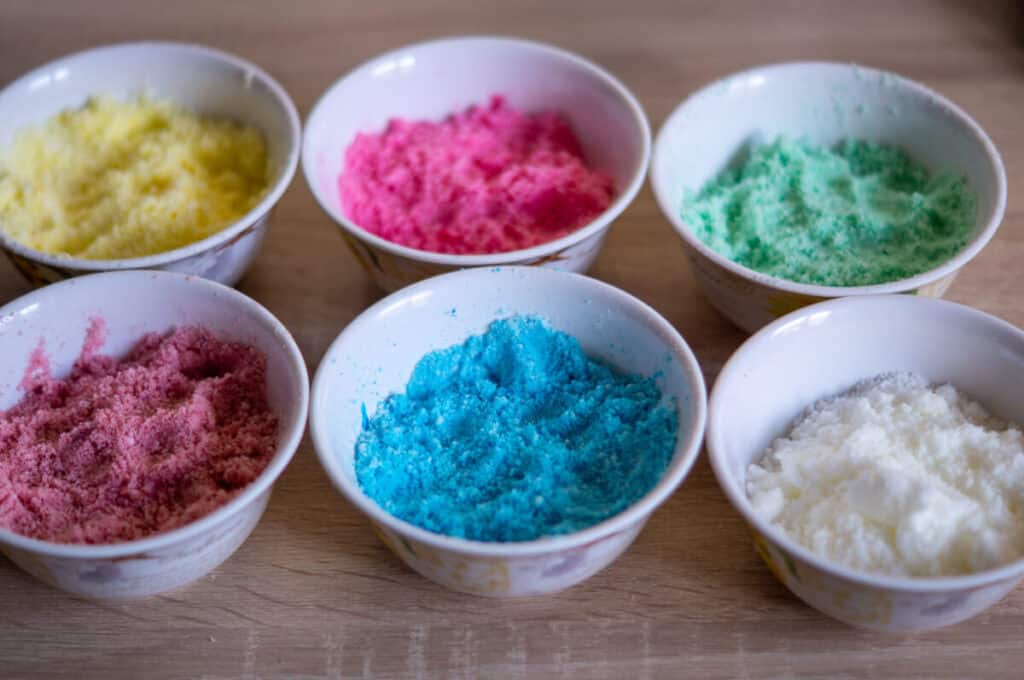
Divide the mixture evenly between six small bowls, colour each portion with food colouring as desired, and add fragrance oil to taste. Knead well so that the colour and scent are evenly distributed.
-
3
Shape the bombs.
Press the mixture into the bath bomb moulds in any colour order you like, filling each half so full that a little excess spills out when the mould is closed. Press the mould halves firmly together and leave to set in the fridge for at least 4 hours.
-
4
Package.
Carefully remove the bath bombs from the moulds and wrap airtight if desired. Store away from moisture.
Tip: If you are making bath bombs for children, leave out the essential oils and use baking flavouring oils instead. These are safe for sensitive children's skin.
Video
Why exactly 37°C for mixing
Shea butter melts between 32 and 38°C. At room temperature it stays solid, and in the Thermomix® it forms clumps with the dry ingredients. At 37°C the butter reaches a semi-liquid state in which it combines with the bicarbonate of soda, citric acid, and cornflour to form a compact mixture.
Above 40°C the mixture becomes too warm. The humidity inside the mixing bowl is then enough to trigger the chemical reaction between the bicarbonate of soda and the acid. The mixture begins to fizz and loses its binding power. By the time you drop the bomb in the bath, there is barely any effect left.
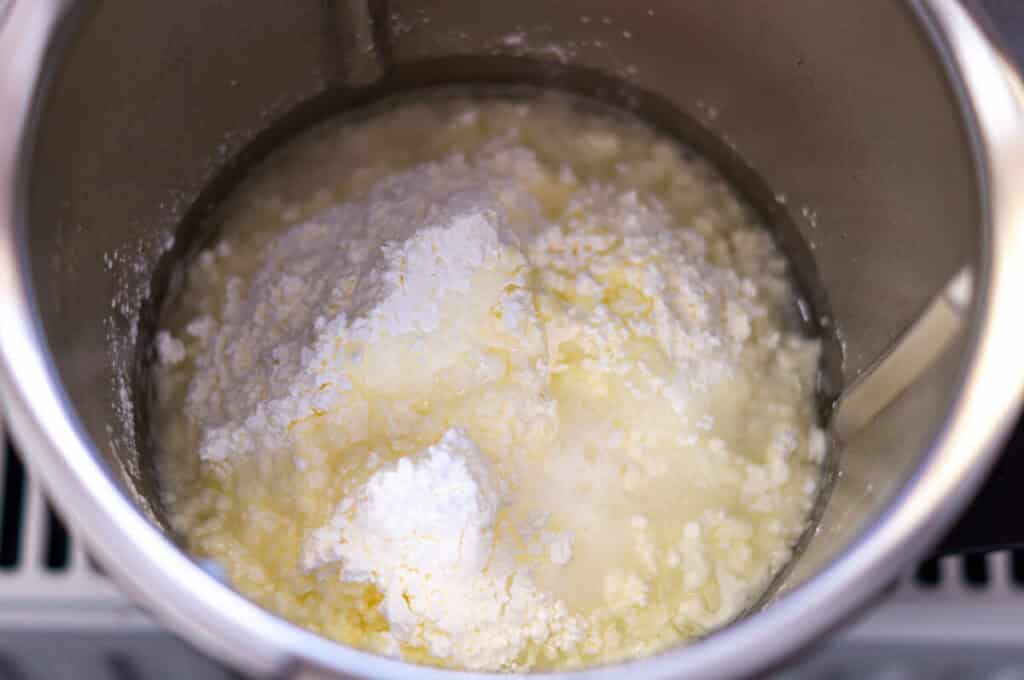
After 3 minutes at speed 3 the butter is melted. Push everything down with the spatula and mix for a further 20 seconds at speed 3.5. The mixture should feel like damp sand but press together well.
Bicarbonate of soda and citric acid: how the fizz works
The fizzing effect comes from the reaction between bicarbonate of soda (sodium bicarbonate) and citric acid. As long as the mixture stays dry, nothing happens. In the bath water the bond breaks, the bicarbonate of soda and acid meet, and carbonic acid forms. This immediately breaks down into water and carbon dioxide (CO2), which rises as bubbles.
The ratio is fixed: 500 g bicarbonate of soda to 250 g citric acid. More bicarbonate of soda does not produce a stronger effect, only alkaline residue in the water. Less acid results in a flat, weak fizz.
Colour: gel or powder only, never liquid
Food colouring in powder or gel form is essential. Liquid colouring contains water, which triggers the reaction between the bicarbonate of soda and the citric acid. The mixture begins to foam before you can press it into the mould.
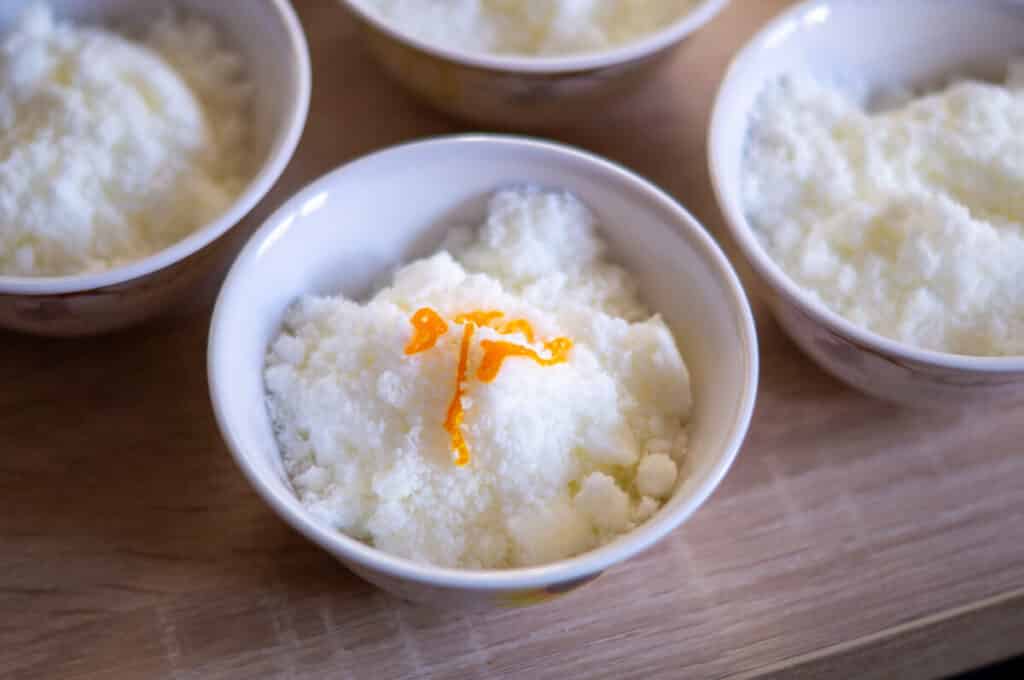
We divide the mixture from the Thermomix® between six small bowls. Each portion gets a different colour. Knead the gel or powder in by hand until the colour is evenly distributed. This takes about 30 seconds per bowl.
Fragrance: essential oils or baking flavouring
Essential oils give the bath bombs their scent. Lavender is calming, eucalyptus helps with colds, rosemary eases muscle tension. For each portion (roughly 100 g of mixture) 3 to 5 drops are enough.
For children under 6 we leave out essential oils and use baking flavouring oils instead. These are milder and do not cause skin irritation. Vanilla, strawberry, or lemon work well.
Moulds: 4 hours in the fridge is the minimum
Press the coloured mixture into the bath bomb moulds. Fill each half as firmly as possible so that a little excess squeezes out when the halves are pressed together. This creates pressure and results in a compact bomb.
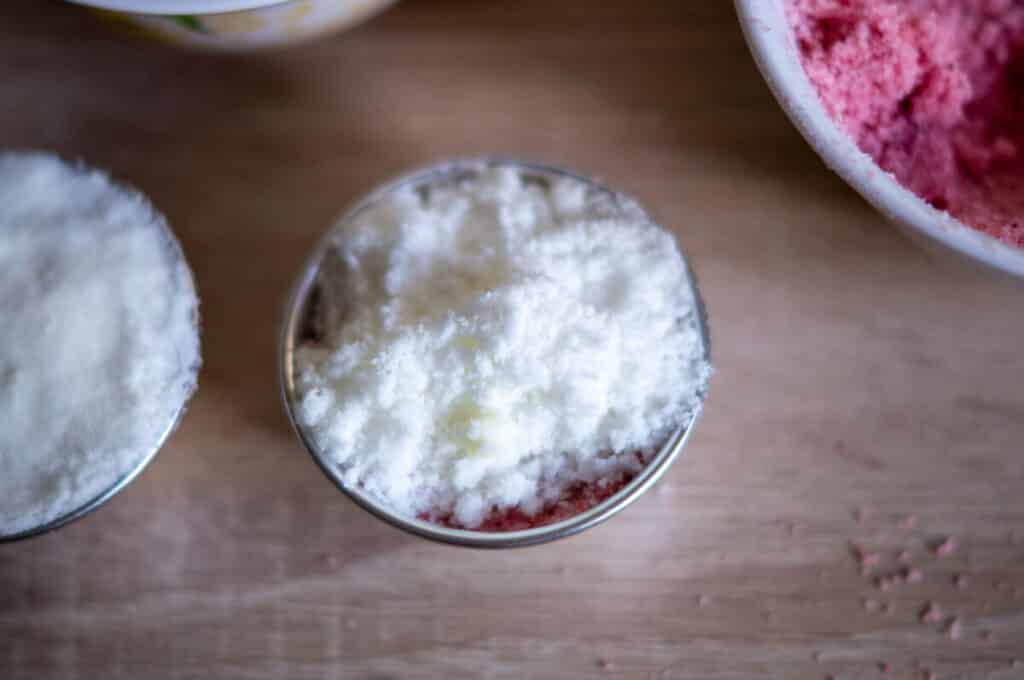
The filled moulds go into the fridge for at least 4 hours. The shea butter sets completely during this time. Less than 4 hours and the bombs crumble when you remove them. Leaving them to set overnight is even safer.
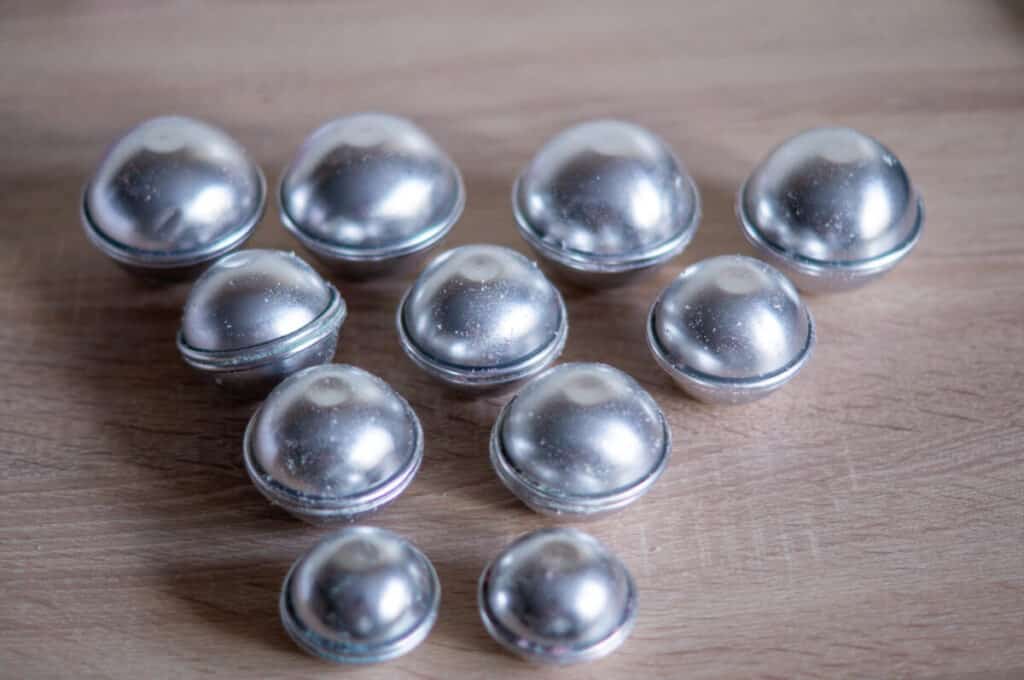
To remove them, open the mould carefully. Do not tap or shake it, or the bombs will break. If a bomb splits at the seam, dampen the broken edge with a little water, press it back together, and return it to the fridge for another 2 hours.
Storage: airtight, dry, and dark
Pack the bath bombs in airtight tins or cellophane bags. Humidity causes the bicarbonate of soda and citric acid to react slowly, and the bombs lose their fizzing power. Store them in a dark place so that the essential oils do not oxidise.
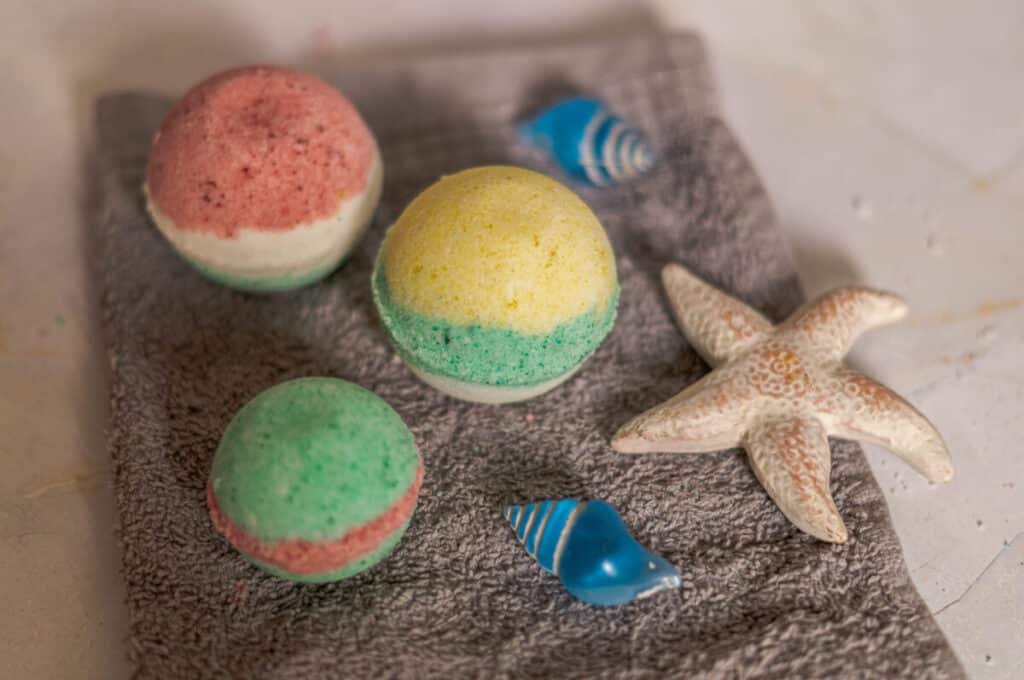
Stored this way, the bath bombs keep for several years. The scent fades after about 12 months, but the fizzing effect remains.
More homemade gifts from the Thermomix®: Homemade Colourful Play Dough, Ice Cream Recipes for the Thermomix®.