We have been baking muffins in the Thermomix® for years, trying every variation imaginable. The most important thing we have learnt: the order in which you mix the batter decides whether a muffin turns out light and fluffy or full of tunnels.
Pulverising the fat and sugar first, then briefly folding in the dry ingredients, prevents those notorious air channels in the middle. The Thermomix® does exactly that in 30 to 50 seconds at speed 3 to 5, whereas a hand mixer often beats for too long and activates the gluten.
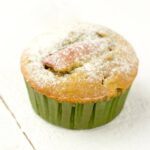
Raspberry Apple Muffins, Thermomix®
Ingredients 0 / 11 ✓
- 160 g brown sugar
- 1 apple
- 70 g blanched almonds
- 200 g cornflour
- 50 g potato starch
- 2 eggs
- 80 g olive oil
- 120 g buttermilk
- 1/2 tsp bicarbonate of soda
- 1 pinch salt
- 50 g raspberries
Instructions 0 / 9
-
1
Pulverise the sugar.
Add the sugar to the mixing bowl and pulverise for 15 sec / speed 10, then set aside.
-
2
Cut the apple.
Wash the apple, quarter it and remove the core. Cut half the apple into twelve wedges and set aside.
-
3
Grind the almonds.
Add the almonds to the mixing bowl and grind for 25 sec / speed 10.
-
4
Chop the apple quarters.
Add the remaining 2 apple quarters to the mixing bowl and chop for 5 sec / speed 5.
-
5
Mix the batter.
Add the cornflour, potato starch, eggs, oil, buttermilk, bicarbonate of soda, salt and 140 g icing sugar to the mixing bowl and mix for 1 min / speed 3.
-
6
Preheat the oven.
Meanwhile, line a muffin tin with paper cases. Preheat the oven to 180°C top and bottom heat.
-
7
Fold in the raspberries, fill and bake.
Sort through the raspberries and fold them gently into the batter using the spatula.
-
8
Divide the batter between the muffin cases. Press one apple wedge into each muffin and bake on the middle shelf for 25 to 30 minutes.
-
9
Finish.
Leave the muffins to cool and dust with icing sugar.
Tip: You can also sprinkle your muffins with a cinnamon-sugar mixture!
Nutrition per serving
Why muffins turn out differently in the Thermomix®
The mixing bowl stirs from the bottom upwards. This means fatty ingredients (butter, oil, yoghurt) are incorporated evenly into the batter without air bubbles forming. With a hand mixer, you tend to beat from above and pull air in, which leads to tunnels in the oven.
Speed matters: speed 3 to 5 is enough for all muffin batters. Speed 6 or higher would overwork the batter and activate the gluten in the flour. The result would be tough, rubbery muffins instead of light ones.
We only use reverse direction at speed 2 when folding in fruit or chocolate chips. This prevents crushing and keeps berries or cherries in whole pieces.
Muffin or cupcake: the only difference
A muffin is a cupcake without a topping. The batter is identical. Add buttercream, cream cheese frosting or ganache to a baked muffin and you have a cupcake.
We eat muffins plain or with a light dusting of icing sugar. Cupcakes get a creamy swirl on top, often piped with a star nozzle. The base stays the same: a light, stirred batter that the Thermomix® finishes in under a minute.
Baking time and temperature: the 25-minute mark
All four recipes further down bake at 180°C top and bottom heat. The time ranges from 20 to 30 minutes, depending on the size of the cases and the proportion of fruit in the batter.
A skewer test after 20 minutes shows whether the muffin is done. A clean wooden skewer means it is baked through. If batter still clings to it, give it another 3 to 5 minutes.
With muffins containing blueberries, cherries or pineapple, the baking time often increases by 5 minutes because the fruit releases moisture. This is normal and not a mistake.
Gluten-free muffins: cornflour instead of wheat flour
The raspberry apple muffins further down contain no gluten at all. Instead of plain flour we use 200 g cornflour plus 50 g potato starch, with ground almonds for binding.
Without gluten, the elasticity that wheat dough provides is missing. That is why buttermilk or yoghurt is needed for moisture, and bicarbonate of soda rather than plain baking powder. The bicarbonate reacts with the acid in the buttermilk and gives the muffins their lift.
Gluten-free batters must not be mixed for too long. 1 minute at speed 3 is enough; any longer and the batter becomes stodgy. The consistency is slightly denser than a wheat-flour muffin, but not dry.
Vegan muffins: banana replaces egg
The banana coconut muffins use a ripe banana instead of two eggs. The banana binds the batter and adds sweetness. Important: the banana must have brown spots, otherwise it is not ripe enough and the batter will taste bland.
Coconut milk and rapeseed oil replace butter and cow’s milk. The ratio of 140 g coconut milk to 80 g oil per 300 g flour gives the right fat content for a light structure.
Vegan batters need a little longer in the oven because eggs normally provide quick binding. For these muffins it is 25 minutes rather than 20.
Prosecco blueberry glaze: alcohol does not evaporate completely
The blueberry prosecco muffins have a glaze made with 1 tbsp prosecco. This is not heated but mixed cold with icing sugar and blended blueberries.
About 85% of the alcohol remains in the glaze because it does not evaporate. These muffins are therefore not suitable for children. To leave out the alcohol entirely, replace the prosecco with apple juice or lime juice.
The blueberries in the glaze turn it violet. Blending at speed 10 for 20 seconds chops the berries finely enough that no pieces remain in the glaze.
Cases: paper or silicone
We use paper muffin cases because they absorb the fat and the muffin does not taste greasy as a result. Silicone cases need more greasing and the muffin comes out oilier on the outside.
The standard size is 5 cm diameter at the base. Each of the recipes below makes 12 muffins of this size. Larger cases yield 8 to 10 pieces, and the baking time increases by 5 minutes.
The muffin tin must sit on the middle shelf, not too close to the top heating element. Otherwise the surface will darken too much before the centre is cooked through.
Four muffin variations for every season
The four recipes below cover different occasions: blueberry prosecco for adult gatherings, raspberry apple gluten-free for intolerances, pineapple melon for a summery freshness, and banana coconut vegan for plant-based eating.
Every recipe works in the TM31, TM5® and TM6®. The times and speeds are identical for all three models because muffin batter does not require high temperatures.
Blueberry Prosecco Muffins
Also nice with: Butter and vanilla ice cream.
Also worth trying: Nut Kisses, Thermomix®.
Blueberries and prosecco in one muffin. The violet glaze with lime zest is the visual highlight. For children’s parties, replace the prosecco with apple juice.
Gluten-Free Raspberry Apple Muffins
Cornflour, potato starch and ground almonds instead of wheat flour. The apple wedges pressed into the top add structure and a visual accent.
Pineapple Melon Muffins
A summery combination of tinned pineapple and galia melon. The lemon glaze lifts the fruit sweetness.
Banana Coconut Muffins
Vegan muffins with ripe banana, cherries and coconut milk. The vanilla pod provides real flavour, not a vanillin substitute.
More muffin recipes: Poppy Seed Apricot Muffins, Basic Recipe for Thermomix® Muffins, Chocolate Muffins.