Classic tiramisu needs four to six hours for the espresso-soaked sponge fingers to soften and for the aroma to work into the Mascarpone cream. With this orange tiramisu made in the Thermomix®, just under an hour in the fridge is enough, because warm orange juice softens the sponge fingers much faster than cold espresso does and releases more flavour at the same time. Warming the juice before adding it opens up the essential oils in the orange peel. The cream then tastes of real fruit rather than pale bottled juice.
We have been making this recipe for years whenever Sunday guests announce themselves at short notice and there is no time for a classic tiramisu with a long setting time. The trick is straightforward: we use an unwaxed orange in its entirety. The zest goes into the mixing bowl and is pulverised with 100 g of cane sugar at speed 10 in 20 seconds to make an aromatic orange sugar. Of that, 70 g go into the Mascarpone cream and the rest is scattered over the finished dessert as a topping. That gives two layers of flavour that a classic tiramisu simply does not have.
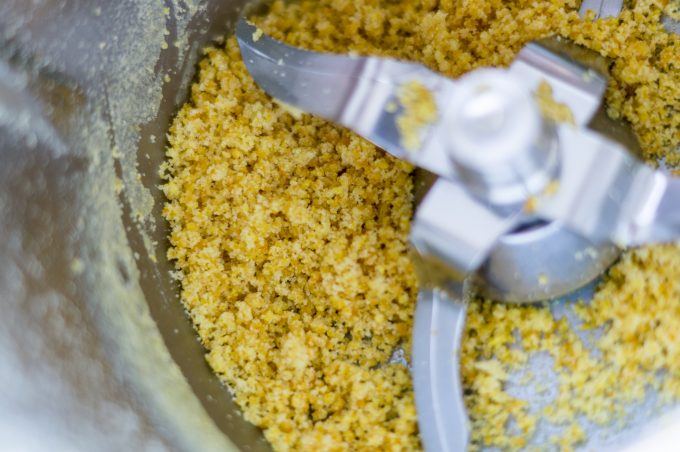
The order of steps in the mixing bowl matters. Pulverise the orange zest with the sugar first, because the essential oil in the zest clings to the sugar and is not lost in the cream. Do not rinse the mixing bowl afterwards, as the residue on the walls adds extra flavour to the cream. Mascarpone, low-fat quark, the freshly squeezed juice of half an orange, a splash of Cointreau and 70 g of orange sugar then go in together and are mixed for just 10 seconds at speed 5. No longer, or the Mascarpone and quark mixture will turn watery.
Quick Orange Tiramisu with the Thermomix®

Ingredients 0 / 8 ✓
- 1 orange unwaxed
- 100 g raw cane sugar
- 100 g sponge fingers
- 60 g coffee brewed and cooled
- 1 vanilla pod
- 20 g Cointreau
- 250 g Mascarpone
- 250 g low-fat quark
Instructions 0 / 6
-
1
Pulverise the orange zest.
Wash the orange thoroughly and pat dry. Use a vegetable peeler to pare off 5 g of orange zest, place it in the mixing bowl together with 30 g of cane sugar and pulverise for 20 seconds / speed 10, then set aside.
-
2
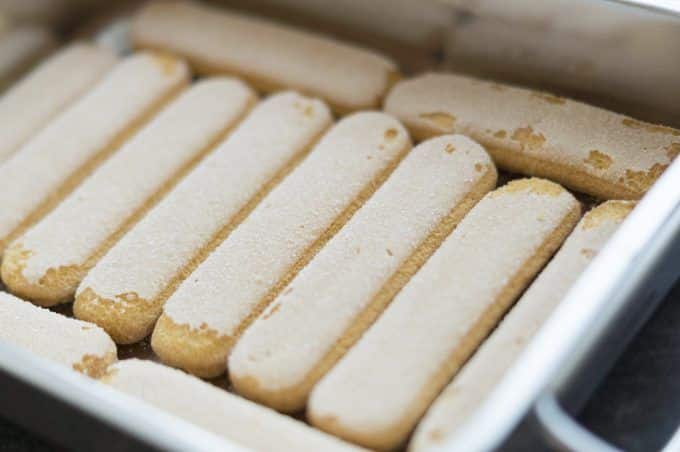
Soak the sponge fingers with coffee. Line a dish with the sponge fingers and spread the coffee evenly over them.
-
3
Juice the orange.
Halve the orange and squeeze one half.
-
4
Mix the cream.
Slit open the vanilla pod and scrape out the seeds. Place them in the mixing bowl together with 70 g of orange sugar, 2 tbsp of orange juice, Cointreau, Mascarpone and quark, then mix for 10 seconds / speed 5.
-
5
Spread the cream.
Spread the cream over the sponge fingers, cover and refrigerate.
-
6
Garnish.
Just before serving, dust with the remaining orange sugar.
Tip: The orange tiramisu tastes best when it is left in the fridge for at least two hours so it can set and the flavours can develop fully.
Video
Nutrition per serving
Why warm orange juice makes the difference
Freshly squeezed orange juice from the hand is usually cold, roughly as cold as the fruit sitting in the fruit bowl. Cold juice soaks into dry sponge fingers slowly because the starch in the biscuit first needs to swell. Warming the juice to around 40 degrees before drizzling it on speeds up two things at once. The sponge fingers absorb the liquid almost twice as fast, and the essential oils of the orange pass more easily into the juice. Both differences show in the first bite: the sponge finger layer is evenly soaked, and the cream on top has a more intense fruity aroma.
In the Thermomix® the warming takes exactly two minutes. Pour the squeezed juice into the mixing bowl and heat for 2 minutes / 40°C / speed 1. Nothing more. We like to add 20 g of Cointreau at this point so that the aroma of the bitter orange peel from the liqueur goes straight into the sponge fingers as well. For an alcohol-free version, simply replace the Cointreau with a little extra juice. The tiramisu then works for children too, without losing any depth of flavour.
Mascarpone and quark in the right ratio
Classic tiramisu is made with Mascarpone and egg yolks only. That makes it rich, heavy and in need of a long setting time so that the egg yolk flavour mellows. We take a different approach: 250 g of Mascarpone meets 250 g of low-fat quark in a one-to-one ratio. The quark brings freshness and reduces the fat content considerably without the cream losing its structure. Mascarpone alone would be too heavy for a quick tiramisu; quark alone would be too loose and would weep. The combination holds the layers and still tastes light.
The second advantage of this combination is that we need no eggs. Classic tiramisu with raw egg yolks is risky in summer, especially when the dessert stands on a birthday table in the garden. With Mascarpone and quark, the cream stays cool enough even after three hours on the table. Anyone who wants a firmer set can replace 50 g of Mascarpone with 50 g of whipped cream. The cream then stays fluffy for longer in warm weather.
Orange zest: only use unwaxed fruit
The zest is what makes the flavour here. Conventionally grown oranges are usually coated with wax or preservatives to extend their shelf life. When pulverised, these substances go straight into the sugar and leave a faintly bitter, soapy aftertaste. For this recipe we always buy unwaxed organic oranges, ideally in season from December to March. The zest is then thin, the oil concentrated and the flavour clean.
Before peeling, scrub the orange under hot water and pat dry with kitchen paper. Use a vegetable peeler to remove only the orange layer, as the white pith underneath is bitter. If you use a Microplane grater instead of a vegetable peeler, the zest comes off even finer and you can shorten the pulverising step. We stick with the vegetable peeler because the mixing bowl handles the pulverising effortlessly.
What else we use the orange sugar for
There is always some orange sugar left over, as 30 g is enough for the garnish. We fill the rest into a small screw-top jar and use it throughout the week for other things. Sprinkled over yoghurt in the morning it tastes better than any shop-bought fruit yoghurt, stirred into homemade advocaat it adds a festive note, and in tea it dissolves better than plain sugar because it is already flavoured. In the jar the orange sugar keeps for about three weeks, after which it starts to lose its freshness.
If you like the idea, you can apply the same trick with lemons or limes. The quantities stay the same: the zest of one fruit, 100 g of sugar, 20 seconds at speed 10. Lemon tiramisu with lemon sugar works on exactly the same principle, and the Cointreau is simply swapped for Limoncello. One recipe becomes a whole flavour system.
Related recipes from our dessert kitchen
If you enjoy layered desserts, we have several variations. The strawberry tiramisu with fresh berries uses the same Mascarpone and quark principle in summer, the rice pudding with strawberry topping needs no sponge fingers at all, and for a chocolate craving there is the lava cake from the Varoma with a molten centre. Fancy a French classic with a caramel crust? Then our Crème brûlée in the Thermomix® is just the thing.
We also use the Cointreau from this recipe in our strawberry jam with Cointreau. A bottle in the cupboard is worth it, because a small amount of the orange liqueur does a great job in many dessert recipes: it binds fruit aromas, adds depth and you only ever need a small quantity. 20 g per tiramisu is enough, and a 0.7-litre bottle goes a long way across around 35 desserts.
Time in the fridge: short but essential
Even though the tiramisu comes together quickly, it does need a short resting time. We give the assembled dessert at least 30 minutes in the fridge, and ideally a full hour. During that time the sponge fingers absorb all the juice, the cream becomes firm enough to slice, and the aroma of the orange zest moves from the topping down into the upper cream layer. If you are in a hurry, put the dessert in the freezer for ten minutes. That works, but has one drawback: the cream can become slightly grainy because the Mascarpone partially freezes at the edges.
In the fridge the tiramisu keeps for two days, after which the sponge fingers go soggy and release water into the cream. Freezing does not work because the Mascarpone and quark mixture weeps when it thaws. If you want to avoid leftovers, simply halve the recipe. Three servings instead of six disappear faster from the dish, and the effort is exactly the same.
Fancy more Italian classics? Try our pizza dough in the Thermomix® for a pizza night, or our pancakes as a sweet breakfast. For the oven there is our quick apple cake and, to go with it, homemade apple sauce. If you want to learn more about the Thermomix®, take a look at our guide to the Thermomix® recipe world.
How other recipes compare
Goes well with: Espresso and amaretti.
Our tip: Low-carb berry and nut quark in the Thermomix® in under 15 minutes.
We have looked at top recipes on Cookidoo, Essen & Trinken and Zaubertopf and see three clear differences. First, the cream ratio: classic versions use 250 g of Mascarpone plus 200 ml of double cream, whereas we combine Mascarpone with low-fat quark and save around 200 kcal per serving without the cream collapsing. Second, the alcohol: Essen & Trinken uses 5 tbsp of orange liqueur, while we treat Cointreau as optional and put fresh orange juice at the centre. Third, the setting time: many recipes call for four hours in the fridge, but we manage with 30 to 60 minutes because our thinner layer of juice soaks the sponge fingers faster.