Advocaat Marble Cake with the Thermomix® is our go-to cake for Sunday visitors. We have been baking it for years and know every critical point by now. The most important one: after creaming the butter and sugar, the butterfly whisk must go in. Without it the eggs will not be whipped up enough and the cake will be dense rather than light.
The recipe works in all models (TM31, TM5, TM6). A 26 cm Bundt tin is standard, though other tins work too. Just note that the baking time will change.
Advocaat Marble Cake with the Thermomix®

Ingredients 0 / 8 ✓
- 250 g butter + a little extra for greasing
- 200 g sugar + a little extra for dusting
- 1 pinch salt
- 5 eggs
- 380 g plain flour (Type 405)
- 1 sachet baking powder
- 130 g advocaat
- 20 g cocoa powder (sweetened)
Instructions 0 / 9
-
1
Preheat the oven.
Preheat the oven to 175 °C top and bottom heat. Grease a Bundt tin with butter and dust it with sugar.
-
2
Cream the butter.
Cut the butter into pieces, add to the mixing bowl with the sugar and salt, and mix for 1 minute / speed 5.
-
3
Whip in the eggs.
Insert the butterfly whisk and whip the mixture for 2 minutes / speed 3.5. Then stir for 3 minutes / speed 2, adding the eggs one at a time through the lid opening.
-
4
Push mixture down.
Remove the butterfly whisk and push the mixture down the sides with the spatula.
-
5
Mix the batter.
Add the flour, baking powder, and advocaat, then stir for 30 seconds / speed 4 with the help of the spatula. Set aside two thirds of the batter.
-
6
Mix the chocolate batter.
Add the cocoa powder to the mixing bowl and stir for 5 seconds / speed 4.
-
7
Fill the tin.
Spread half of the light batter into the prepared tin. Add the chocolate batter on top, followed by the remaining light batter. Draw a fork once in a spiral through all the layers to create a marble pattern. Do not repeat this, or the batters will mix too much and the pattern will be lost.
-
8
Bake the cake.
Bake on the lower shelf for 50 to 60 minutes, then test with a skewer.
-
9
Leave to cool.
Leave the cake to cool in the tin for 15 minutes, then turn it out onto a wire rack and leave to cool completely.
Tip: You can serve the cake drizzled with advocaat, or glaze it with dark chocolate. Or better still, do both!
Video
Nutrition per serving
Why the butterfly whisk is essential after the butter phase
Butter and sugar are first creamed together with the blades at speed 5. That is quick and efficient. But once the eggs go in, we need to incorporate air, not chop.
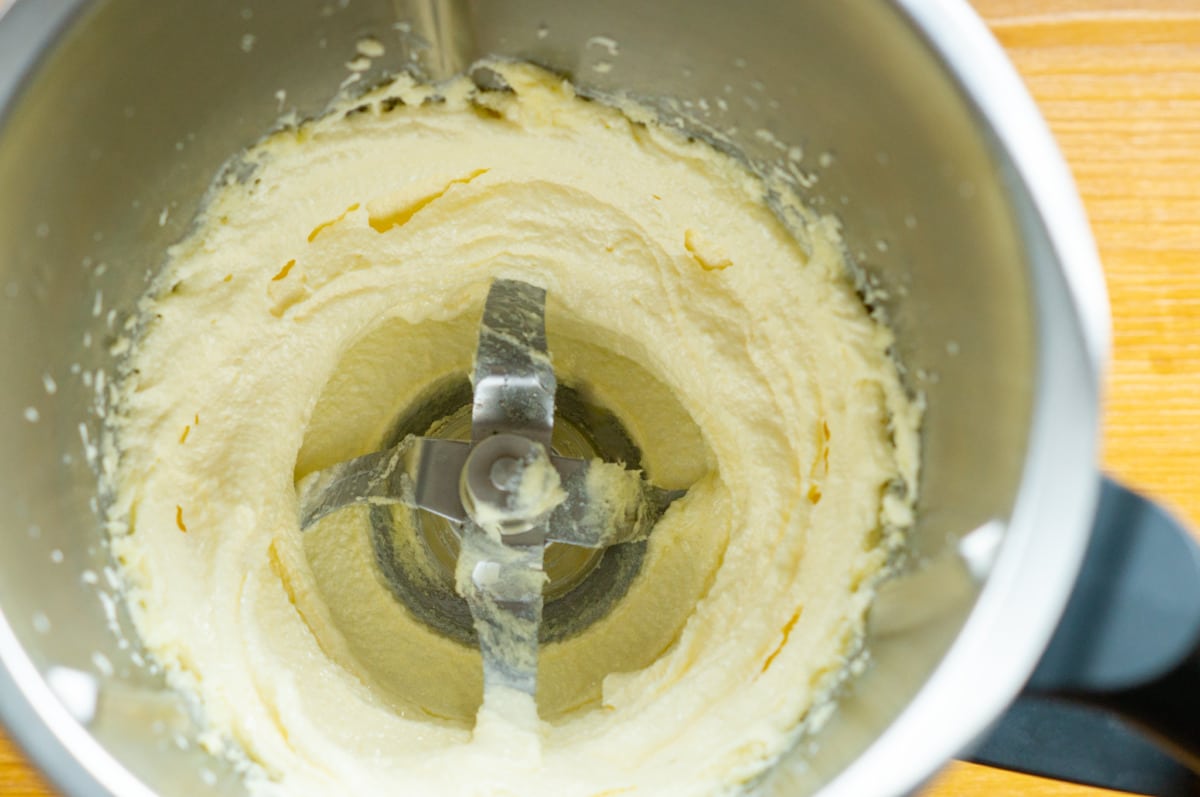
The butterfly whisk folds the eggs gently into the butter and sugar mixture, whipping them at speed 3.5. This creates volume. The blades would only stir the eggs, not whip them. The result would be a dense, heavy cake rather than a light one.
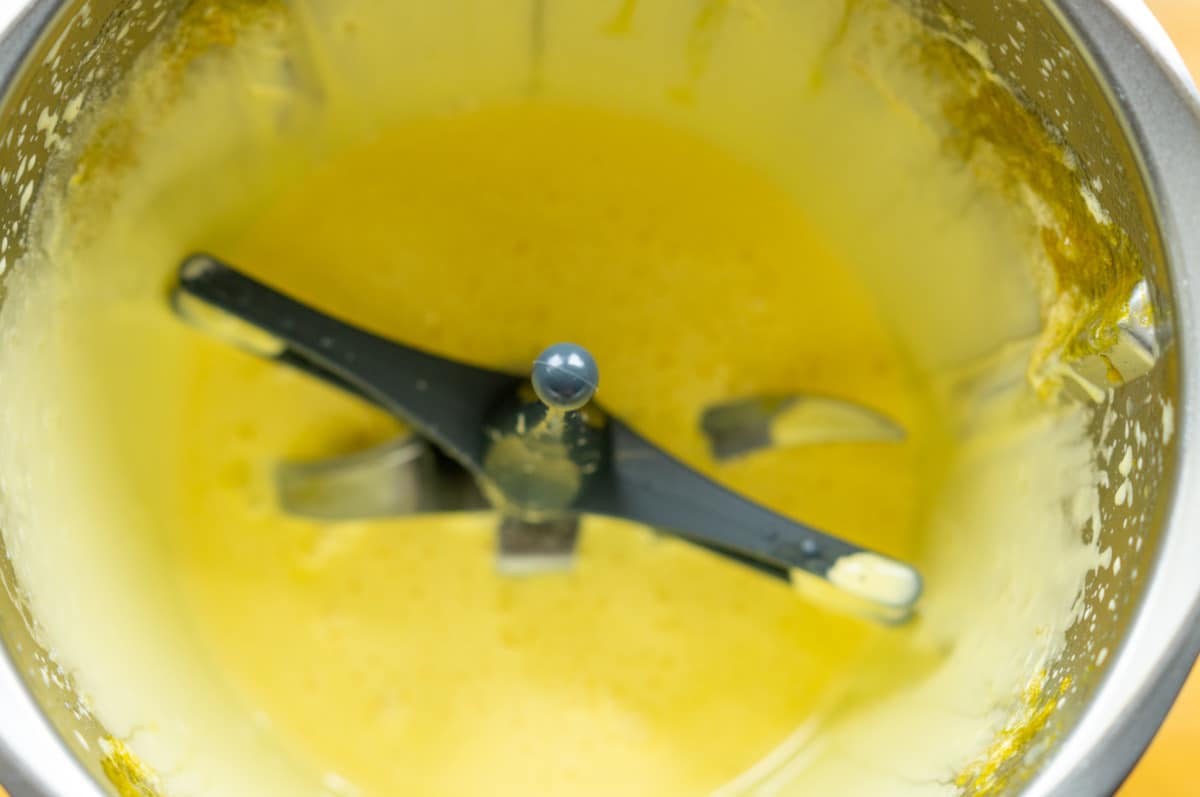
We add the eggs one at a time through the lid opening while the mixing bowl runs at speed 2. Each egg needs about 30 seconds to be fully incorporated. After the fifth egg the mixture is pale and creamy.
The 2/3 to 1/3 split for the marble effect
Once the flour, baking powder, and advocaat are stirred in, we take two thirds of the batter out of the mixing bowl and put it into a bowl. The remaining third in the mixing bowl is mixed with 20 g of sweetened cocoa powder to make the chocolate batter.
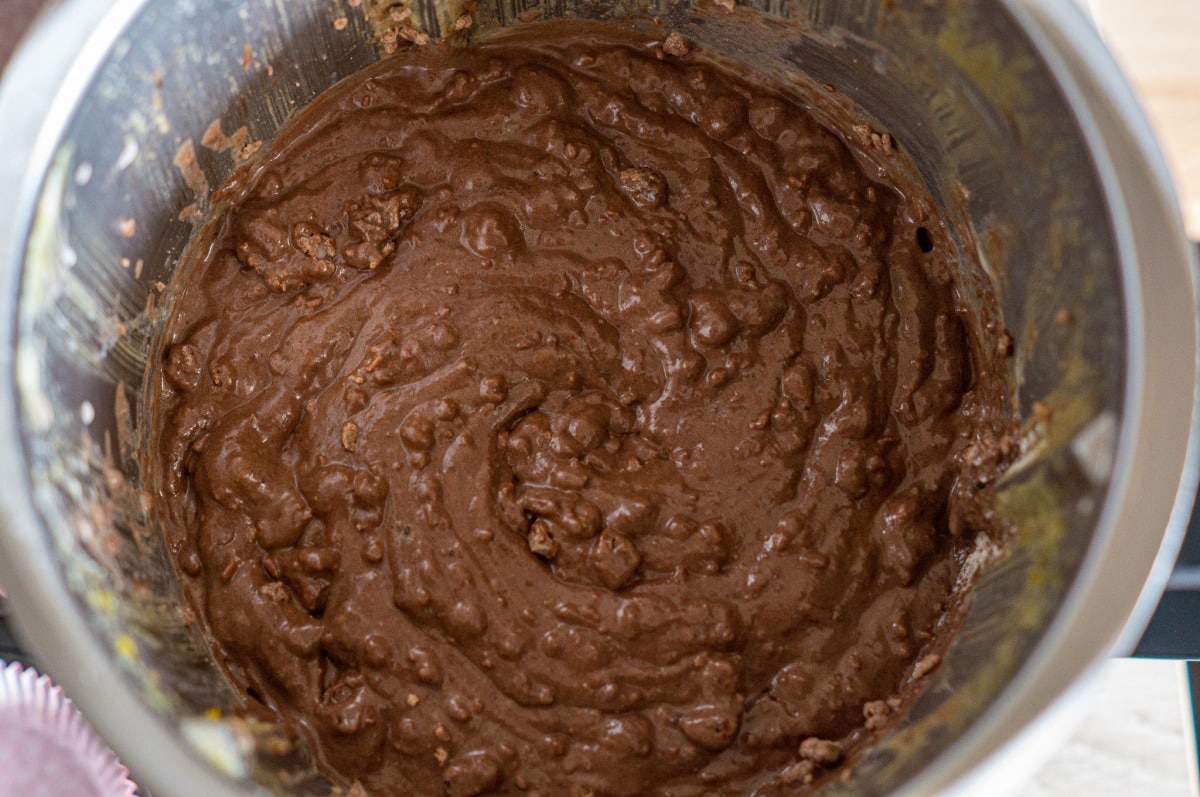
This split matters. At 50/50 the cake turns too dark and the advocaat flavour disappears behind the chocolate. At 2/3 light and 1/3 dark, the advocaat stays dominant and the chocolate provides only accents.
For the marble pattern, we spread half of the light batter into the greased and sugared Bundt tin. Then the entire chocolate batter goes on top, followed by the second half of the light batter. We draw a fork once in a spiral through all the layers. Not more than once, otherwise the batters blend too much and the pattern disappears.

Advocaat: homemade or shop-bought
We usually use homemade advocaat, because the flavour is more intense. Shop-bought works just as well, but it should have at least 14% alcohol. Below 14% the flavour is too weak and gets lost in the cake.
The 130 g of advocaat in the recipe is a fixed quantity. More will make the batter too runny, less will cause the advocaat flavour to disappear. The ratio to the 380 g of flour is important for the right consistency.
Baking time and the skewer test
At 175 °C top and bottom heat on the lower shelf, the cake bakes for 50 to 60 minutes. The range is wide because ovens vary in how hot they actually run. After 50 minutes we do the first skewer test.

We insert a wooden skewer into the thickest part of the cake. If it comes out clean, the cake is done. If damp crumbs stick to it, it needs another 5 to 10 minutes. The surface may be golden brown, but not dark brown.
After baking, the cake stays in the tin for 15 minutes. Turning it out too early will cause it to break apart. After 15 minutes the structure has enough firmness. Then turn it out onto a wire rack and leave to cool completely.
Serving with or without a glaze
We usually serve the cake plain. The advocaat flavour is present enough. Anyone who would like a glaze can use dark chocolate. The bitter chocolate balances the sweetness of the cake. Chocolate glaze with the Thermomix® is ready in 5 minutes.
Another option: soak the cake with extra advocaat. To do this, pierce several holes in the still-warm cake with a skewer and drizzle 2 to 3 tbsp of advocaat over the top. This makes it even more moist and intensifies the flavour.
Three cakes that work the same way
Goes well with: vanilla ice cream and coffee.
The classic marble cake with the Thermomix® is the base version. If you do not have advocaat at home, use milk instead. The basic sponge batter is identical, just without the cocoa and without the advocaat. And our Fanta cake works on the same principle, only with lemonade instead of advocaat.
More cake recipes: crumble cake, cheesecake, lemon cake.