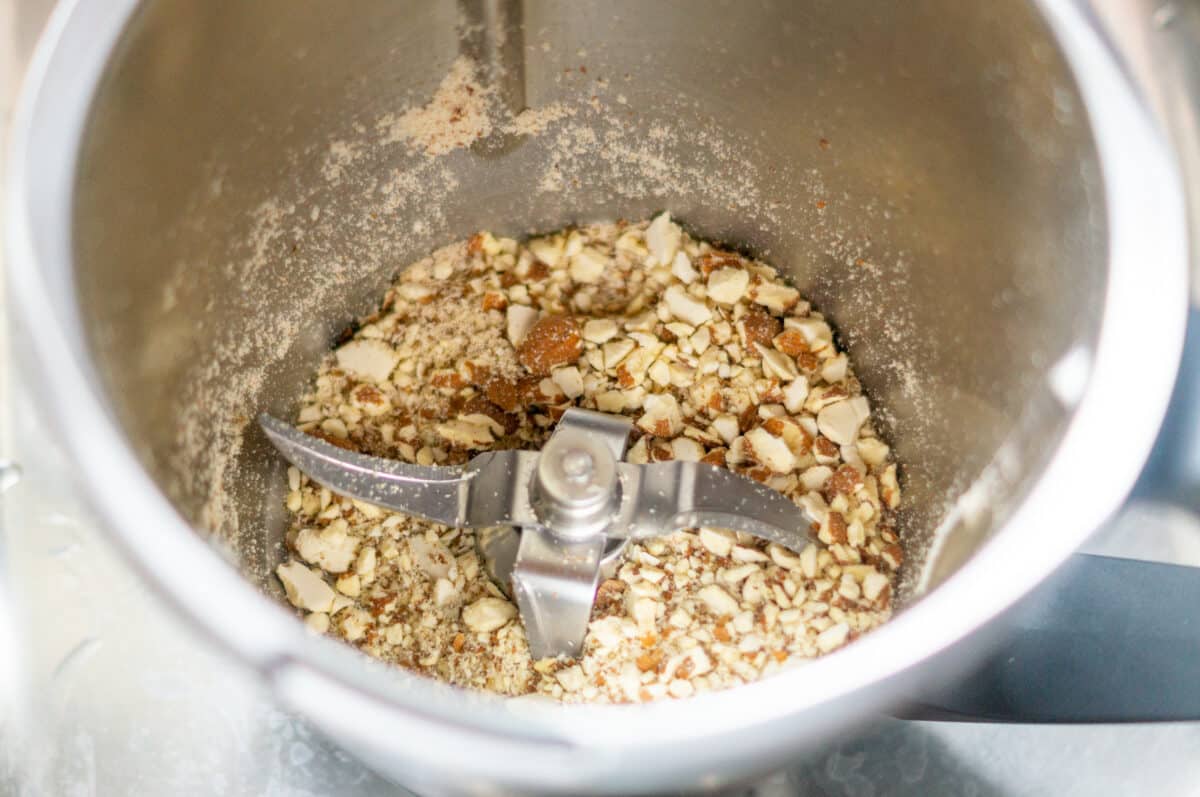
We grind the almonds with sugar at speed 7 first. This releases the essential oils from the almonds and binds them straight into the sugar. That step stops the bread turning dry later.
Banana bread is our standard recipe for overripe bananas. The brown spots on the skin show that the starch has converted to sugar. The browner the banana, the sweeter the bread. Pale bananas give a bland result.
Banana Bread with the Thermomix®
Ingredients 0 / 6 ✓
- 280 g almonds
- 130 g raw cane sugar + a little extra for the tin
- 5 bananas
- 130 g coconut oil + a little extra for the tin
- 1 tsp vanilla extract
- 1 sachet baking powder
Instructions 0 / 6
-
1
Preheat the oven.
Preheat the oven to 180°C fan and grease a loaf tin with oil, then dust with sugar.
-
2
Grind the almonds.
Add the almonds and sugar to the mixing bowl and grind for 20 seconds / speed 7.
-
3
Blend the batter.
Add 4 bananas, oil, vanilla extract and baking powder to the mixing bowl and blend for 40 seconds / speed 6.
-
4
Fill the tin.
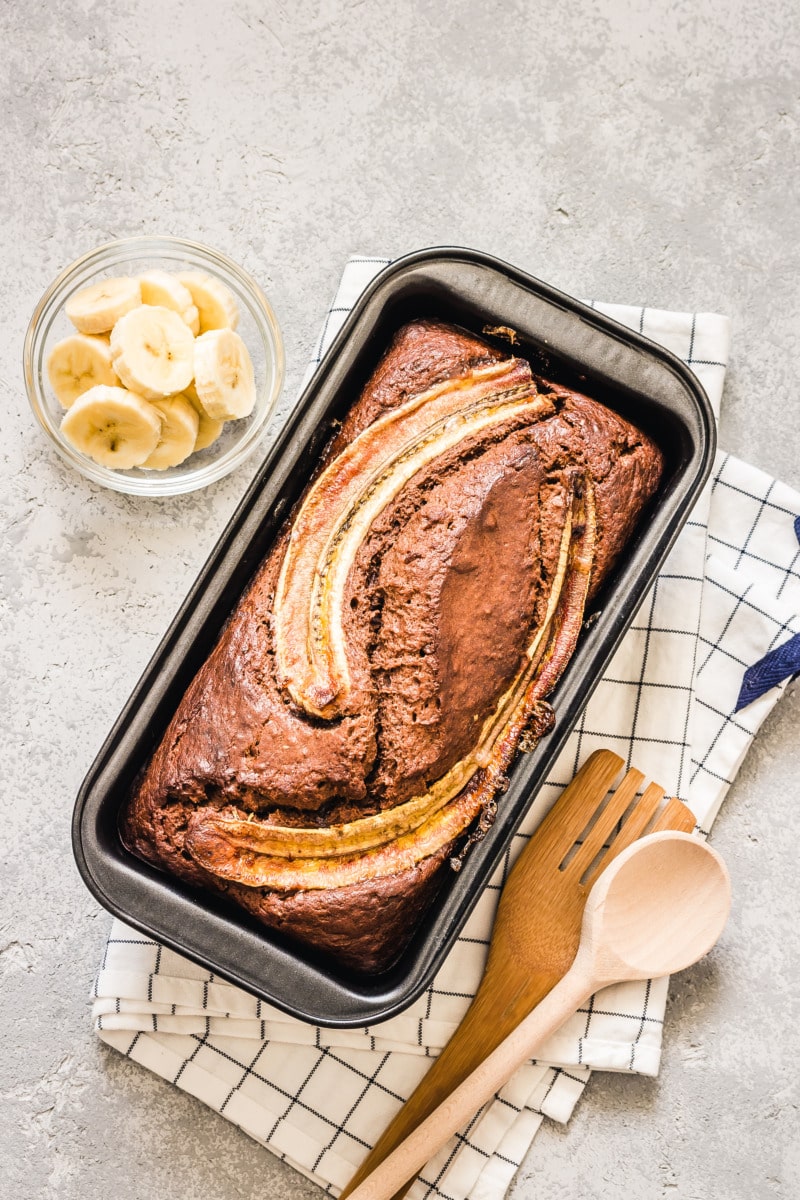
Pour the batter into the tin, halve the remaining banana lengthways and place on top of the batter.
-
5
Bake the banana bread.
Bake the banana bread on the middle shelf for 45 minutes, then check with a skewer.
-
6
Serve.
Leave the bread to cool in the tin for a few minutes, then turn out.
Tip: You can store your banana bread in the fridge for up to one week and enjoy it slice by slice. Keep it in an airtight container.
Video
Nutrition per serving
Why almonds instead of flour
280 g of ground almonds replace plain flour entirely. That keeps the bread moist and gives it a nutty base. Almonds provide fat and protein, whereas plain flour offers only starch. Without gluten, the crumb stays lighter.
The Thermomix® grinds raw almonds in 20 seconds at speed 7, fine enough for batter. Ready-ground almonds from a packet are often too coarse or already oxidised. Freshly ground tastes more intense.
Coconut oil for structure
130 g of coconut oil in the batter ensures the bread firms up as it cools. Coconut oil has a melting point of around 24°C. At room temperature it is solid, in the oven it becomes liquid and distributes evenly.
Rapeseed oil or sunflower oil stays liquid even when cold. That gives a softer bread, but it holds together less well when sliced. For a bread you can transport easily, coconut oil is the better choice.
4 bananas in the batter, 1 on top
We add 4 of the 5 bananas to the batter and blend them for 40 seconds at speed 6. The fifth banana is halved lengthways and placed on top of the batter before the tin goes into the oven. That banana caramelises during baking and forms a sweet crust.
If you put all 5 bananas into the batter, it becomes too wet. The baking powder cannot then raise the batter sufficiently and the bread stays dense rather than light.
45 minutes at 180°C fan
The oven must be preheated before the tin goes in. 180°C fan on the middle shelf. Check with a skewer after 45 minutes to see whether the batter is cooked through. If moist crumbs cling to the skewer, bake for a further 5 minutes.
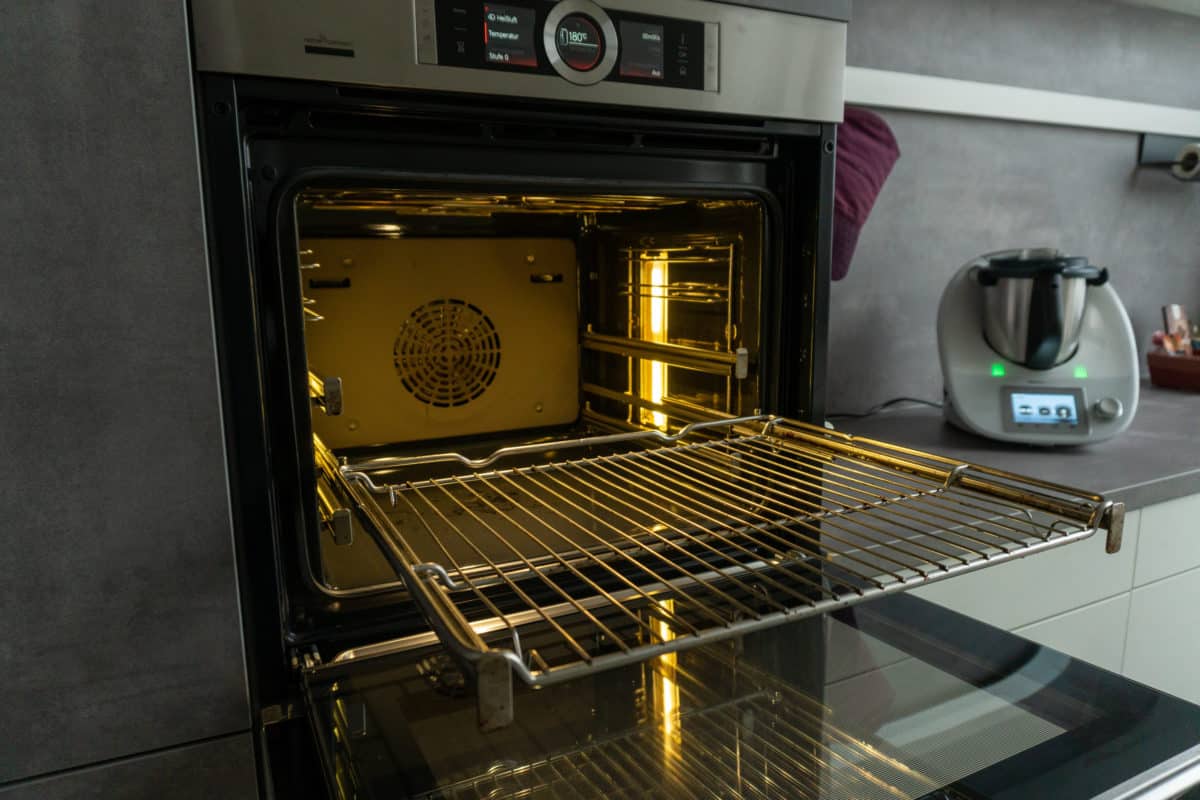
For top and bottom heat, use 200°C. The dry heat from below makes the underside crispier, but you need to rotate the tin more often so the bread browns evenly.
Leave to cool in the tin
The bread needs to stay in the tin for at least 10 minutes after you take it out of the oven. During that time the structure stabilises. If you turn it out straight away, it will fall apart.
Once cooled, the bread comes away from the tin cleanly. Run a thin knife around the edge if it sticks, then turn out and leave to cool completely on a wire rack.
Storing and slicing
Once cooled, cut the banana bread into 12 even slices. Kept in an airtight container in the fridge, it stays fresh for up to one week. The almonds and coconut oil stop it drying out.
Freezing works well too. Pack individual slices into freezer bags and defrost as needed. After 2 hours at room temperature, a slice is soft again.
More recipes with bananas: Banana Milk, Banana Crisps, Banana Pancakes
What other recipes do differently
Goes well with: Butter, peanut butter and cream cheese.
Many recipes use spelt or oat flour instead of our almonds and therefore need more sugar, because flour adds hardly any sweetness. Others swap coconut oil for butter, which gives more flavour but makes the bread harder as it cools. Some versions stir grated apple or carrot into the batter, which stretches the bananas and adds vitamins but costs some of the banana flavour. Walnuts or dark chocolate chips are common as a topping, and both work well with our batter. Baking times and temperatures vary between 175 and 180°C at 45 to 60 minutes depending on the tin. We stick with 180°C fan for 45 minutes, because our Thermomix® grinds the almonds fine enough in 20 seconds and the batter cooks through more quickly as a result.