Crispbread made with the Thermomix® is no big deal. We make it regularly because the dough logic is simple: 360 g water to 810 g dry ingredients, 15 seconds speed 4, done. No kneading, no proving, no folding. Baking takes 50 minutes, but the prep takes less than 10.
The trick: we do not bake it in one go, but in two stages. First 15 minutes at 160°C, then we cut the half-baked flat into rectangles, then a further 35 minutes. Anyone who bakes it straight through in one go ends up with either burnt edges or a soggy middle. Cut after 15 minutes and every piece bakes evenly and crisply.
Crispy Crispbread with the Thermomix®

Ingredients 0 / 8 ✓
- 130 g wholegrain rye flour, type 1150
- 120 g rolled oats
- 100 g sunflower seeds
- 80 g sesame seeds
- 1/2 tsp salt
- 1/2 tsp rosemary dried
- 20 g olive oil
- 360 g water
Instructions 0 / 4
-
1
Preheat the oven.
Preheat the oven to 160°C fan. Line 2 baking trays with baking paper. Prepare all ingredients.
-
2
Mix all ingredients.
Place all ingredients into the mixing bowl and mix for 15 sec / speed 4.
-
3
Spread the dough thinly.
Spread the dough thinly over the lined baking trays.
-
4
Bake and cut the Thermomix® crispbread.
Bake for 15 minutes, then cut the crispbread into rectangles using a pizza wheel, and bake for a further 35 minutes until done.
Tip: The crispbread also makes a great snack for dipping. To keep it nice and crispy, store it in an airtight container once it has cooled down.
Video
Nutrition per serving
Why 360 g of water is the threshold
With 130 g rye flour, 120 g rolled oats, 100 g sunflower seeds, 80 g sesame seeds, and the remaining dry ingredients, the dough needs exactly 360 g water to become spreadable without sticking. Less, and it tears when spreading. More, and it runs off the baking paper. The ratio is non-negotiable.
The olive oil adds binding and makes the broken edges more stable later on. Without oil, the crispbread crumbles when you break it.
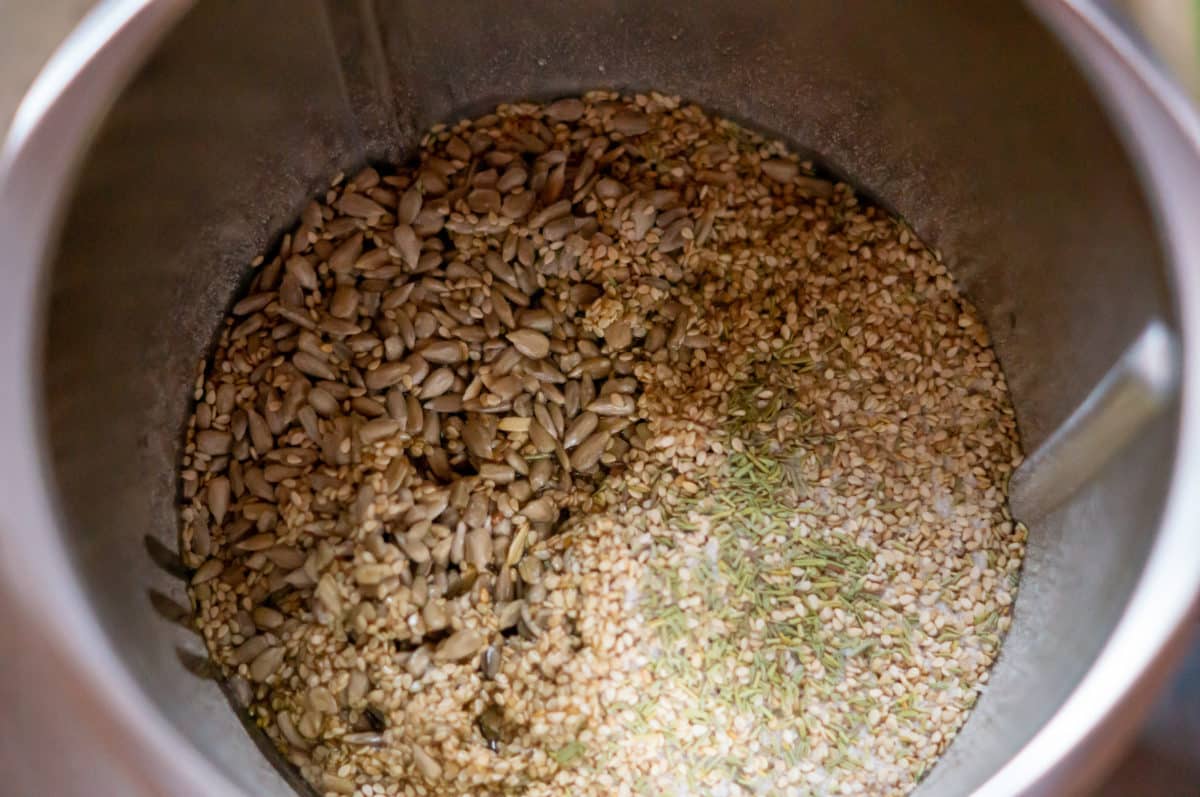
15 seconds at speed 4 is enough
The Thermomix® only needs to combine the dry ingredients with the water, not blend them smooth. 15 seconds at speed 4 is sufficient. Do not mix for longer, as the rolled oats will be chopped and the dough will turn mushy instead of grainy. The grains should remain visible.
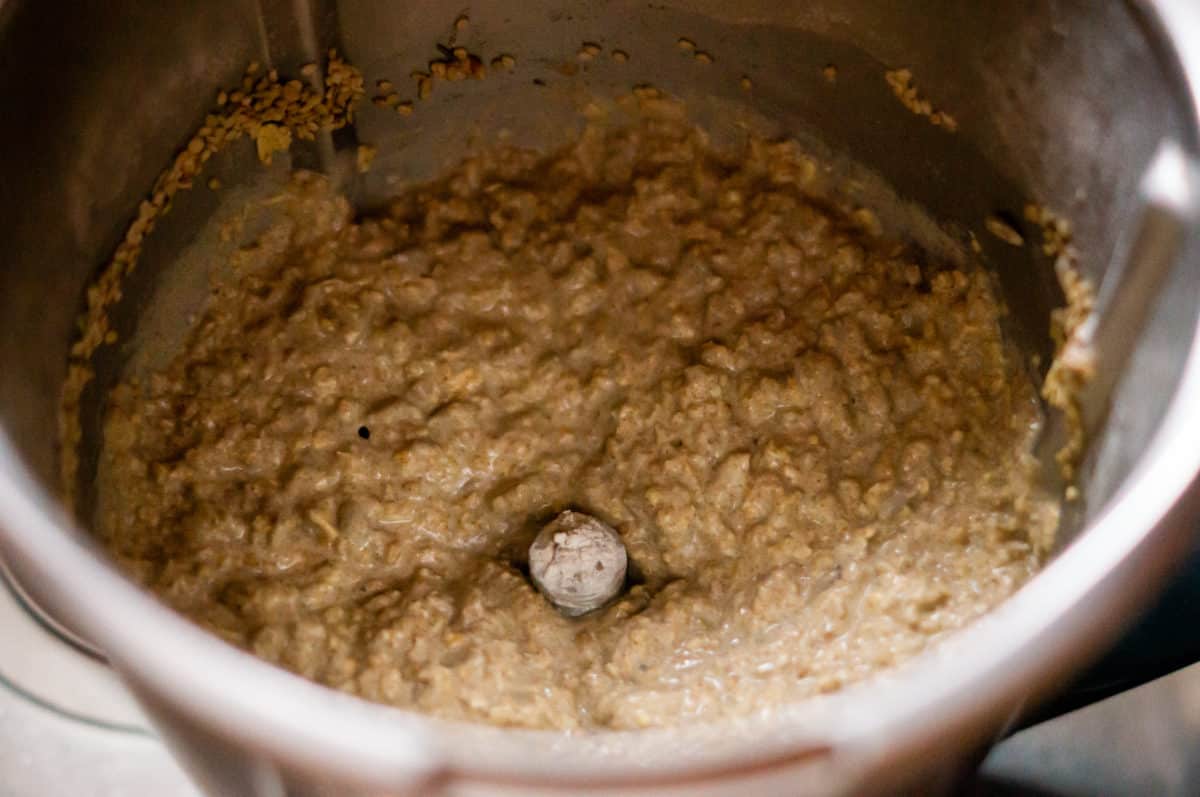
Spreading thinly without tearing
Spread the dough over two baking-paper-lined trays using a dough scraper or the back of a tablespoon. As thin as possible, 2 to 3 millimetres is ideal. Thicker and the crispbread turns chewy instead of crispy. Thinner and the dough tears when spreading.
We start in the centre of each tray and work our way outwards. If the dough sticks, dip the scraper briefly in cold water.
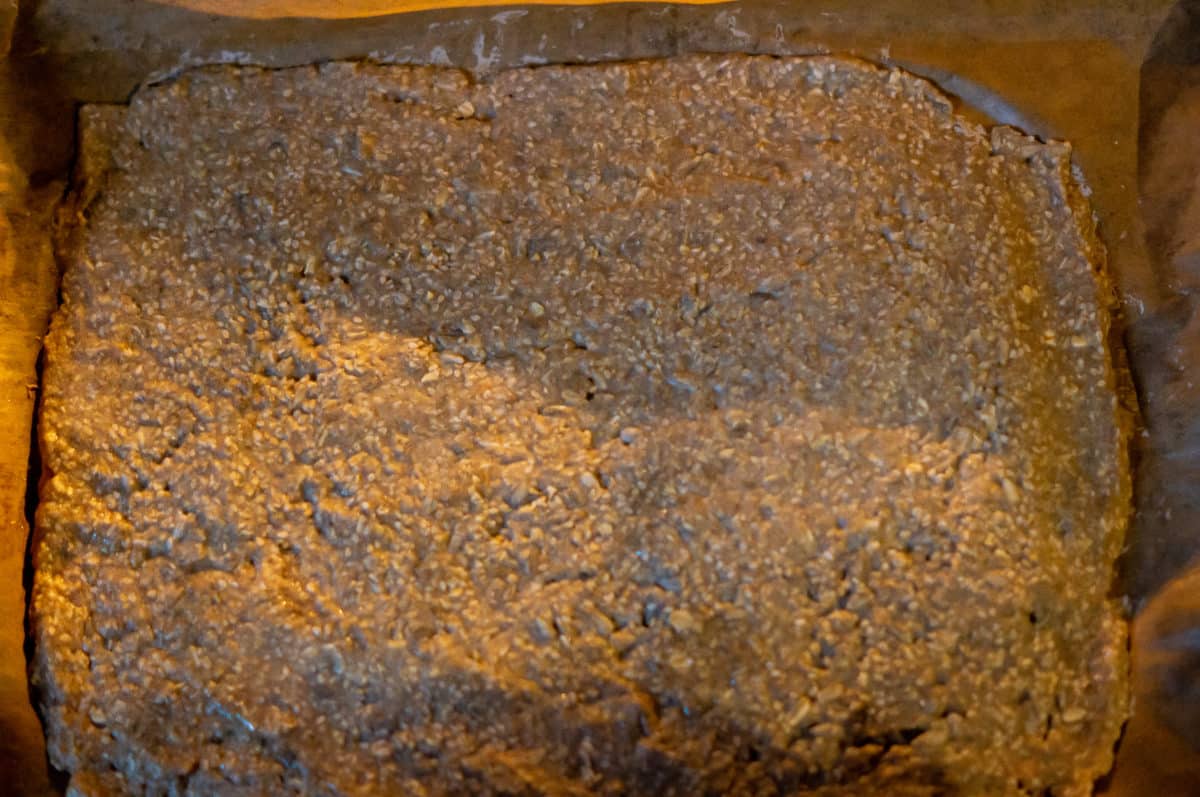
Why we cut after 15 minutes
After 15 minutes at 160°C fan, the dough is set but not yet hard. At this point, cut the flat into rectangles using a pizza wheel or a sharp knife. The size does not matter much. We usually cut pieces about 8 x 4 cm.
If you skip the cut and bake it straight through, the edges will be dark and the middle still soft. Cutting after 15 minutes creates clean break lines, and each piece bakes through evenly.
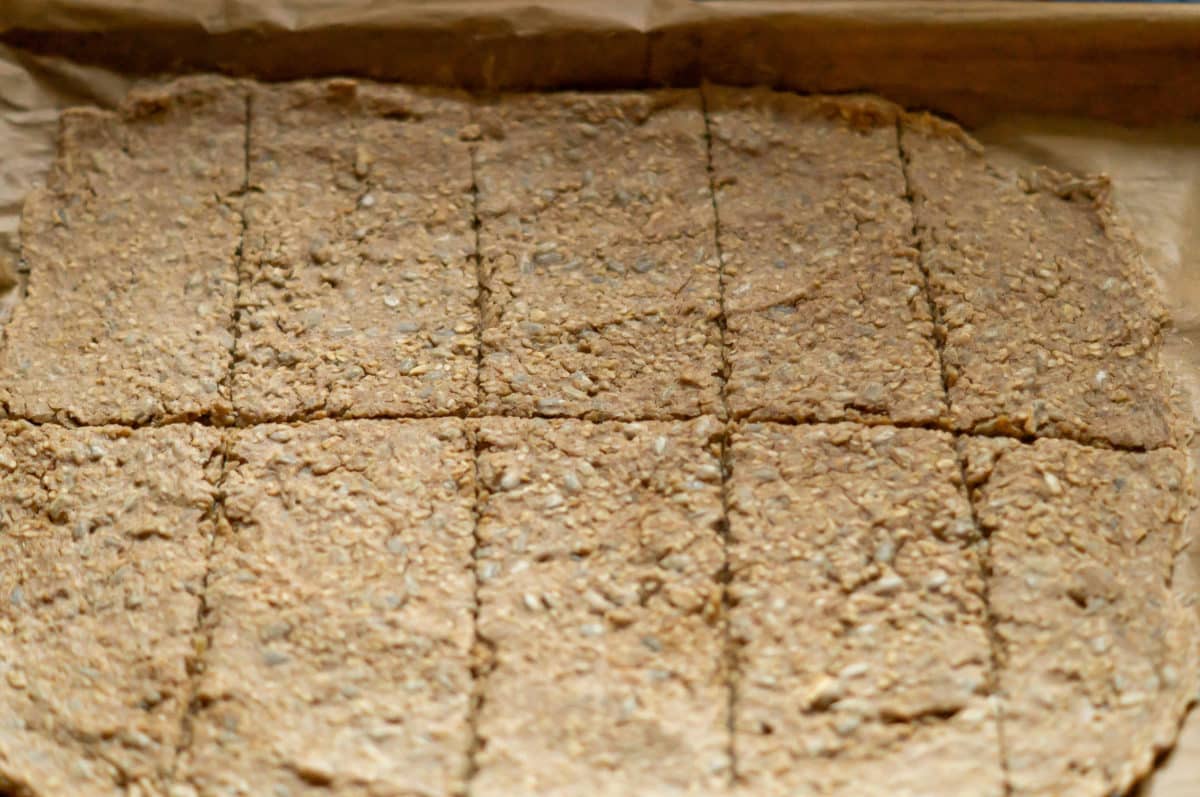
A further 35 minutes until crispy
After cutting, the trays go back into the oven for another 35 minutes. During this phase the crispbread loses the remaining moisture and turns crispy. The surface may go golden brown, but not dark brown. If you are unsure, check after 30 minutes.
Straight out of the oven the crispbread is still soft. It turns crispy as it cools. We leave it on the tray for 10 minutes, then break it apart along the cut lines.
In an airtight tin
Crispbread draws moisture from the air and goes soft quickly. We store it in an airtight tin or a sealed bread bag. That way it stays crispy for up to 3 weeks.
If the crispbread has gone soft anyway, bake it again at 150°C for 5 minutes. It will be crispy again.
Variations with seeds and spices
The basic recipe is open to variations. We have swapped the sunflower seeds for pumpkin seeds (same quantity), replaced the sesame with linseeds (makes the crispbread even crispier), or swapped the rosemary for thyme or oregano.
For a spicier version, add 1 tsp caraway seeds or 1 tsp fennel seeds. For a more savoury result, scatter coarse sea salt over the dough after spreading.
The water stays at 360 g regardless of which seeds you use. Only if you use linseeds, you may need 10 g more water, as linseeds absorb more liquid.
Why homemade crispbread is better
Shop-bought crispbread usually contains palm oil, preservatives, and too much salt. Our crispbread contains only rye flour, rolled oats, seeds, olive oil, salt, and rosemary. No additives, no E numbers.
And: you control the seasoning yourself. Want more salt, add more. Want less, use less. With shop-bought crispbread you do not have that control.
Other homemade spreads that go well with crispbread: Butter with the Thermomix®, cream cheese with the Thermomix®, or hummus.
What other recipes do differently
Goes well with: cream cheese, salmon, and hummus.
Also worth a look: Spelt wholegrain sticks with the Thermomix®.
Many Thermomix® crispbread recipes rely on pure seeds without flour, or swear by spelt wholegrain with rolled oats. We deliberately use a mix of flour and seeds (sunflower, sesame, linseed, pumpkin) because the slices stay sturdy and do not crumble when broken. Others bake at 170°C fan for 50 to 60 minutes. We stay at 160°C fan for the full two-stage bake, because the seeds retain their flavour that way and do not turn bitter. If you like, add caraway or rosemary and bake a version with extra pumpkin seeds. Spreading thinly on baking paper is essential in all versions, otherwise the crispbread turns chewy instead of crispy.