Spaghetti aglio e olio only works when the olive oil gently sweats the garlic rather than frying it. We therefore use 6 minutes at 100°C in reverse direction, which is the threshold at which the essential oils are released from the garlic without turning bitter.
The recipe comes from southern Italy and has just 4 core ingredients: garlic, olive oil, chilli, spaghetti. Even so, it can easily go wrong because the balance between aromatic and burnt needs to be hit precisely.
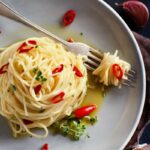
Spaghetti Aglio Olio e Peperoncino, Thermomix®
Ingredients 0 / 9 ✓
- 4 garlic cloves
- 1 bunch flat-leaf parsley
- 2 dried chillies small
- 70 g extra virgin olive oil
- 1000 g water
- 1 tsp salt
- 500 g spaghetti
- 30 g extra virgin olive oil
- black pepper freshly ground
Instructions 0 / 3
-
1
Cook the garlic.
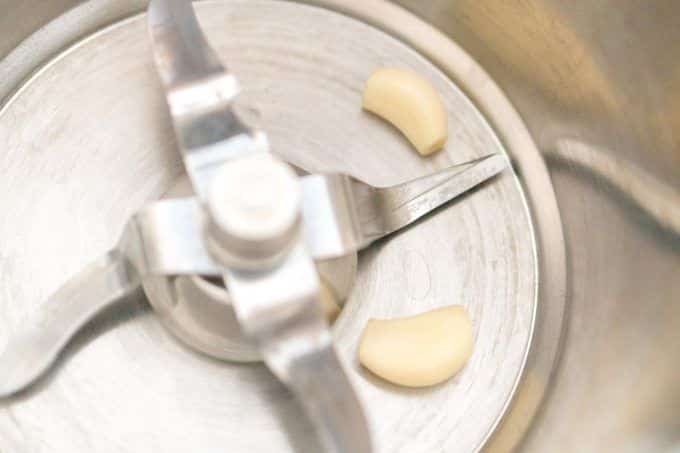
Peel the garlic and place in the mixing bowl. Wash the parsley, shake dry and add the leaves along with the chillies to the mixing bowl. Chop for 5 sec / speed 7. Push down with the spatula. Add 80 g olive oil and sweat for 6 min / 100°C / reverse direction / speed 1.
-
2
Cook the spaghetti.
Add the water and salt to the mixing bowl. Bring to the boil for 4 min / 100°C / speed 1 with the measuring cup in place. Set the cooking time stated on the packet plus 3 min / 100°C / reverse direction / gentle stir setting and feed the spaghetti through the lid opening into the mixing bowl. Push them down gradually with the spatula.
-
3
Serve.
Stir the spaghetti through with the spatula, drain and divide among deep bowls. Drizzle with the remaining olive oil, season with pepper and serve.
Tip: No spaghetti in the cupboard? Feel free to make this recipe with fusilli instead!
Video
Nutrition per serving
Why 100°C and not higher or lower?
100°C is not a compromise; it is the physical threshold for water in reverse direction at speed 1. Reverse direction prevents the chopped garlic from being thrown against the blades and shredding. The olive oil forms a protective coating around the garlic pieces. At lower temperatures the essential oils do not release from the garlic. At higher temperatures (possible on the TM5 or TM6 but not necessary) the fine edges of the garlic pieces burn and the oil turns bitter.
The chilli is chopped together with the parsley and garlic at speed 7. This distributes the heat evenly through the oil. Dried chilli is hotter than fresh because the capsaicin is more concentrated. If you prefer a milder result, use only 1 chilli or remove the seeds before blending.
Cooking the spaghetti properly
We cook the spaghetti directly in the mixing bowl with 1 litre of water on the gentle stir setting. The packet time plus 3 minutes is needed because the Thermomix® uses less water than a large pot and the pasta sits more densely. The spaghetti are fed through the lid opening gradually while the water is boiling. Reverse direction prevents the pasta from sticking together or wrapping around the blades.
The salt goes into the water after the oil step, not before. Salt added to the olive oil would not dissolve and would sink to the bottom.
Common mistake: adding the oil too late
Many people pour raw garlic oil over the pasta after draining. This does not work because raw garlic is aggressively sharp and the oil does not emulsify. The result is oily puddles on the plate and pungent garlic pieces with no real aroma.
Our solution: Sweating at 100°C for 6 minutes makes the garlic mild and slightly sweet. The parsley adds fresh notes that balance the fat. The extra olive oil added at the end (the 30 g) is raw and brings back the fruity notes of the oil that are lost during heating.
Which spaghetti and which oil?
We use spaghetti with a cooking time of 9 to 11 minutes. Very thin spaghettini (6 to 7 minutes) go too soft in the Thermomix®. Thick spaghettoni (13 to 14 minutes) need more water than the mixing bowl can hold. A standard 500 g pack serves 4 as a main course.
The olive oil should be extra virgin, not refined. Refined oil has no flavour of its own and makes the dish flat. A mild oil from Liguria or Apulia works better than a sharp Greek oil that competes with the chilli.
Fusilli as an alternative
Fusilli or penne work with the same settings. The cooking time follows the packet instruction plus 3 minutes. Short pasta distributes the garlic and oil mixture better than long spaghetti because there is more surface area. The flavour stays the same; the texture becomes slightly more compact.
More pasta recipes
If you enjoy this recipe, try our Thermomix® Carbonara, Spaghetti Bolognese or our Quick Summer Spaghetti with fresh tomatoes.
What other recipes do differently
Serve with: Ciabatta and Parmesan.
Also worth trying: Tortellini in cream sauce with the Thermomix®.
Many Thermomix® recipes use 4 garlic cloves for 350 to 500 g of pasta. That is a solid base with room to go higher. We stick with extra virgin olive oil from Liguria or Apulia, because a too-sharp oil overshadows the gentle heat of the chilli. Instead of chilli flakes, we use whole dried chillies, as whole pods release capsaicin more evenly. Parsley goes in at the end to keep the freshness. Parmesan is not traditional in a purist version, but works well for anyone who wants a creamier result. A slice of lemon or a finely chopped anchovy lifts the dish further without losing the classic character.