Candied almond cake lives or dies by one small detail: the caramelised almonds must not go into the mixing bowl while the cream or batter is still running. We add them right at the end, four seconds at speed 5, then spread them over the whipped cream with the spatula. Chop them too early or too long and you end up with brown almond powder and not a single crunchy shard left in the slice.
We have been baking this cake regularly for years, mostly for the coffee table in autumn when the first candied almonds appear at the markets. By now we know exactly where things go wrong and where the recipe looks after itself. Three layers, one baking tray and a clear order of steps. Nothing more is needed.
Candied Almond Cake with the Thermomix®
Ingredients 0 / 16 ✓
- 4 eggs
- 220 g sugar
- 250 g rapeseed oil
- 300 g flour
- 1 sachet baking powder
- 3 tbsp unsweetened cocoa powder
- 100 g sparkling mineral water
- 400 g double cream
- 2 sachets cream stabiliser
- 2 egg yolks
- 1 vanilla pod
- 300 g milk
- 40 g cornflour
- 60 g sugar
- 400 g soured cream
- 200 g candied almonds shop-bought or homemade,
Instructions 0 / 8
-
1
Preheat oven.
Preheat the oven to 175°C top/bottom heat (160°C fan). Line a baking tray with baking paper.
-
2
Whip batter until fluffy.
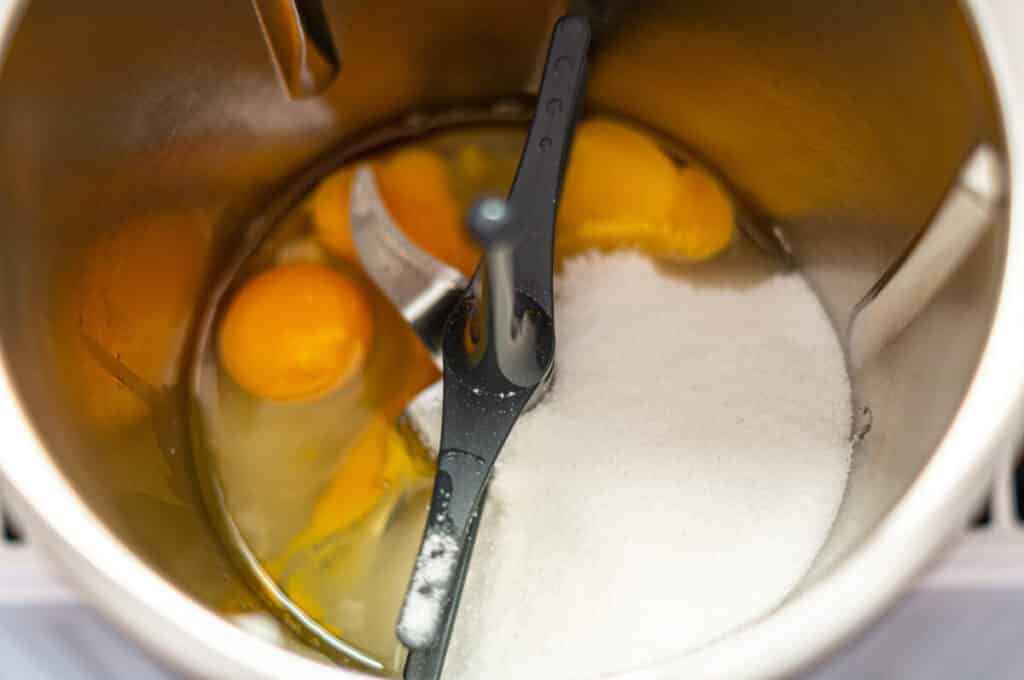
Insert the butterfly whisk into the mixing bowl, add the eggs and sugar and whip for 5 min / speed 4 until light and fluffy.
-
3
Mix batter.
Remove the butterfly whisk, add the oil, flour, baking powder, cocoa and sparkling water and mix for 10 sec / speed 4.
-
4
Bake base.
Spread the batter onto the baking tray and bake on the middle shelf for approx. 20 minutes. Leave the base to cool completely, then rinse the mixing bowl.
-
5
Whip cream.
Meanwhile, insert the butterfly whisk into the mixing bowl, add the cream and whip on speed 4 while watching closely, letting the cream stabiliser trickle in through the mixing bowl lid opening. Transfer the whipped cream to a bowl and place in the fridge to keep cold.
-
6
Cook vanilla custard.
Separate the eggs and place the egg yolks in the mixing bowl. Slice the vanilla pod lengthways, scrape out the seeds with a knife and add them to the mixing bowl. Add the milk, cornflour and sugar to the mixing bowl, mix for 5 sec / reverse direction / speed 4, then cook for 10 min / 95°C / reverse direction / speed 3 and leave to cool.
-
7
Add soured cream and fold in whipped cream.
Add the soured cream to the mixing bowl and mix for 6 sec / speed 4. Carefully fold in the whipped cream using the spatula, then spread the cream over the cake base. Rinse the mixing bowl.
-
8
Scatter almonds.
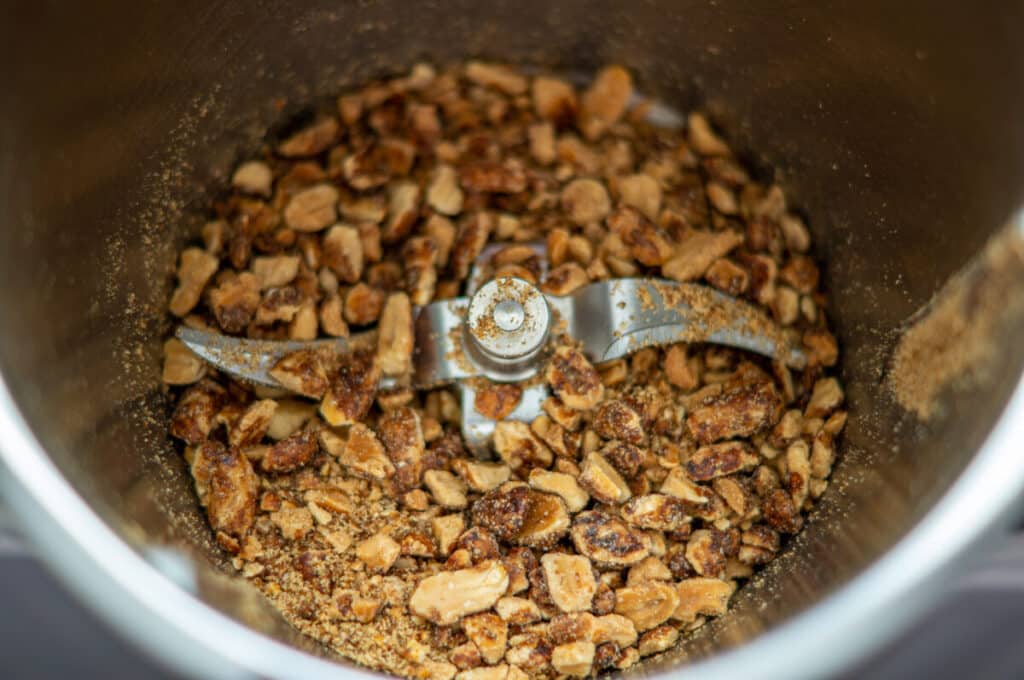
Place the candied almonds in the mixing bowl, chop for 4 sec / speed 5 and scatter over the cream.
Tip: If you want to bake the cake the day before, keep it well chilled in the fridge. Scatter the almonds over the top shortly before serving so they stay crisp.
Nutrition per serving
Why the almonds go into the mixing bowl last
The 200 g of candied almonds run in the TM6 or TM5 for just 4 sec at speed 5. That is deliberately brief. We want rough shards with a caramel coating, not a smooth paste. Anyone who goes to speed 8 or 10 will have almond flour within three seconds. And that powder dissolves into the whipped cream when you spread it on top, instead of cracking under your fork.
The second reason for adding them last is mixing bowl hygiene. If we chopped the almonds before the vanilla custard, caramel would stick to the stainless steel. During the 95°C custard step that follows, it would melt further and give the custard an murky caramel tinge. Base first, then cream, then custard, then almonds. This order keeps the mixing bowl clean between each stage.
The base made with sparkling water instead of milk
The 100 g of sparkling mineral water in the batter is not a cost-cutting measure. The carbonation makes the chocolate base lighter than any milk or yoghurt could manage. During baking the gas escapes and leaves fine air pockets behind. The result is a base that can carry the heavy cream and soured cream filling without collapsing under the weight.
The mixing bowl steps are quick: insert butterfly whisk, add four eggs and 220 g sugar, then whip for 5 min / speed 4 until fluffy. Remove the whisk, otherwise it will break up the finished batter. Add 250 g rapeseed oil, 300 g flour, one sachet of baking powder, three tablespoons of cocoa and the sparkling water, then mix for just 10 sec / speed 4. No longer. Once the flour is combined, stop, otherwise the base becomes tough.
Spread onto the baking tray, smooth out and bake for 20 minutes at 175°C top/bottom heat. Do the skewer test in the centre: it should come out slightly moist, not dry. An over-baked base will absorb the cream later and turn soggy.
Setting the vanilla custard properly
The cream filling comes together in two stages. First the stiff whipped cream, then the warm vanilla custard. The two are combined once the custard has cooled completely. Rush this step and fold warm custard into cold whipped cream and you end up with a runny soup.
Add the cream to the mixing bowl, speed 4 while watching closely, letting two sachets of cream stabiliser trickle in. We keep the lid on but watch through the viewing window, because 400 g of cream can be stiff in 60 to 90 seconds depending on its fat content. One second too long and the cream turns buttery. Take it out of the mixing bowl straight away, transfer to a bowl and put in the fridge.
Wipe out the mixing bowl briefly, then add two egg yolks, the seeds of one vanilla pod, 300 g milk, 40 g cornflour and 60 g sugar. Mix for 5 sec / reverse direction / speed 4 first so the cornflour dissolves, then cook for 10 min / 95°C / reverse direction / speed 3. Reverse direction is essential here: without it the starch breaks down and the custard will not set. After the 10 minutes, pour into a bowl, press cling film directly onto the surface and leave to cool until completely cold. Lukewarm is not enough.
Combining the soured cream and whipped cream
Once the vanilla custard is cold, add 400 g soured cream. 6 sec / speed 4 is enough. Then set the mixing bowl aside and work with the spatula. Fold the cold whipped cream into the soured cream and vanilla custard mixture a spoonful at a time. We fold from the bottom up, not stir. The volume of the whipped cream needs to be preserved, otherwise the cream becomes dense and heavy.
Spread the finished cream over the cooled chocolate base and smooth it out. Important: the base must be genuinely cold. Spread over a warm base and the cream will run to the edges and the soured cream layer will start to weep.
Common mistakes
Almonds turn to powder
This happens when you go to speed 8 or higher. Speed 5 is enough, and four seconds are all you need. If you are unsure, start with two seconds, check, and add two more. Our fix: A few slightly coarser pieces are far better than fine almond powder. The rough shards are what makes this cake.
Cream turns buttery
Speed 4 is the right setting for whipping cream. At speed 5 or 6 it can turn in 30 seconds because the fat globules stick together too quickly. Our fix: Stay at speed 4 and watch through the viewing window. As soon as the cream holds tracks from the butterfly whisk, stop immediately.
Cream is too runny
The main cause: the vanilla custard was still warm when mixed with the soured cream. Cornflour only sets properly once cooled. Our fix: Put the custard in the fridge for at least 30 minutes before adding the soured cream. We often prepare it an hour before we start on the base.
With pecans, walnuts or toasted hazelnuts
With homemade candied almonds: If you have the time, make the almonds yourself. Our recipe for candied almonds with the Thermomix® takes 25 minutes and tastes fresher. A freshly made caramel coating is thinner and shatters more easily at speed 5.
With cinnamon in the base: One teaspoon of cinnamon in the chocolate base pairs beautifully with candied almonds, as the cinnamon brings out the caramel flavour of the nuts. We do this as standard in autumn and winter.
As a layered dessert in glasses: Cut the base into cubes and layer with cream and almond shards in individual glasses. Works well for buffets because everyone has their own portion and nothing looks cut into.
Coffee, espresso or a glass of late-harvest wine
Anyone who wants to serve an eggnog alongside the cake can try our eggnog with the Thermomix®. The vanilla in the liqueur echoes the vanilla in the cream filling. Also very good: a slice of eggnog traybake on the same coffee table when guests arrive and one cake is not quite enough.
3 days in the fridge, frozen up to 1 month
The cake keeps covered in the fridge for three to four days. Note: the candied almonds soften after the second day as they draw moisture from the cream. If you are making the cake ahead of time, store the almonds separately and scatter them over the cream only about an hour before serving. That way they stay crisp.
Freezing does not work. The cream in the filling breaks down on thawing, the cream becomes watery and the base turns soggy. If there are leftovers, eat them within four days or invite someone over.
What other recipes do differently
Goes well with: Vanilla ice cream and coffee.
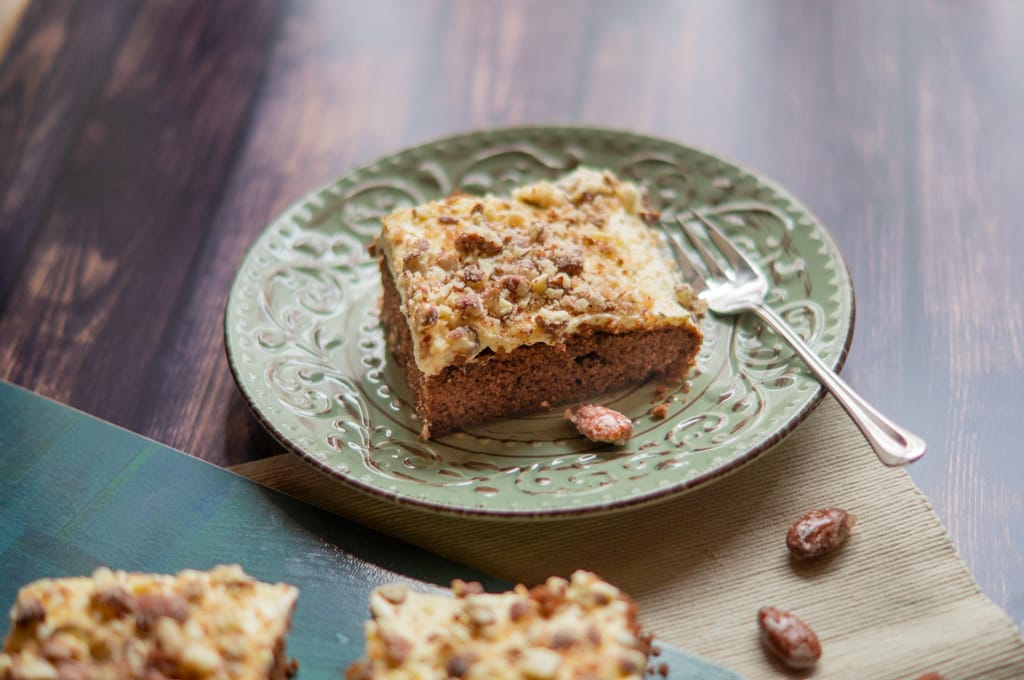
Many Thermomix® recipes for candied almond cake simply scatter the almonds as a topping over a mascarpone and cream filling, with the base being a plain butter and egg sponge without cocoa. Our chocolate base made with sparkling water is noticeably lighter and carries the dense soured cream and vanilla custard filling without collapsing. The order of steps in the mixing bowl is also clearer: base, cream, vanilla custard, then almonds last with just 4 seconds at speed 5. Chop the almonds beforehand and caramel sticks to the stainless steel, tinting the custard brown. Homemade candied almonds following our recipe shatter into finer shards than shop-bought bags from the market.