We have been baking Magenbrot with the Thermomix® every year in the run-up to Christmas. The key detail: the glaze only sets properly once it has dried, forming the characteristic shiny crust that makes market Magenbrot so recognisable.
We have refined the recipe over many batches. By now we know exactly: the order of pulverising matters, the drying time on the rack is not optional, and the glaze needs completely cooled pieces.
Magenbrot with the Thermomix®

Ingredients 0 / 14 ✓
- 200 g sugar
- 40 g raw cane sugar
- 1/2 cinnamon stick
- 350 g wheat flour type 1050
- 1/2 sachet baking powder
- 15 g cocoa powder (unsweetened)
- 3 tsp gingerbread spice mix
- 60 g honey
- 40 g double cream
- 80 g milk 3.5 %
- 130 g dark chocolate couverture
- 80 g water
- 30 g butter
- 1 pinch nutmeg
Instructions 0 / 9
-
1
Preheat the oven.
Preheat the oven to 180 °C (fan 160 °C, gas mark 3).
-
2
Pulverise the ingredients.
Add sugar to the mixing bowl, pulverise for 10 sec / speed 10 and set aside. Add raw cane sugar and cinnamon stick in pieces to the mixing bowl and pulverise for 20 sec / speed 10.
-
3
Knead the dough.
Add flour, baking powder, cocoa, gingerbread spice mix, honey, double cream and milk and knead for 5 minutes / kneading mode to form a dough.
-
4
Roll out the dough.
Briefly knead the dough by hand on a lightly floured surface, then roll it out to a rectangle approximately 1.5 cm thick and place on a baking tray lined with baking paper.
-
5
Bake.
Bake on the middle shelf of the oven for approximately 20 minutes. Leave to cool.
-
6
Cut into pieces.
Cut the bake into pieces of 3 x 4 cm and place in a bowl.
-
7
Melt the couverture.
Break couverture into pieces, add to the mixing bowl and chop for 5 sec / speed 6. Push down with the spatula and melt for 5 minutes / 50 °C / speed 2.
-
8
Mix the icing.
Add water, butter, nutmeg and icing sugar and mix for 10 sec / speed 4.
-
9
Glaze the Magenbrot.
Pour the mixture over the Magenbrot and mix well. Lay the Magenbrot on a wire rack to dry for approximately 12 hours.
Tip: If you like, you can add the seeds of a vanilla pod or vanilla paste to the dough.
Video
Nutrition per serving
Why raw cane sugar and cinnamon stick are pulverised together
The plain sugar is pulverised on its own and set aside. Raw cane sugar and cinnamon stick go into the Thermomix® together and are chopped for 20 seconds at speed 10. There is a reason for this: the cinnamon stick releases essential oils as it is broken down, which immediately bind with the raw cane sugar. This distributes the cinnamon flavour more evenly through the dough than simply adding ready-ground cinnamon would.
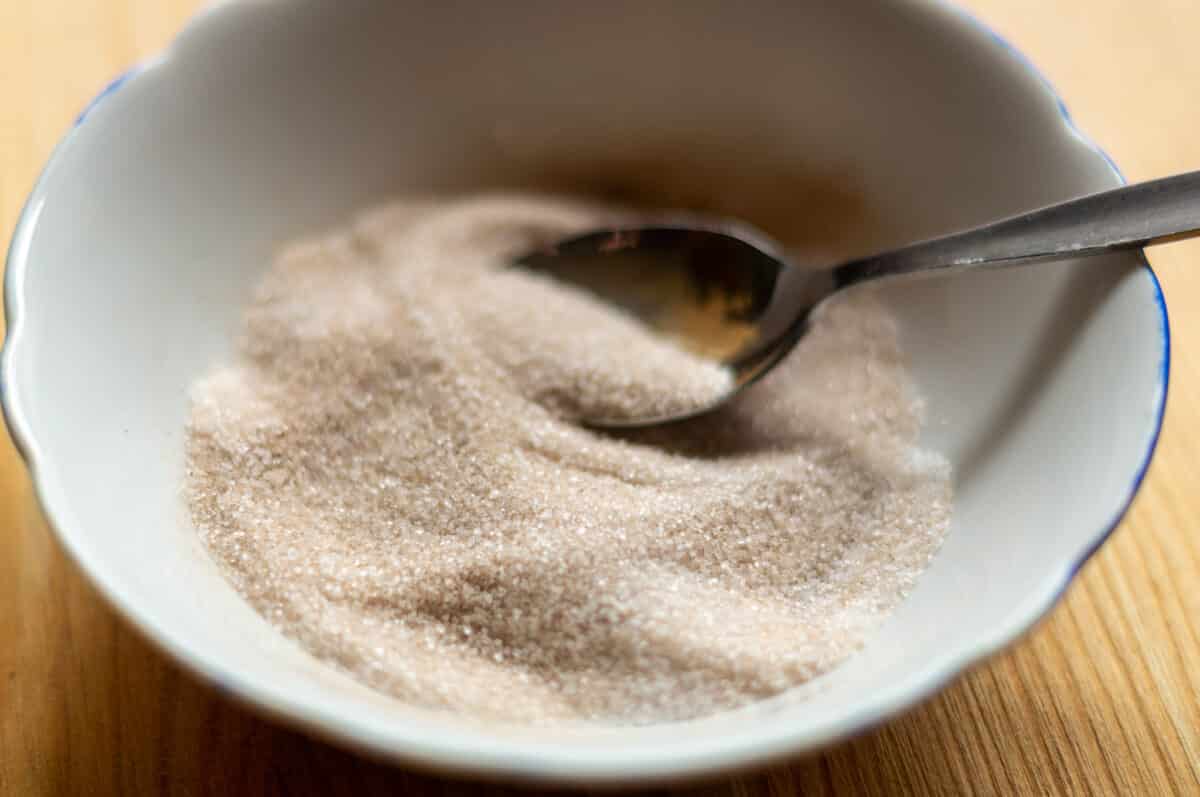
The plain sugar stays separate because it only adds sweetness and carries no aromatic function. This separation saves a step and gives the dough more structure.
5 minutes on kneading mode is enough for the dough
Once the flour, baking powder, cocoa, gingerbread spice mix, honey, double cream and milk are added, the Thermomix® kneads the dough for 5 minutes on kneading mode. That is sufficient, because Magenbrot should not be light and airy. The dough needs to be compact and dense so the pieces do not crumble after cutting.
After the machine finishes, we briefly knead the dough by hand. This smooths the surface and makes rolling it out easier. The 1.5 cm thickness matters: thinner and the Magenbrot dries out too much, thicker and the centre stays too soft after baking.
20 minutes baking time at 180 °C
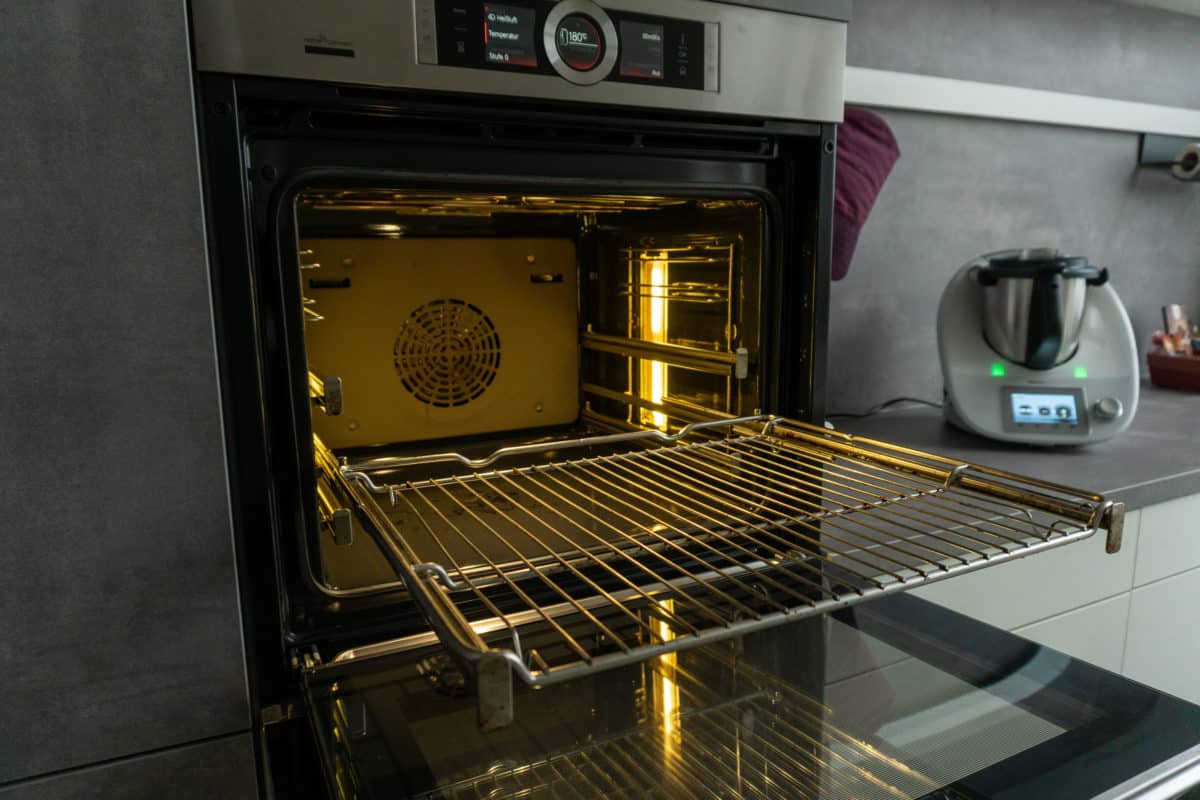
The oven must be preheated to 180 °C (fan 160 °C). The Magenbrot bakes on the middle shelf for 20 minutes. During this time a light crust forms, the surface turns matt and the dough is cooked through. No longer, or the bake will be too hard.
After baking, we let the bake cool completely before cutting. Warm Magenbrot breaks when cut, cold gives clean edges. The 3 x 4 cm pieces are the classic market size.
The glaze goes on cold pieces only
This is the critical point with Magenbrot: the couverture is melted at 50 °C and combined with water, butter, nutmeg and icing sugar to make the glaze. This glaze is liquid and warm. If you pour it over warm or even slightly lukewarm pieces, the couverture melts straight through, the icing turns soggy and the shiny crust does not form.
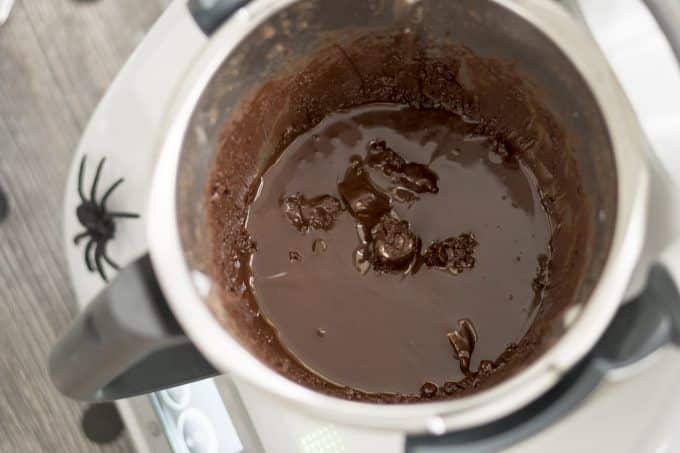
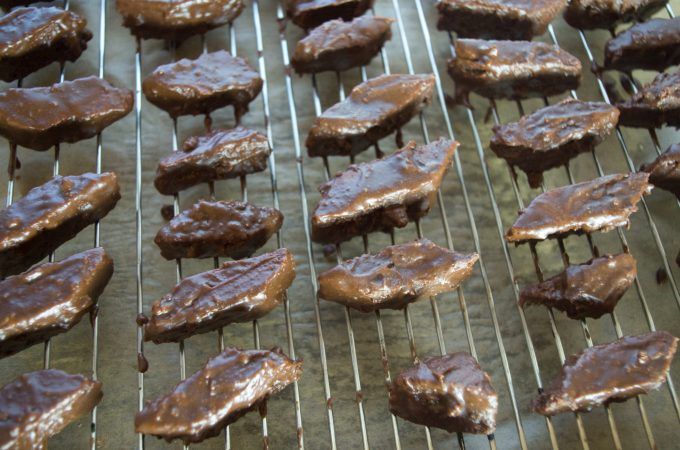
We pour the glaze into a bowl over the cold Magenbrot pieces and mix everything well until every piece is coated all over. We then lay the glazed pieces individually on a wire rack and leave them to dry for 12 hours. During this time the glaze sets, hardens and forms the characteristic shiny surface.
Type 1050 instead of 405
We use wheat flour type 1050 instead of the usual type 405. This makes the Magenbrot slightly darker and gives it more bite. Type 1050 contains more minerals and pairs better with the spiced gingerbread mix. If you only have type 405, the recipe still works, but the result will be lighter and softer.
Gingerbread spice mix in the recipe
3 teaspoons of gingerbread spice mix are the basis for the typical flavour. You can use a ready-made gingerbread spice mix from the supermarket or make your own gingerbread spice mix with the Thermomix®. Home-made tastes more intense because the spices are fresher.
If you like, you can also add the seeds of a vanilla pod or vanilla paste to the dough. This lifts the aroma another level, but it is not essential.
In airtight tins
Once fully dry, we store the Magenbrot in airtight tins, between layers of greaseproof paper. This keeps the glaze dry and stops the pieces sticking together. Stored in a cool, dry place the Magenbrot keeps for 3 weeks. The texture actually improves over time as the spices mellow and deepen.
What other recipes do differently
Goes well with: mulled wine, coffee and baked apple cake.
Many Magenbrot recipes use plain sugar and water instead of honey. That sacrifices flavour. Our honey makes the dough more moist and adds a delicate caramel note that plain sugar cannot provide. Other versions use a plain water and icing sugar glaze with cocoa. We use real couverture with butter and nutmeg because the glaze shines rather than going dull. For the flour, most recipes reach for type 405. Our type 1050 gives more bite and suits the spicing better. And while many recipes suggest 2 to 4 hours of drying time, we give the glaze a full 12 hours on the rack. Only then does the crust set properly.
Looking for more Christmas bakes? Browse our Thermomix® recipe collection.