These woodruff ice lollies made with the Thermomix® are blended in 4 minutes and make 7 pieces. In short: pulverise 2 tsp vanilla sugar for 10 seconds at speed 10, then add 500 g water and 130 g woodruff syrup and blend for 20 seconds at speed 10. Pour the mixture into ice lolly moulds and freeze for at least 4 hours. Anyone buying woodruff syrup should take a quick look at the label before using it.
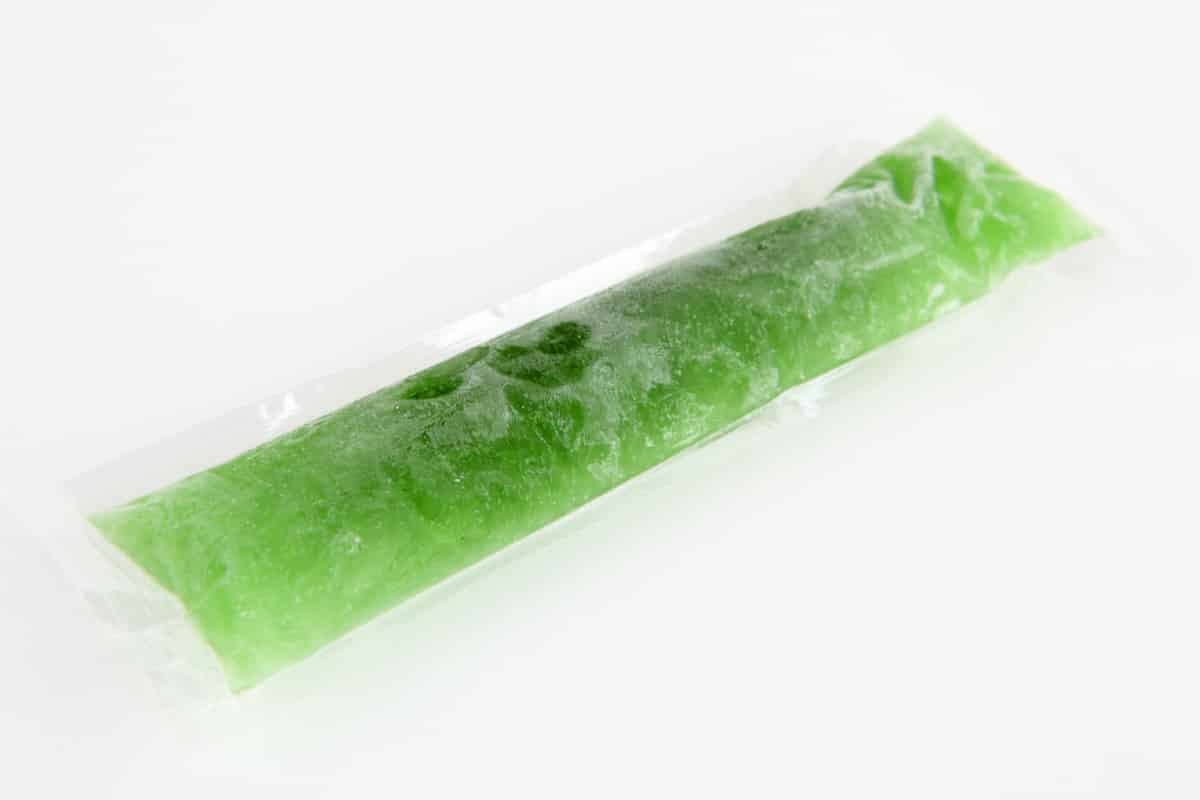
This is the most straightforward ice lolly we know. No egg yolks, no cream, no cooking. Three ingredients, one blend, straight into the moulds. That is exactly why it is the first frozen treat we make at the start of the season, and the one children ask for most often. What matters here is less the technique and more the choice of syrup and getting the portion size right.
Woodruff Ice Lollies with the Thermomix®
Ingredients 0 / 3 ✓
- 2 tsp vanilla sugar
- 500 g water
- 130 g woodruff syrup
Instructions 0 / 3
-
1
Pulverise the sugar.
Add the vanilla sugar to the mixing bowl and pulverise for 10 sec / speed 10.
-
2
Blend the ingredients.
Add the water and syrup and blend for 20 sec / speed 10.
-
3
Freeze.
Pour the mixture into ice lolly bags or ice lolly moulds, seal well and freeze.
Tip: Replace the water with cherry juice. Cherry and woodruff ice lollies are absolutely delicious!
Video
Nutrition per serving
Woodruff syrup and coumarin: a clear-headed look
Woodruff contains coumarin, a natural flavouring compound that can put strain on the liver in very large amounts over a long period of time. The German Federal Institute for Risk Assessment (BfR) and the EFSA set the tolerable daily intake at 0.1 mg coumarin per kilogram of body weight. For a 20 kg child that works out to around 2 mg coumarin per day, an amount that is considered safe for lifelong consumption. A single ice lolly does not come close to that figure, as long as you stick to one lolly a day and are not also drinking litres of May wine.
Our recipe uses 130 g of syrup across 7 pieces, which is deliberately calculated so that each portion contains a moderate amount of syrup. If you are making these primarily for young children, you can play it safe by using less syrup per piece, for example 100 g with the same amount of water. The lollies will be slightly lighter in flavour but still clearly taste of woodruff.
We deliberately use woodruff syrup rather than fresh woodruff. Fresh woodruff only develops its full aroma after wilting for at least a day, and it is precisely during that process that coumarin forms, often in amounts that are hard to calculate. The rule of thumb for the fresh plant is a maximum of 3 g per litre of liquid. An industrially produced syrup with a declared flavouring removes that guesswork entirely. For an ice lolly that needs to come together quickly, the syrup is the safer and simpler choice.
Why the vanilla sugar is pulverised first
The first step of pulverising 2 tsp vanilla sugar for 10 seconds at speed 10 looks unnecessary, but it makes a measurable difference. Fine icing sugar dissolves evenly in the cold mixture and distributes the vanilla flavour fully. If you skip the sugar and blend directly with water and syrup, you risk undissolved sugar crystals. Once frozen, you will notice individual sweet spots rather than a rounded flavour throughout. Ten seconds fixes this completely. Making your own vanilla sugar in the Thermomix® is doubly worthwhile here because it tastes more intense than shop-bought.
Next, add 500 g water and 130 g syrup, then blend for 20 seconds at speed 10. No further blending is needed as there is nothing to chop. We pour the finished mixture directly into ice lolly bags or silicone ice lolly moulds, seal well and freeze for at least 4 hours. Silicone moulds release more easily than rigid plastic ones, which saves a lot of frustration later when unmoulding.
Where woodruff ice lollies can go wrong
The lolly only tastes sweet, barely of woodruff
When frozen, our tongue perceives sweetness and aroma less strongly than at room temperature. A mixture that tastes perfect as a liquid can seem bland once frozen. Our fix: season the liquid mixture deliberately a touch more intensely before pouring than you would drink it neat. Add 10 g more syrup rather than too little. If you already know you want a bold flavour, start with 140 g.
The lolly will not come out of the mould
Plain water-based lollies stick more firmly in the mould than creamy ice cream because there is no fat acting as a release layer. Our fix: hold the sealed mould under lukewarm running water for 10 seconds and the lolly will come out cleanly. With ice lolly bags this is not an issue, as the bag is simply cut open or squeezed.
The lolly is rock hard and cracks when you bite into it
Without fat and with a high water content, the result is a dense ice block that is very hard straight from the freezer. Our fix: leave it to thaw for 5 to 10 minutes before serving. If you prefer a consistently softer texture, replace 50 g of the water with 50 g of apple or grape juice. The fructose lowers the freezing point slightly and keeps the lolly more supple.
Cherry juice, lemon and more: how to vary the recipe
With cherry juice instead of water: The recipe card includes exactly this tip, and it genuinely lifts the lolly. Woodruff and cherry work well together because the acidity of the cherry juice balances the sweet syrup. We replace all of the water with cherry juice. If you would like a dedicated version, we have a separate cherry ice lolly recipe made with the Thermomix® that uses real cherry juice and a slightly different base.
With a squeeze of lemon: If you prefer something fresher and less perfumed, add 1 tbsp lemon juice to the woodruff base. This sharpens the flavour without overpowering the woodruff. For a full citrus lolly, we have a lemon ice lolly made with the Thermomix® as its own separate recipe.
Two-colour ombre look: Prepare two mixtures, one with woodruff and one with cherry or raspberry syrup. Freeze the first layer halfway, then pour the second on top. The result is the green and red lolly you see at the ice cream parlour. Stainless steel ice lolly moulds work well for this look because they keep the layers neat and release cleanly.
A little less sweet: Use 100 g instead of 130 g of syrup plus 1 tbsp lemon juice. This is the version we make when the little ones want several lollies in a day, as it contains less sugar and less coumarin per piece. If you want to try different syrup flavours, elderflower and raspberry are worth exploring next.
What goes well with woodruff ice lollies
Woodruff ice lollies are a summer treat for outdoors, and they are best enjoyed alongside variety in the freezer. We usually make two or three flavours at the same time because the Thermomix® has the next batch ready in two minutes. Alongside the cherry and lemon variations above, other fruity ice lolly flavours make great companions. For a compact overview of all our methods and flavours, take a look at our ice cream section.
How long woodruff ice lollies keep in the freezer
Sealed properly in moulds or bags, these woodruff ice lollies keep for 3 months in the freezer without any loss of flavour. Because there is no fat and no egg, there is no risk of them going rancid. The only enemy is freezer burn from a poorly sealed mould. That is why we fill the moulds right to the top and press the air out of bags before sealing.
There is no need to thaw before eating: water-based lollies are meant to be eaten frozen. If any mixture is left over after filling, it freezes in a small cup as a spoonable granita. Once thawed, the lollies should not be refrozen, as a second freeze produces coarse ice crystals and the texture becomes grainy.
What sets our recipe apart from other woodruff ice lolly recipes
Many Thermomix® woodruff ice cream recipes use cream, egg yolks and sugar, resulting in a creamy ice cream that needs 30 minutes in an ice cream machine or 4 hours in the freezer with regular stirring. Other guides start with fresh woodruff, steeping it in water and sugar, while largely sidestepping the hard-to-predict coumarin content of the fresh plant. We deliberately take a different approach: real water-based lollies rather than creamy ice cream, ready-made syrup with a declared flavouring rather than fresh plant, no stirring during freezing, and a clear yield of 7 pieces so that the amount of syrup per lolly is easy to track. Optionally, cherry juice or lemon adds further depth. At 54 kcal per piece, it is also considerably lighter than any cream-based version.
Also worth a look: Heiße Liebe ice cream with the Thermomix®.