Bakery-style chocolate rolls live or die by one detail that almost every recipe skips over: the chocolate chips must not go into the mixing bowl. The moment we add them with the flour during kneading mode, the blade friction melts them into the dough, smearing it grey-brown. So we knead the dough for 5 minutes in kneading mode on its own, then fold the heat-stable chocolate chips in by hand in a bowl afterwards. That way every piece stays visible, the dough stays light, and the finished roll actually tastes of chocolate rather than cocoa bread.
We have been baking these rolls at the weekend for years, usually on Saturdays when the children have time for a proper breakfast and the dough can rest for 60 minutes. The dough is a classic sweet yeast dough: 500 g plain flour (Type 550), 230 g milk, 75 g brown sugar, 80 g butter and half a cube of fresh yeast. Brown sugar is not a minor detail here. It adds a gentle caramel note and makes the crumb a little darker, which pairs perfectly with the 100 g of heat-stable chocolate chips.
We deliberately avoid chocolate spread and chopped bar chocolate for these rolls. Chocolate spread runs out of the roll during baking and burns on the tray, while standard bar chocolate melts completely at 190°C and leaves nothing but dark hollow pockets in the dough. Heat-stable chocolate chips can take the heat, hold their shape, and are exactly what bakeries use for their chocolate rolls.
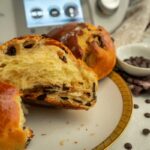
Chocolate Rolls with the Thermomix®
Ingredients 0 / 10 ✓
- 1/2 cube fresh yeast
- 75 g brown sugar
- 230 g milk
- 2 eggs
- 500 g plain flour (Type 550) plus a little extra for dusting
- 80 g butter
- 3 pinches salt
- 100 g heat-stable chocolate chips
- 20 g milk
- 1 egg
Instructions 0 / 9
-
1
Warm the yeast.
Add yeast, sugar and 230 g milk to the mixing bowl and heat for 3 minutes / 37°C / speed 2.
-
2
Add the eggs.
Add two eggs.
-
3
Knead the dough.
Add flour, butter in pieces, and salt. Knead for 5 minutes / kneading mode.
-
4
Fold in the chocolate.
Meanwhile, flour a large bowl. Turn the dough out into the bowl, add the chocolate chips and fold in by hand. Cover and leave to rise in a warm spot for 1 hour.
-
5
Prepare the baking trays.
Meanwhile, line 2 baking trays with baking paper.
-
6
Shape the rolls.
Divide the dough in half, then into quarters. Shape each portion into a round roll. Place seam-side down, evenly spaced, on the baking trays. Cover and leave to prove for 15 to 20 minutes.
-
7
Preheat the oven.
Meanwhile, preheat the oven to 190°C (top and bottom heat).
-
8
Mix the egg wash.
Whisk the egg yolk and milk together with a fork.
-
9
Bake the chocolate rolls.
Brush the chocolate rolls with the egg and milk mixture and bake one tray at a time for 20 to 23 minutes. The rolls should be golden brown. If they colour too quickly, cover them with a second sheet of baking paper for the last 10 minutes.
Only have one baking tray? No problem. Shape the rolls on a lightly floured surface and leave them to rise there, covered, before placing them on the tray for the second bake. You can skip the proving step just before baking in that case.
Nutrition per serving
Why this yeast dough turns out better with the Thermomix®
Yeast is activated at a precise 37°C. We add the yeast, brown sugar and 230 g milk to the mixing bowl and heat for 3 minutes at 37°C at speed 2. This temperature is the sweet spot at which yeast becomes active without dying off. On the hob you need a thermometer to hit 37°C; the Thermomix® holds it automatically.
500 g of flour kneaded into a smooth, elastic dough in 5 minutes and no effort at all. After the warming step, we add 2 eggs, 500 g plain flour (Type 550), 80 g butter in pieces and 3 pinches of salt, then knead for 5 minutes in kneading mode. By the end, the dough pulls cleanly away from the sides of the mixing bowl, which is the sign that the gluten has developed properly. Kneading the same quantity by hand takes around 12 minutes and a lot of elbow grease.
A clean dough because the chocolate goes in afterwards. The mixing bowl stays white at the base, the dough does not turn brown, and the chocolate chips stay whole. We flour a large bowl, tip the dough in, press it flat and scatter the 100 g of chocolate chips on top. We then fold the dough two or three times with our hands until the chips are evenly distributed. Cover and leave to rise in a warm spot for 60 minutes.
Four pitfalls that can ruin our chocolate rolls
1. Adding the chocolate chips during kneading
This is the classic mistake and the reason so many homemade chocolate rolls come out looking a muddy grey. The friction from the kneading blade generates enough heat to melt even heat-stable chips. Our fix: We always knead the dough without any chocolate, then fold the chips in by hand in a bowl afterwards, with no more than three folds.
2. Milk that is too hot for the yeast
If you warm the milk in the microwave first and then pour it into the mixing bowl, you can easily end up at 50 or 60°C. Yeast starts to die above 45°C. Our fix: Milk straight from the fridge into the mixing bowl, then run the 37°C programme. The Thermomix® keeps the temperature steady and the yeast gets to work.
3. Rolls that turn out dry
If the rolls spend more than 25 minutes in the oven, or if you use a fan setting above 200°C, they lose their softness. A sweet yeast dough has little water to spare and does not forgive being over-baked. Our fix: We bake at 190°C on top and bottom heat for 20 to 23 minutes, and cover the rolls with a second sheet of baking paper from minute 13 once the tops are browned. The egg yolk and milk glaze also adds shine and helps prevent the surface from drying out too quickly.
4. Rolls that split open at the seam
When shaping, many people only roll the pieces briefly, leaving the seam open, which causes the surface to split untidily during baking. Our fix: We divide the dough by halving, then quartering, then dividing into eighths. We roll each piece in a circular motion with the palm of our hand on the work surface until the seam draws together underneath. Place seam-side down on the baking tray and the top will split in a controlled way along the centre.
Four variations from our own kitchen
Raisin rolls. Simply swap the 100 g of chocolate chips for 50 g of raisins. There is no need to soak the raisins beforehand as the moist dough takes care of that. Do not go above 50 g or the dough will become too wet.
White chocolate rolls. We use white heat-stable chips instead of milk chocolate. The rolls turn out lighter in colour, and the flavour is milder and a little sweeter. We swap the brown sugar for white in that case, otherwise the caramel note clashes.
Double chocolate version. Replace 30 g of the flour with 30 g of cocoa powder and add an extra 20 g of milk to compensate for the liquid cocoa absorbs. The rolls turn a deep dark brown and the chocolate chips remain clearly visible. This version is our birthday breakfast for the children.
With quark and oil dough instead of yeast. If you have no yeast in the house or simply do not want to wait, you can make these rolls with our quark and oil dough as a basic recipe. The dough needs no proving time, but the rolls will be slightly lighter in texture and a little drier, and they are best eaten on the day they are baked.
What else to put on the Sunday breakfast table
We serve the chocolate rolls the classic way alongside a mug of hot chocolate or milky coffee, with a little butter and apricot jam. If you want to put together a full weekend breakfast spread, pair them with a braided Thermomix® yeast bread and a glass of freshly squeezed orange juice. If you have never shaped yeast rolls before, we recommend starting with our sweet yeast dough basic recipe before tackling the chocolate version. You will find a complete overview of all our bread and roll recipes in our Bread and Rolls hub.
How to keep the rolls fresh and bring them back from the freezer
Freshly baked is always best with yeasted bakes. Kept in a bread bin at room temperature, the rolls stay good for 1 to 2 days. On the second day, warm them in the oven at 150°C for 3 minutes and they taste good as new.
These rolls freeze very well. We let them cool completely after baking, wrap them individually in freezer bags and put them in the freezer. They keep for 3 months. To thaw, leave them at room temperature for 1 hour, then warm in the oven at 180°C for 5 minutes. They taste freshly baked again, the chocolate chips soften once more, and the rolls smell as though they have just come out of the oven.
You can also prepare the raw yeast dough in advance. If you want to bake in the evening, make the dough in the morning, leave it to rise for 30 minutes, then cover and refrigerate. It will slowly continue to ferment in the fridge and actually develops more flavour this way. Take it out 30 minutes before shaping to come up to temperature, then carry on as in the recipe.
What we do differently from most Thermomix® recipes
Goes well with: butter, chocolate hazelnut spread and strawberry jam.
Most Thermomix® instructions for chocolate rolls, including those from the ZauberTopf world, knead the chocolate chips in on kneading mode for a final minute. That is precisely where the chips get crushed, leaving a grey streak through the dough and no visible pieces of chocolate in the finished roll. We therefore knead the dough completely without chocolate and fold the heat-stable chips in by hand in a bowl. The second difference: many recipes bake at 200°C top and bottom heat. Our rolls get 190°C and a sheet of baking paper over the top from minute 13. This keeps the crumb soft rather than dry, the egg yolk and milk glaze stays shiny, and the top splits in a controlled line down the centre because we place the rolls seam-side down on the tray.
For more yeasted bakes to go with breakfast, take a look at our recipes for braided yeast bread, sweet yeast dough as a basic recipe and quark and oil dough.