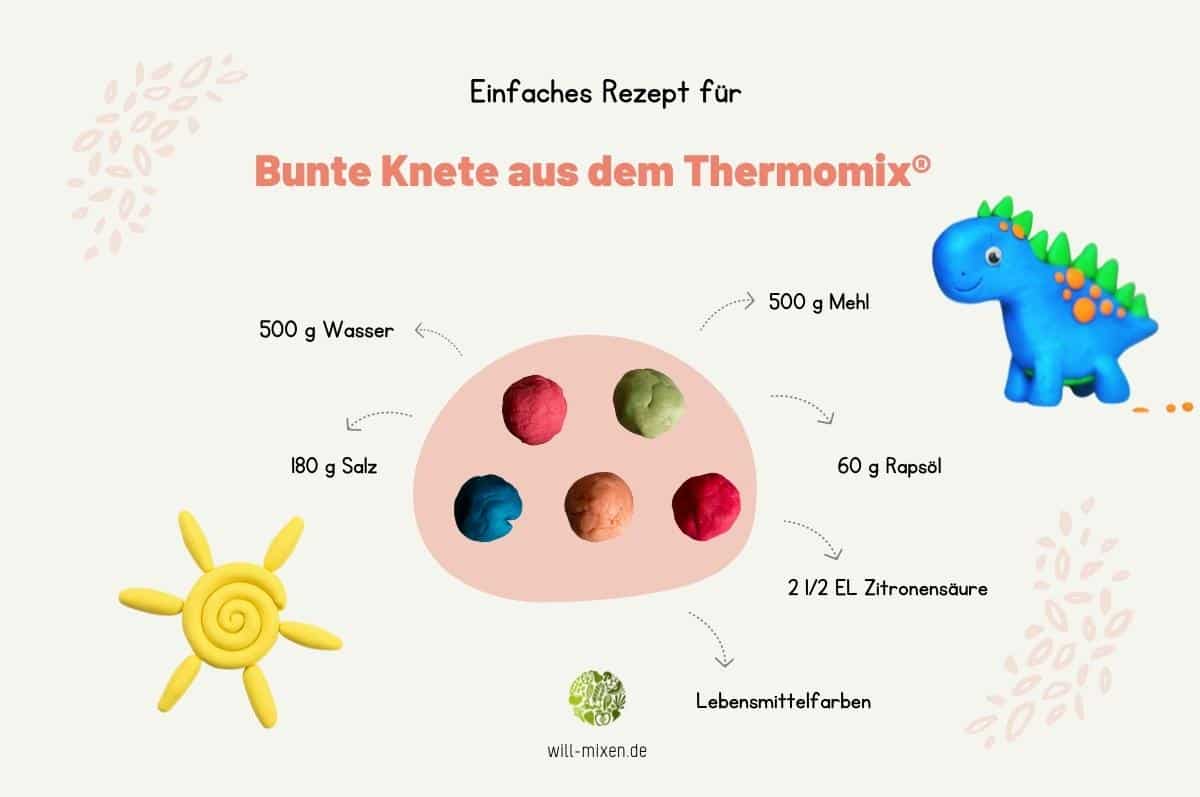
Making homemade coloured play dough in the Thermomix® takes just 8 minutes. 500 g flour, 180 g salt, 60 g rapeseed oil, 2.5 tbsp citric acid, and food colouring. Heat the water for 7 minutes at Varoma / speed 1, mix everything together for 20 seconds at speed 6, add the colours, and you are done. The play dough is soft, non-toxic, and keeps for 4 months in airtight containers.
Homemade Coloured Play Dough in the Thermomix®

Ingredients 0 / 6 ✓
- 500 g water
- 500 g flour
- 180 g salt
- 60 g rapeseed oil
- 2 1/2 tbsp citric acid
- food colouring
Instructions 0 / 4
-
1
Heat the water.
Add the water to the mixing bowl and heat for 7 minutes / Varoma / speed 1. Meanwhile, mix the flour and salt together well in a bowl.
-
2
Mix the dough.
Add all ingredients, except the food colouring, and mix for 20 seconds / speed 6. If the dough is not yet smooth, push everything down with the spatula and mix again for 10 seconds / speed 6.
-
3
Divide the dough.
Remove the dough from the mixing bowl and divide it into as many pieces as you have colours.
-
4
Colour the play dough.
Place one piece of dough back into the mixing bowl, add the lightest colour and mix for 15 seconds / speed 4.5. Remove from the mixing bowl and knead through once more with your hands. Repeat with the remaining pieces, using the darkest colour last.
Tip: Store your play dough in airtight containers and it will keep for several months.
The play dough is completely non-toxic, but should not be eaten due to its high salt content. Keep an eye on young children while they play.
Video
Nutrition per serving
What we do differently with the binding agent and colouring
Many Thermomix® recipes use 250 g water, 200 g flour, and only 5 g citric acid, and describe the play dough as lasting one to two months. We double the quantities to 500 g flour plus 2.5 tbsp citric acid (about 12 g), which gives a full 4 months shelf life because the higher acid dose prevents mould far more reliably. Important: always use food-grade citric acid, never the kind sold for cleaning. For the colours, we also offer a natural alternative using turmeric, beetroot juice, and spinach powder, if you do not have food colouring to hand or if children react sensitively. And one detail that most guides miss: use non-iodised salt, as iodised salt makes the dough go sticky more quickly.
7 minutes Varoma, 20 seconds speed 6: the dough in 8 minutes
First, add 500 g water to the mixing bowl and heat for 7 minutes at Varoma / speed 1. Meanwhile, mix 500 g flour and 180 g salt in a separate bowl. Then add the flour and salt mixture, 60 g rapeseed oil, and 2.5 tbsp citric acid to the hot water in the mixing bowl and mix for 20 seconds at speed 6. If the dough is still too sticky, mix for a further 5 to 10 seconds. Important: use non-iodised salt. Iodised salt makes the play dough go sticky more quickly.
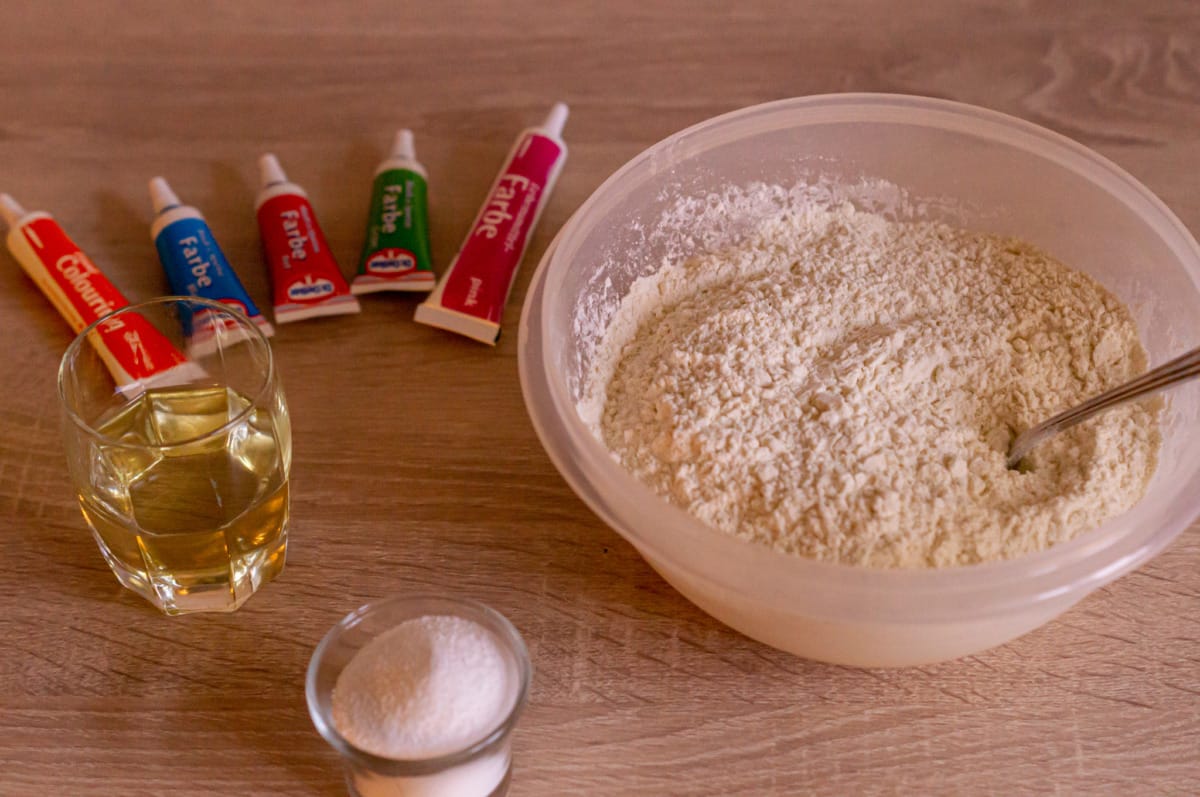
Lightest colour first: why the order matters
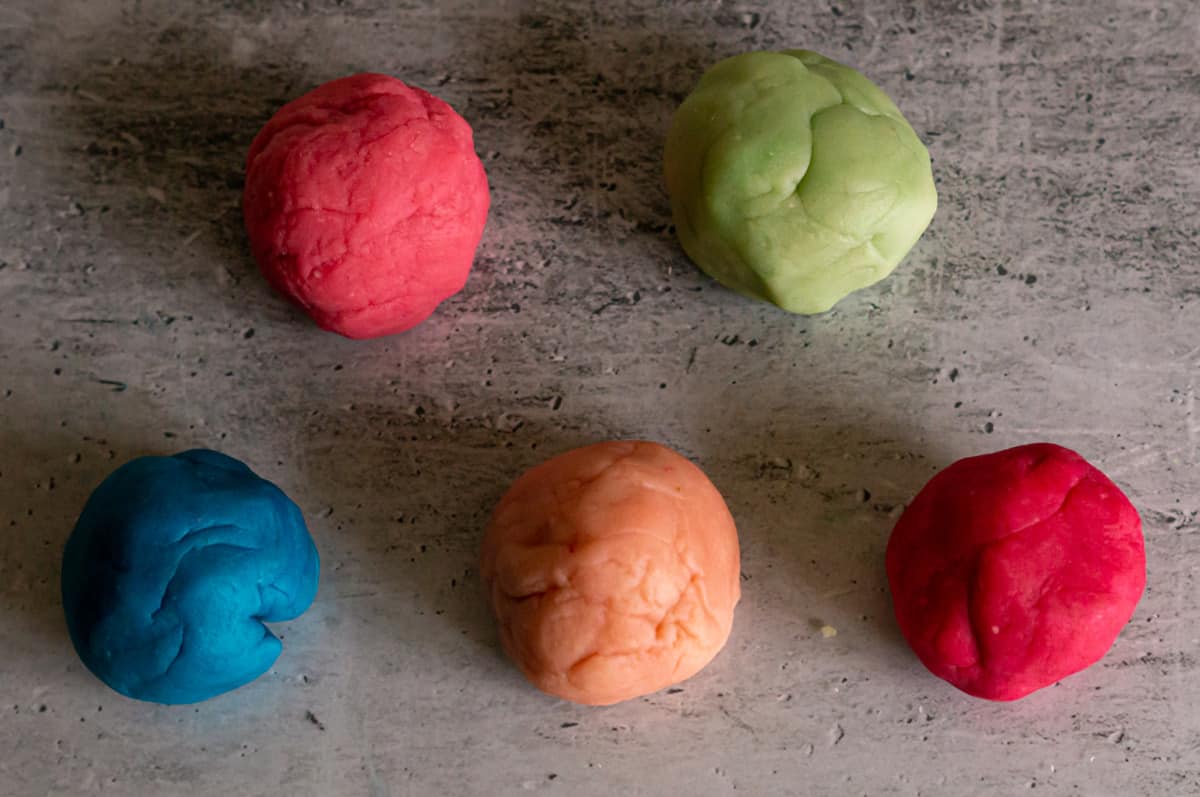
Remove the finished dough from the mixing bowl and divide it into as many pieces as you have colours planned. Then place one piece of dough back into the mixing bowl, add the food colouring, and knead it in for 15 seconds at speed 4.5. Start with the lightest colour (yellow before red before blue), so you do not need to rinse the mixing bowl between colours. The more colouring you add, the more intense the shade. If you prefer to knead in the colour by hand, wear gloves or your fingers will stain. The finished play dough does not transfer colour onto hands during play.
Too sticky or too dry: the two most common problems
If the dough sticks to your hands, add flour a tablespoon at a time and knead it through. If the dough is too dry and crumbly, work in a teaspoon of rapeseed oil. Always add small amounts at a time and test in between. The consistency also depends on the type of flour: plain wheat flour produces a smoother dough than spelt flour.
Glitter, natural colours, scent: 3 variations
- Glitter play dough: Knead edible glitter or fine craft glitter into the dough. Kids love the effect.
- Natural colours: Instead of food colouring, use turmeric for yellow, beetroot juice for pink, and spinach powder for green. The shades will be slightly more muted.
- Scented play dough: A few drops of essential oil (lavender, orange, or vanilla extract) turn the play dough into a sensory experience.
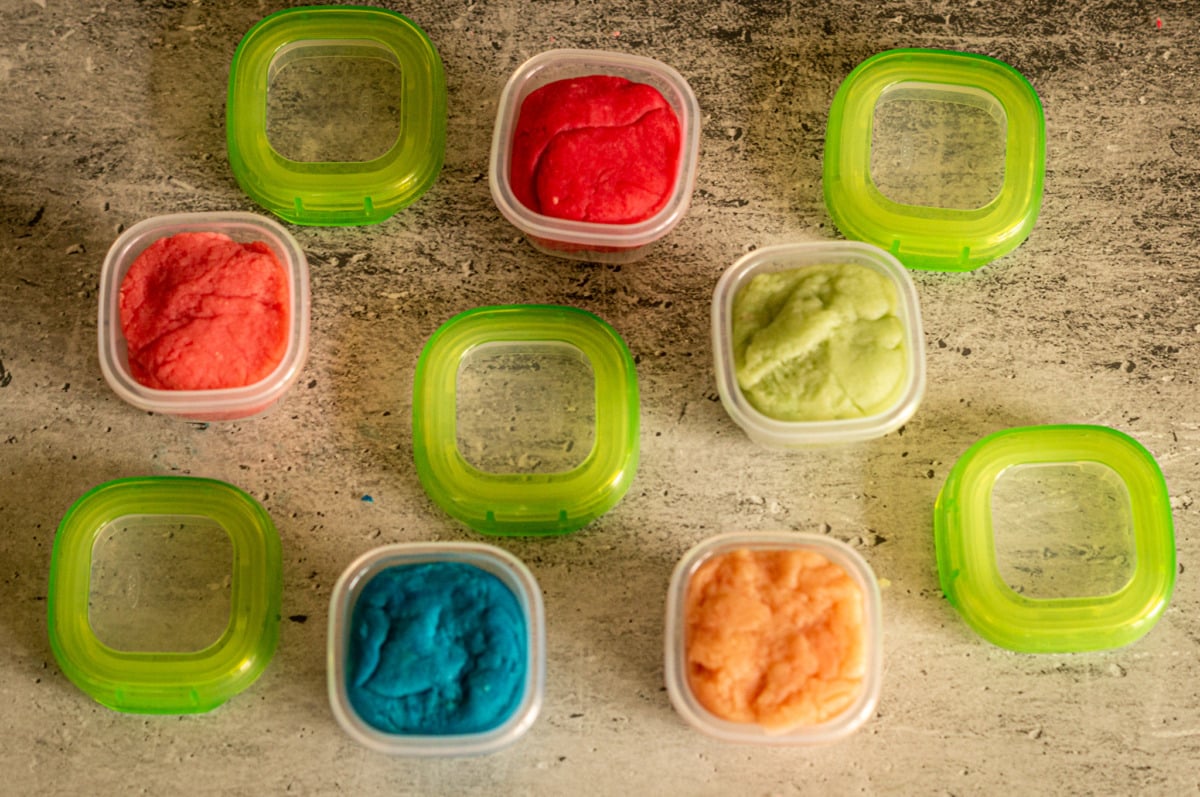
Keeps for 4 months: airtight in storage containers
The salt preserves the play dough naturally. Stored in airtight containers or screw-top jars, the play dough keeps for up to 4 months at room temperature. Do not put it in the fridge, as the cold makes the dough hard. If the surface dries out slightly after a few weeks, knead it through briefly with damp hands. Store different colours separately, otherwise the shades will mix together over time.
Safe, but not for eating: safety note
All ingredients are food-grade, so the play dough is non-toxic. That said, the play dough is not suitable for eating due to its high salt content. Keep an eye on young children while they play. The citric acid prevents mould and keeps the dough flexible. If you do not have citric acid, you can use 2 tbsp of vinegar as a substitute.
If you enjoy making things with the kids: Bath bombs made in the Thermomix® are another project that children and adults can do together.