Foot balm made in the Thermomix® needs only four ingredients and 10 minutes. Here is how: add 30 g body butter, 30 g beeswax in pieces and 40 g almond oil to the mixing bowl and mix for 8 min / 70°C / speed 1, then stir in the 5 drops of lavender oil for 10 sec / speed 4 and fill into jars straight away. The quantity makes around 100 g, enough for two small jars. We have been making it ourselves for years because we want to know exactly what goes on our skin.
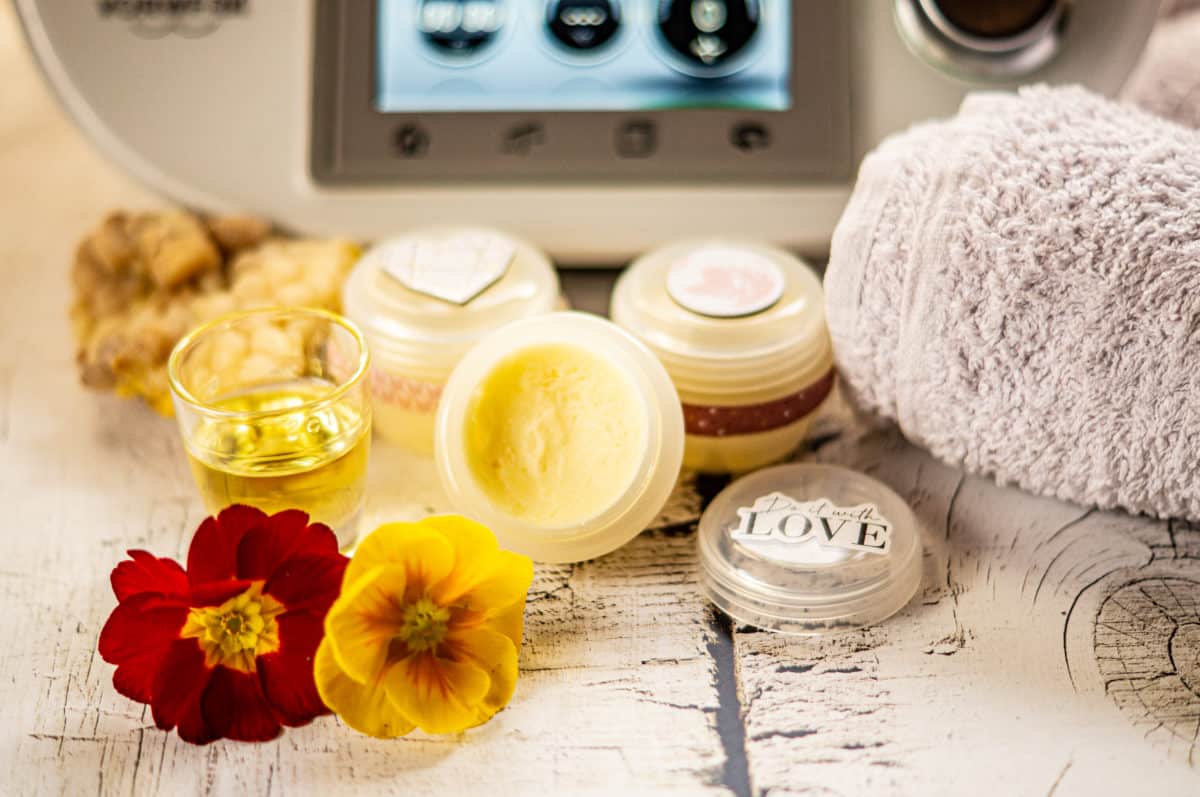
The balm sets very firm once it cools down. That is not a batch gone wrong; it is exactly right. When you massage it in, it melts through body heat and absorbs better than liquid oils. The key is the temperature during mixing: 70°C at speed 1 for 8 minutes. At a higher temperature the almond oil partly evaporates; at a lower one the beeswax does not bind fully. The result would be either too dry or too crumbly. That precise temperature control is exactly why we make this balm in the Thermomix® rather than in a bain-marie.
Homemade Foot Balm with the Thermomix®
Ingredients 0 / 4 ✓
- 30 g body butter for very dry skin
- 30 g beeswax
- 40 g almond oil
- 5 drops lavender oil
Instructions 0 / 2
-
1
Heat and blend the ingredients.
Add body butter, beeswax in pieces and almond oil to the mixing bowl and mix for 8 min / 70°C / speed 1.
-
2
Mix in the oil.
Add lavender oil to the mixing bowl and mix for 10 sec / speed 4. Fill into jars immediately.
Tip: Filled into pretty cream jars, our foot balm makes a lovely gift. The balm sets very firm, but that is no problem at all: it softens through body heat when you massage it in.
How to use: Apply generously to the areas you want to treat and massage in well. For very thick calluses, apply daily. Once the skin has improved, two to three times a week is enough.
To clean the mixing bowl, use boiling water and a drop of washing-up liquid.
Please note: We have tested all recipes published here ourselves. Even so, we cannot accept responsibility if a recipe does not work out for you or if you have a reaction to it. Our notes on the properties of plants are not intended as treatment for conditions requiring medical care, and they are not a substitute for a visit to your doctor.
Why 70°C is the critical point for the foot balm
Beeswax melts at around 62 to 65°C. Below that threshold it stays solid and will not combine with the oils. In a bain-marie this threshold is hard to hold because the temperature fluctuates. The Thermomix® keeps 70°C constant throughout the full 8 minutes, and the stirring action at speed 1 ensures body butter, wax and almond oil blend evenly instead of separating into layers.
We use 30 g beeswax to 30 g body butter and 40 g almond oil. This ratio makes the balm spreadable without being too soft. More wax would make it too hard; less wax would leave it too liquid. For a softer balm, use 25 g beeswax and 45 g almond oil. For a firmer stick-style balm, increase the wax to 35 g.
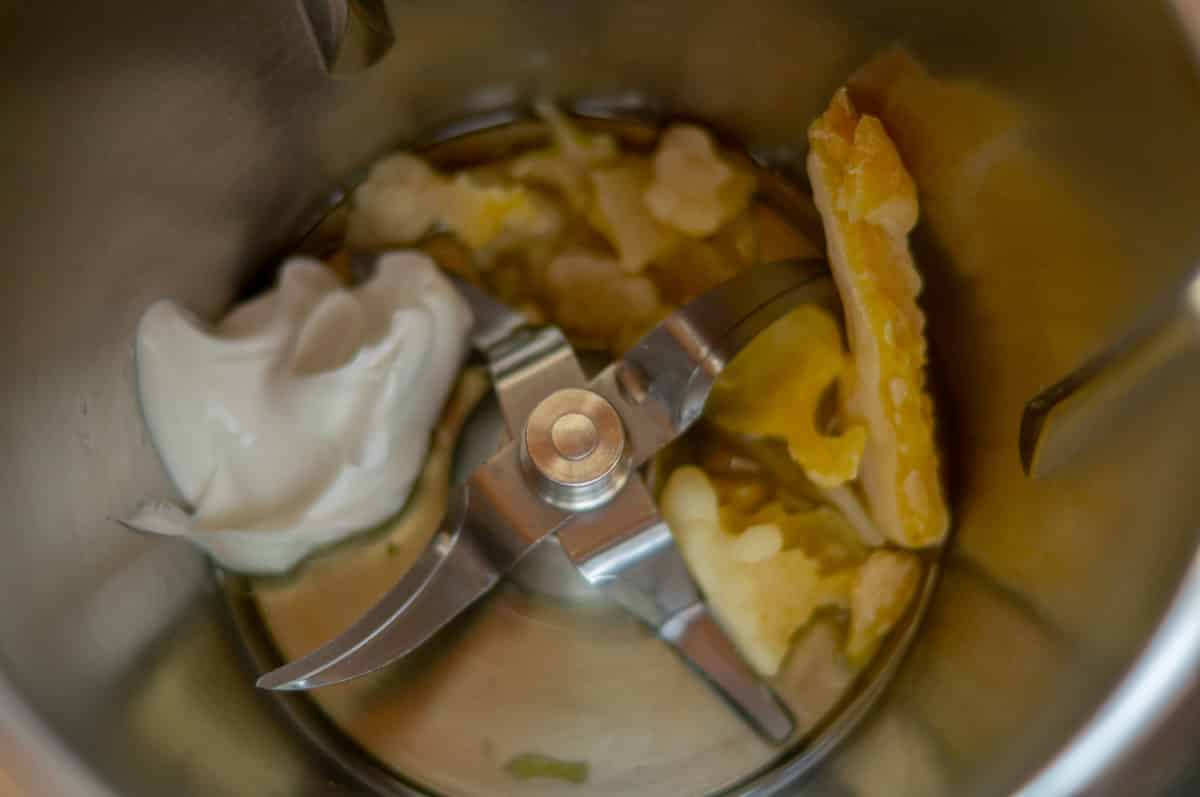
Lavender oil goes in after the heating phase
The lavender oil is added only after the heating phase. Essential oils are sensitive to heat: at 70°C they partly evaporate and lose their effect. That is why we stir the 5 drops of lavender oil in after the mixture has cooled to around 50°C, mixing for 10 seconds at speed 4. This preserves the fragrance fully, and the balm still smells of lavender weeks later.
Lavender calms the skin and has a pleasant scent without being overpowering. For cold feet, you can use 3 drops of dwarf pine oil instead, which promotes circulation. For a cooling effect on tired feet, 3 drops of peppermint oil work well. We never mix more than three different essential oils, otherwise the scents compete with each other.
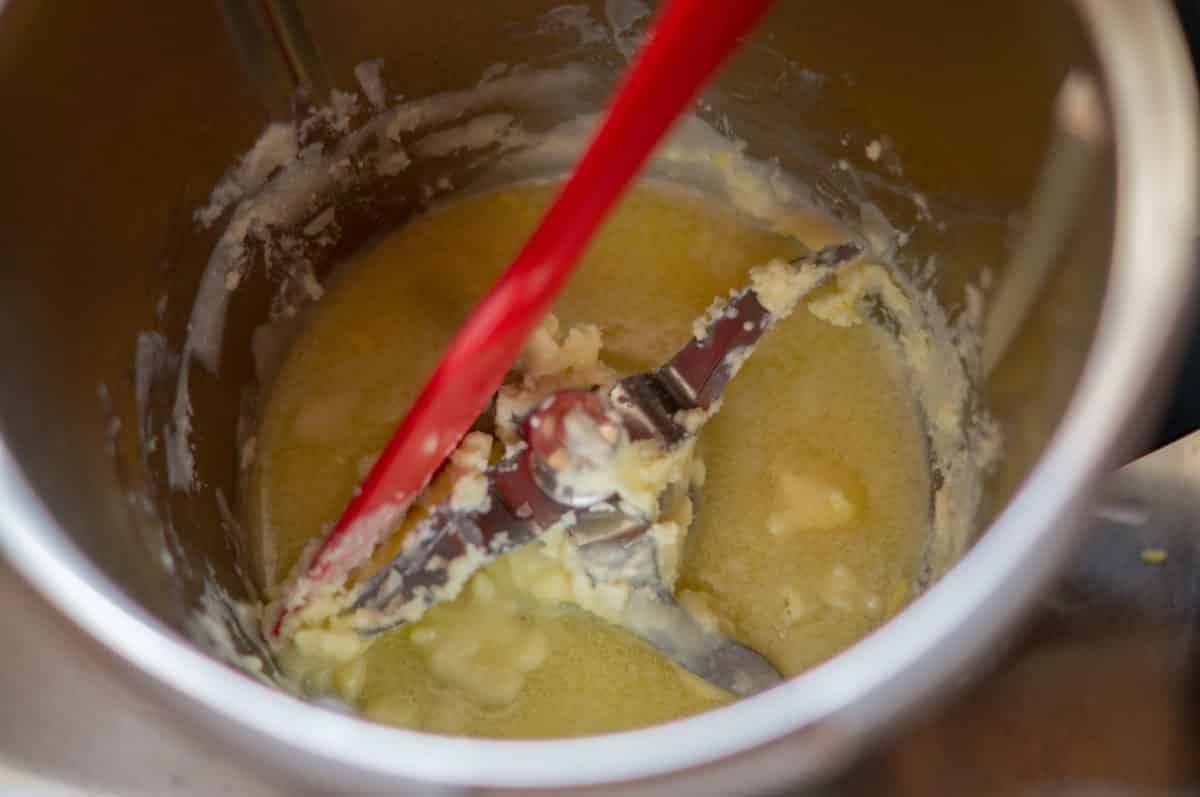
The three pitfalls when making foot balm at home
The balm turns crumbly instead of creamy
This happens when the temperature was too low or the wax did not melt completely. Remaining pieces of solid beeswax form small granules later on.
Our fix: Keep to the full 8 minutes at 70°C and cut the beeswax into small pieces beforehand. Larger chunks take longer than the heating phase allows. If granules remain, simply mix again for 3 min / 70°C / speed 1.
The balm sets solid inside the mixing bowl
Beeswax firms up quickly as it cools. If you wait too long after mixing, the mixture can no longer be poured cleanly into jars.
Our fix: Have your cream jars ready beforehand and fill them immediately after the final mixing step. The balm sets within a few minutes. If it does firm up in the bowl, warm it gently for 2 min / 50°C / speed 2 and it will flow again.
The wax will not come off the mixing bowl
After use, beeswax sticks to the mixing bowl, blade and spatula. Cold water does not remove it; it clings on as a stubborn film.
Our fix: Straight after filling the jars, add boiling water and a drop of washing-up liquid to the mixing bowl and leave for 5 minutes. The wax melts again and can then simply be poured away. Our tips for cleaning the Thermomix® cover this in more detail. The blade can be cleaned the same way.
Four variations for different skin needs
With shea butter for very dry skin: Replace the 30 g body butter with 30 g shea butter. Shea butter is rich in fatty acids and forms a more intensive protective layer over cracked heels. The Thermomix® settings stay the same.
Anti-callus with peppermint: Use 4 drops of peppermint oil instead of lavender oil. This cools and stimulates circulation, which helps with thick calluses. Combined with the overnight treatment below, the softened skin comes away more easily the next morning.
With vitamin E for a longer shelf life: Add 3 drops of vitamin E oil after the heating phase together with the lavender oil. Vitamin E acts as a natural antioxidant and slows the almond oil from going rancid, so the balm keeps for several weeks longer.
Vegan without beeswax: Beeswax can be replaced with candelilla wax, which is considerably harder. Use only 20 g of it and increase the almond oil to 50 g to compensate. Candelilla wax melts at around 70°C, so the 70°C in the recipe works perfectly.
Overnight treatment for very cracked heels
For very thick calluses, we use the balm as an intensive treatment. In the evening, massage the feet generously with the balm, ideally after a warm foot bath when the skin is soft. Then pull on cotton socks and leave to work overnight. The firm balm stays on the skin under the socks instead of spreading over the bedding.
The next morning, the softened callus comes away more easily with a foot file. Two to three applications per week are enough to maintain the effect. This is exactly where the firm consistency from the beeswax proves its worth: a liquid lotion would simply soak into the socks and be wasted.
More homemade skin care to go with this
Once the feet are taken care of, the rest of your skin care routine is worth making yourself too. Our solid hand cream from the Thermomix® works on the same beeswax principle and is ready in 10 minutes. For larger areas of skin, our body butter from the Thermomix® is a great option. And for gifts we like to add bath bombs or bath salts, which makes a complete wellness gift from your own kitchen.
How long the foot balm keeps
Because the balm is completely water-free, it keeps for a very long time. Without water, bacteria cannot multiply, so no preservative is needed. With clean preparation, 8 weeks is easily achievable, often considerably longer. Shelf life depends on the ingredient with the shortest best-before date, which is usually the almond oil.
Hygiene is key: we only fill the balm into sterilised jars that we have rinsed out with boiling water and left to dry completely. Store at room temperature in a dark spot and the almond oil will stay fresh longer. In warm summer temperatures the balm may soften slightly; that is no problem, it will firm up again in the fridge. If you want to be on the safe side, add 3 drops of vitamin E oil (see the variations above).
Important: this balm is not a medical treatment. For pain, deep cracks or inflammation on the feet, a doctor or professional podiatrist is the right person to see.