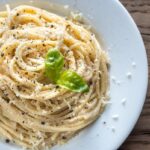
Parmesan pasta from the Thermomix® is on our table when there is no time for experiments after work. We cook the pasta in parallel with the sauce. Everything is ready in 20 minutes.
The trick is in the pasta water. 100 g of it goes into the sauce at the end. The starch from the pasta binds the fat and cheese into an emulsion. Without this water the sauce separates as it cools, fat floats on top and the cheese clumps at the bottom.
Quick Parmesan Pasta with the Thermomix®
Ingredients 0 / 9 ✓
- 400 g Pasta
- 170 g Parmesan
- 2 shallots
- 20 g butter
- 1 tsp plain flour (type 405)
- 100 g white wine
- 250 g milk
- 300 g double cream
- freshly ground pepper
Instructions 0 / 8
-
1
Cook the pasta.
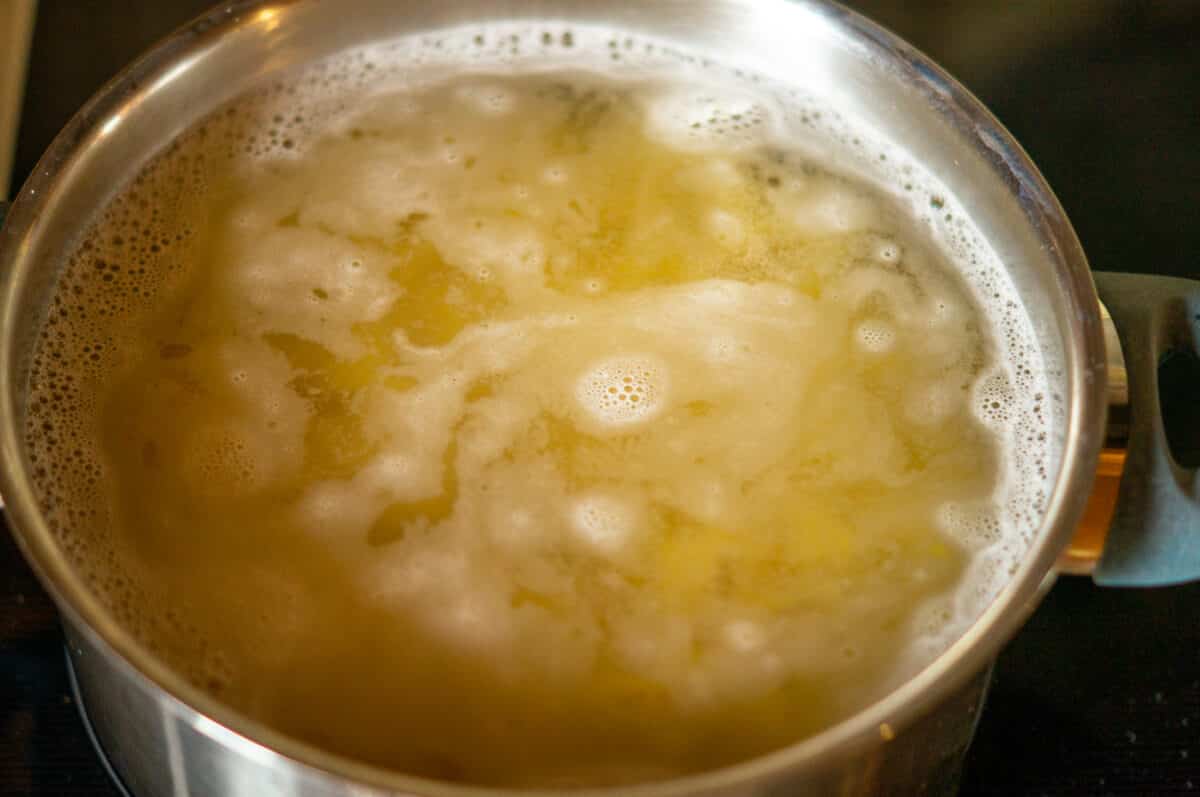
Cook the pasta al dente according to the packet instructions. (Reserve 100 g of the pasta cooking water.)
-
2
Chop the cheese.
Cut the cheese into pieces, place in the mixing bowl, chop for 10 seconds / speed 10 and set aside.
-
3
Chop the shallots.
Peel the shallots, place in the mixing bowl, chop for 5 seconds / speed 5 and push down with the spatula.
-
4
Sweat the shallots.
Add butter and flour and, without the measuring cup, steam for 5 min / Varoma / reverse direction / speed 1.
-
5
Add the wine.
Add white wine and, without the measuring cup inserted, cook for 4 minutes / Varoma / speed 2.
-
6
Cook the sauce.
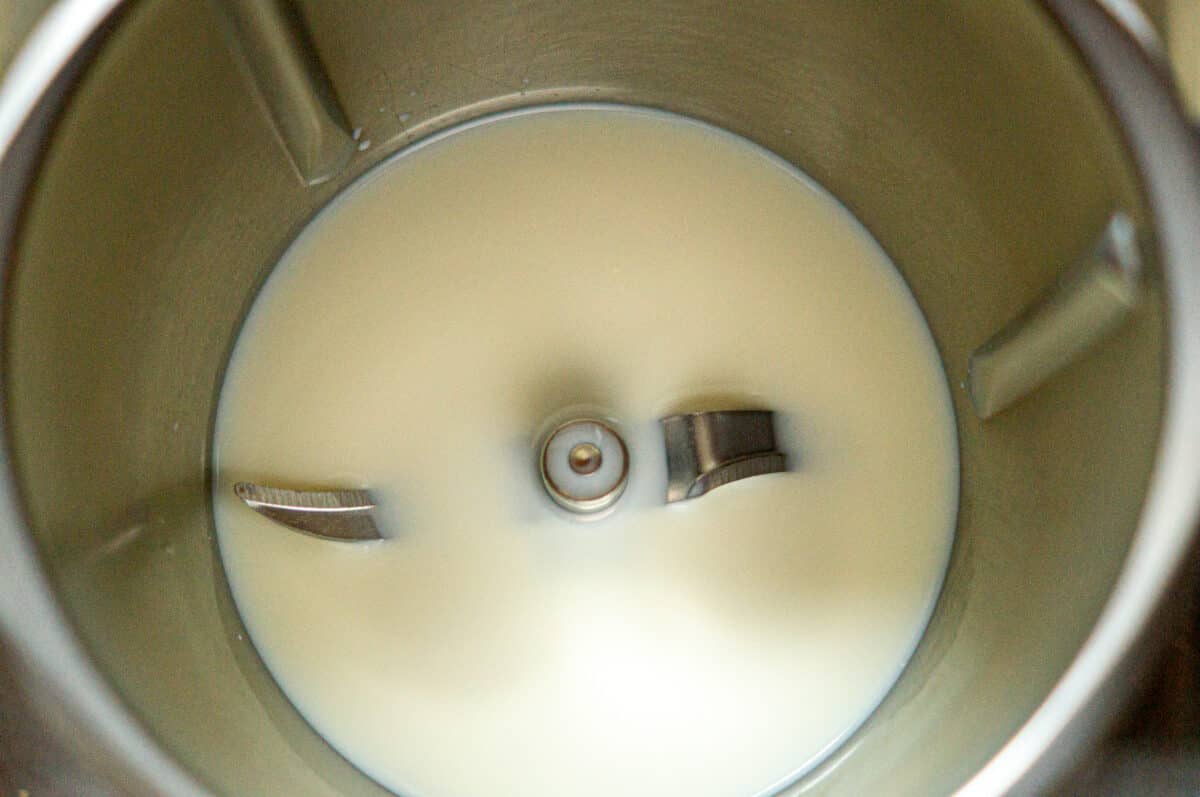
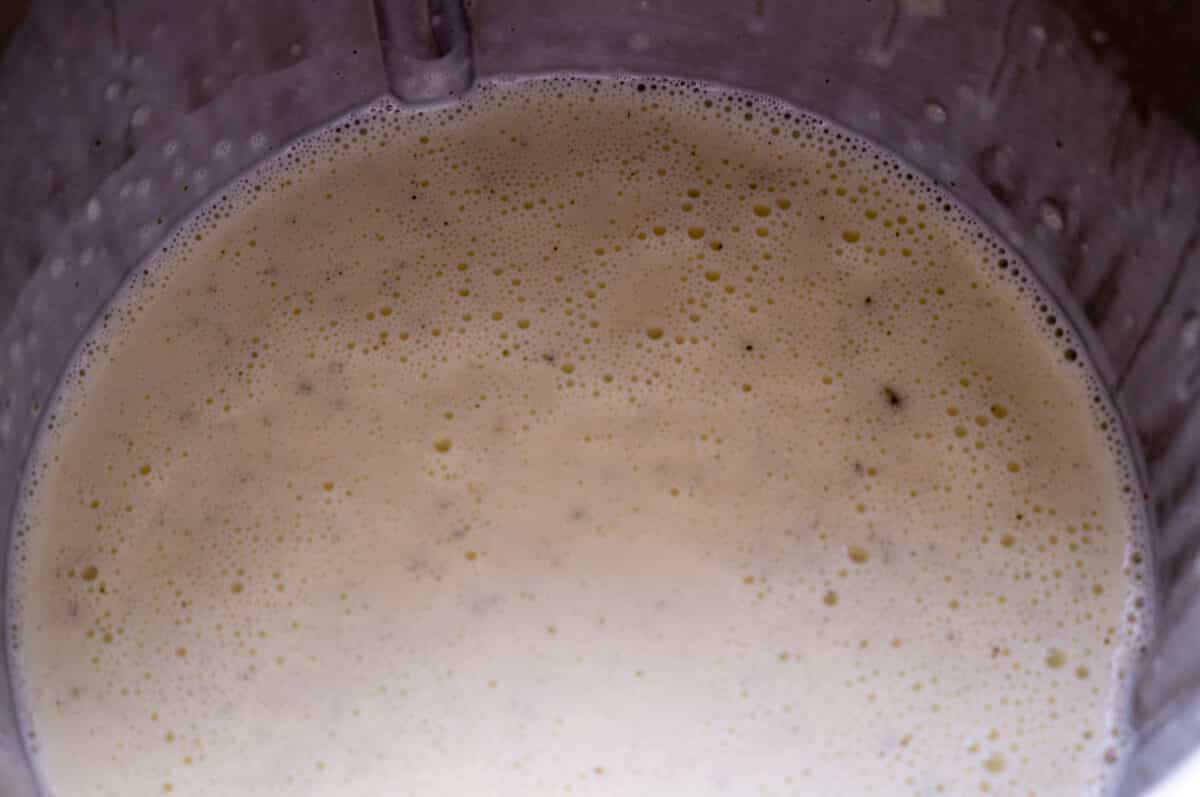
Add milk and double cream and cook for 10 minutes / 90°C / speed 1.
-
7
Add the cheese.
Add 100 g of pasta cooking water and 90 g of cheese and mix for 30 seconds / speed 5.
-
8
Serve.
Mix the pasta and the sauce in a bowl and serve sprinkled with pepper and the remaining cheese.
Tip: Quartered cherry tomatoes go very well with this pasta.
Video
Nutrition per serving
Why shallots instead of onions
We sweat shallots with butter and flour. Shallots are milder than onions and do not turn bitter as quickly at Varoma temperature. The flour forms a classic roux with the butter. This later binds the milk and double cream without any lumps forming.
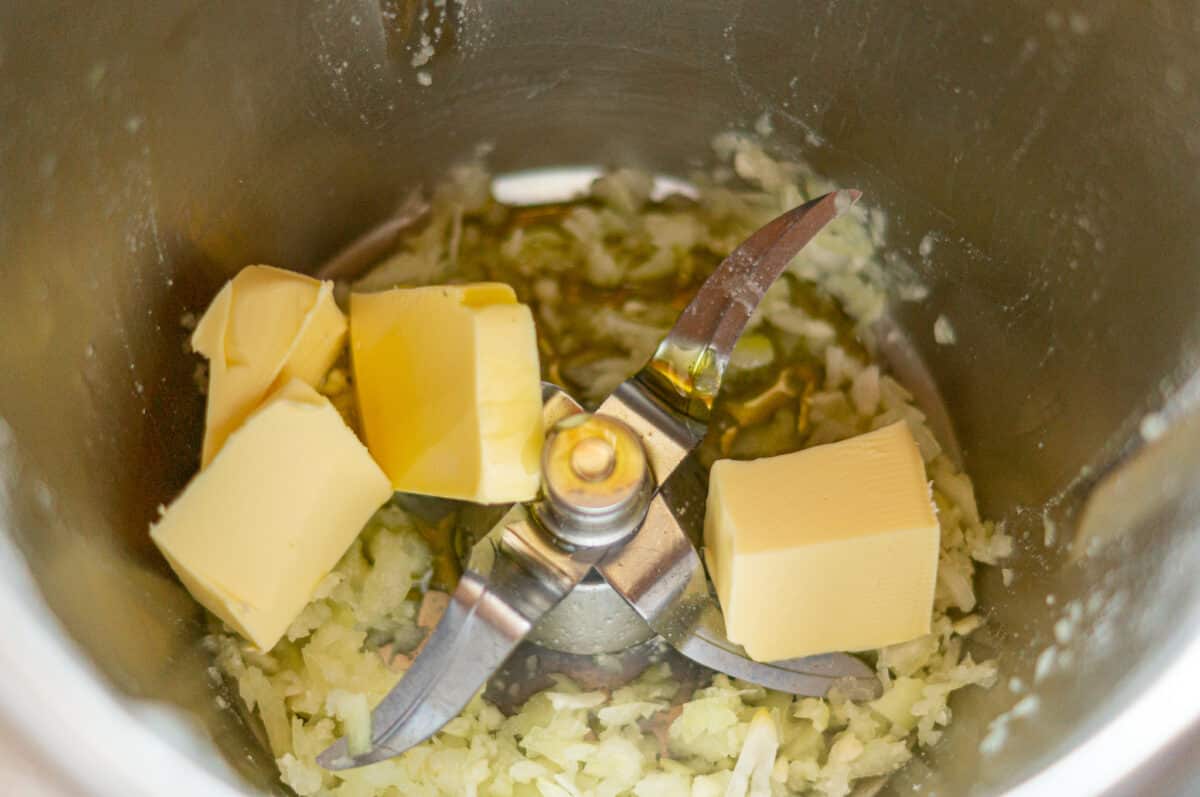
5 minutes at Varoma in reverse direction at speed 1 is enough. The shallots turn translucent and the flour lightly toasts. No longer than that, otherwise the base becomes too dark and tastes caramelised rather than neutral.
White wine reduces acidity and alcohol

After sweating, we add 100 g of white wine and cook for 4 minutes at Varoma speed 2. The alcohol evaporates through the open lid and the acidity reduces. What remains is a mild wine note without any sharpness. Without this step the sauce tastes flat, and with too much wine the acidity overpowers the Parmesan.
Milk and double cream in a 5 to 6 ratio
We add 250 g of milk and 300 g of double cream. This ratio gives creaminess without being too heavy. Pure cream would be too thick, pure milk too watery. The roux binds the mixture in 10 minutes at 90°C speed 1 into a velvety consistency.
Parmesan only after cooking
170 g of Parmesan is enough for 4 servings. We blitz it before the recipe for 10 seconds at speed 10. At the end, 90 g of it goes into the sauce with the pasta water, mixed for 30 seconds at speed 5. We sprinkle the remaining 80 g over the pasta when serving.
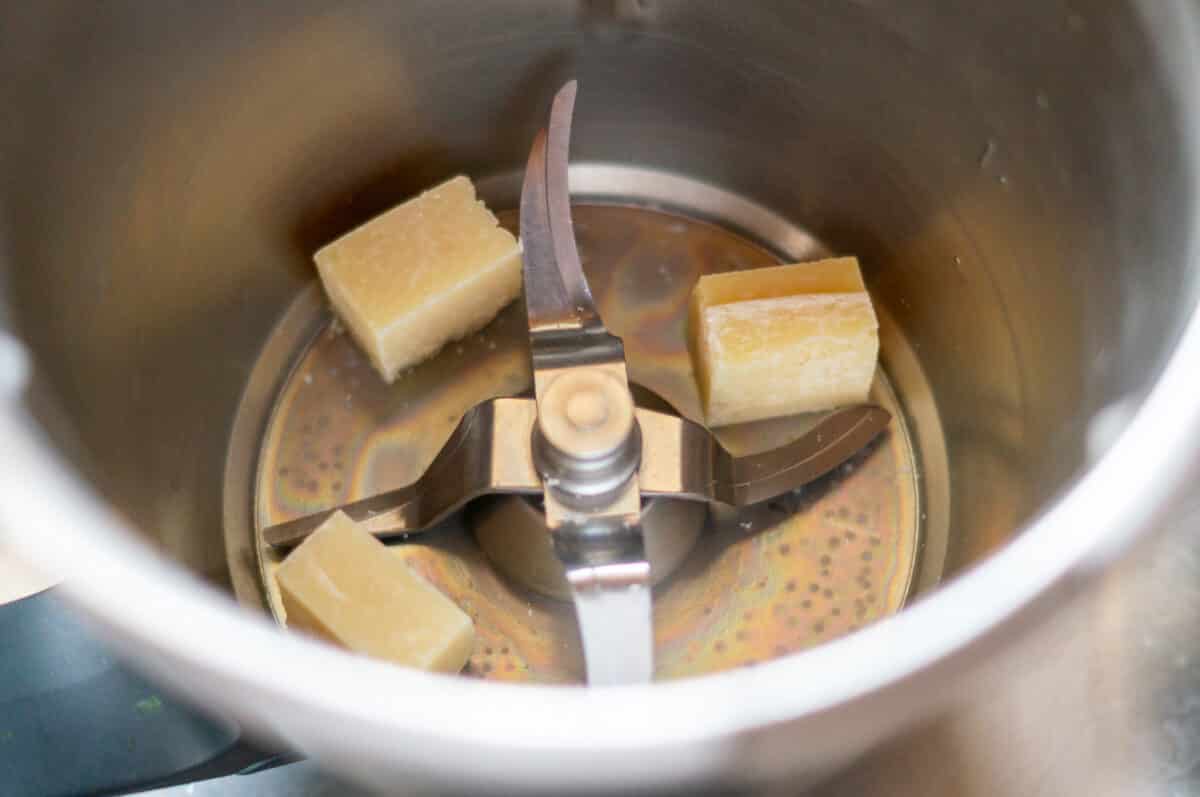
Timing matters. Parmesan clumps at temperatures above 80°C if it cooks too long. That is why we add it only after cooking, with the heat switched off. The residual warmth is enough to melt the cheese without the proteins curdling.
The pasta water as the final step
100 g of pasta cooking water goes into the sauce at the same time as the cheese. The starch from the pasta acts as a natural emulsifier. It coats the fat molecules from the butter and double cream and stops the sauce from separating. Without pasta water the sauce stays unstable. As it cools, fat floats on top and the cheese settles as a grainy mass at the bottom.
Which pasta works best
We use 400 g of pasta of your choice. Short shapes like penne or rigatoni catch the sauce in their tubes. Long pasta such as spaghetti or linguine works just as well. The only important thing is to cook the pasta al dente. Soft pasta absorbs too much sauce and turns mushy.
Cooking in parallel saves time
While the sauce runs in the Thermomix®, we cook the pasta on the hob. Both processes run at the same time. After 20 minutes everything is ready. If we were to cook the pasta only after the sauce, dinner would not be on the table until 35 minutes later. The sauce would have cooled down and thickened in the meantime.
Leftovers the next day
The pasta with sauce keeps for 2 days in the fridge. When reheating, add 2 to 3 tbsp of milk, otherwise the sauce becomes too thick. Freezing does not work well as the emulsion breaks on thawing. That is why we only cook the amount we will eat on the same day.
Fancy more quick Thermomix® pasta? Try our homemade pasta, browse more main courses or explore our pasta category.