Spaghetti al burro only works when the butter stays melted and does not turn brown. The moment it tips over, the whole sauce tastes bitter and nutty instead of mild and silky. We have cooked this recipe for years as a Wednesday-night pasta when time is short, and the make-or-break point is those two minutes at 100°C / speed 1.
The second thing most people underestimate is the pasta water. We save 100 g of it after draining, and it comes into play later. This is not a tip from the internet, it is the reason our sauce turns creamy without cream, without a roux and without processed cheese. Starch from the 400 g of spaghetti dissolves during cooking, stays in the water and later binds the melted 50 g of butter into a light emulsion. If you pour the pasta water away, all you have left is butter and tomato puree. That is not the same thing.
Spaghetti al Burro with the Thermomix®

Ingredients 0 / 9 ✓
- 400 g spaghetti
- 8 cherry tomatoes
- 100 g Parmesan
- 50 g butter
- 1 tsp tomato puree
- 1/2 tsp salt
- 1/2 tsp vegetable stock powder
- 2 tsp freshly ground pepper mixed or black
- 3 sprigs basil
Instructions 0 / 6
-
1
Cook the spaghetti.
Cook the spaghetti al dente according to the packet instructions in plenty of salted water, then drain, reserving 100 g of pasta water. Return the pasta to the pot and keep warm.
-
2
Cut the tomatoes.
Meanwhile, wash the cherry tomatoes and quarter them.
-
3
Grate the Parmesan.
Add the Parmesan in pieces to the mixing bowl and grate finely for 10 sec / speed 9, then set aside.
-
4
Melt the butter.
Add the butter to the mixing bowl and melt for 2 min / 100°C / speed 1.
-
5
Mix the sauce.
Add the tomato puree, stock powder, pasta water and salt, then mix for 10 sec / speed 3.
-
6
Serve.
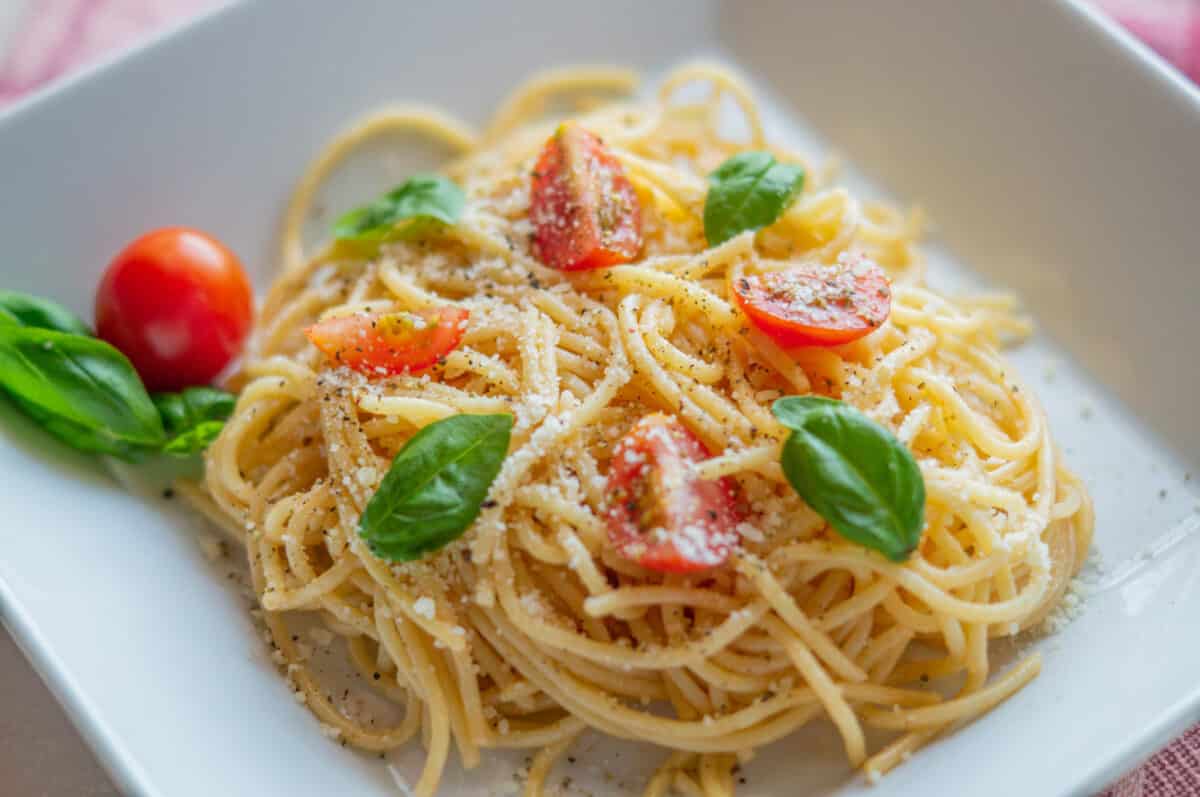
Pour the sauce with 70 g of Parmesan over the pasta and mix well. Wash and dry the basil, then pick the leaves. Place the remaining Parmesan in a small bowl to serve alongside. Arrange the spaghetti on plates with the tomatoes, sprinkle with pepper and serve garnished with basil leaves.
Tip: If you want your spaghetti al burro even more intense in flavour, you can use Pecorino instead of Parmesan.
Video
Nutrition per serving
Why the order in the mixing bowl matters
The recipe has six steps and looks like a straightforward pasta recipe at first glance. The order, however, is precisely structured, and every deviation costs us flavour.
Parmesan first, then the butter. 100 g of Parmesan in pieces is grated finely for 10 seconds at speed 9 and removed from the bowl. If you reverse this, melting the butter first and then grating the Parmesan, you end up with warm, sticky cheese on the blades. The mixing bowl must be dry, otherwise the Parmesan clumps together instead of becoming fine.
Butter at 100°C, not 120°C. 50 g of butter goes into the mixing bowl for 2 minutes at speed 1. At 100°C it melts gently, the milk proteins stay white and give the sauce that pale, almost velvety colour. At 120°C the browning process begins. If you enjoy brown butter, this is not the recipe for that. Spaghetti al burro lives on the mild, slightly sweet note that only unbrowned butter delivers.
Tomato puree, salt, stock powder and the pasta water together. Only now do 1 tsp of tomato puree, 1/2 tsp of salt, 1/2 tsp of vegetable stock powder and the 100 g of reserved pasta water go in. 10 seconds at speed 3 is enough to combine everything. This is the moment when the starch in the pasta water binds the butter. The result is a pale, lightly broken sauce with a small depth of tomato from the puree, not the fully cooked tomato sauce flavour that we are deliberately avoiding here.
Sauce stays in the bowl, spaghetti goes in
We pour the sauce together with 70 g of the grated Parmesan over the drained pasta in the pot, not the other way around. The spaghetti are hot and absorb the sauce as we mix well. The Parmesan melts from the residual heat and makes the sauce creamier. The remaining 30 g of Parmesan go into a small bowl on the table so everyone can add more.
The Thermomix® shows its real advantage here: while the spaghetti cooks al dente on the hob, we grate the Parmesan and melt the butter in the mixing bowl. When the pasta is done, the sauce is ready too. No waiting around where the pasta sticks together because everything else is not quite finished.
When the sauce turns too thick or too thin
Too thick: usually we have not saved enough pasta water, or the pasta drained too thoroughly. Fix: add one or two tablespoons of hot water from the kettle and toss briefly in the pan. We do not use cold water, as it shocks the butter and breaks the emulsion.
Too thin: too much pasta water, or the spaghetti were not fully drained. The fix here is to hold back some of the Parmesan and add it only when mixing with the pasta. Cheese binds the sauce reliably without needing any flour.
A bitter note in the finished dish means the butter got too hot after all. This happens on the TM31 if the temperature is set higher than intended, or if we accidentally leave it on Varoma instead of 100°C. Next time, pay close attention to the 100°C setting and check the butter after 90 seconds.
Pepper, tomatoes and basil as fresh accents
We do not cook the eight quartered cherry tomatoes. They go on raw over the finished spaghetti, spread directly on the plate, and stay cool and slightly acidic. That is the contrast to the warm butter and Parmesan sauce. 2 tsp of freshly ground pepper sounds like a lot, but it is not. In the mild sauce the pepper distributes evenly and provides the sharpness that spaghetti al burro would otherwise lack.
Three sprigs of basil are enough for four servings. We pick the leaves, rinse them briefly, pat dry and lay them whole on the pasta. Sliced basil goes mushy and loses its aroma within minutes. Whole leaves hold up and look better.
Pecorino, garlic or anchovies as variations
Pecorino instead of Parmesan: for more intensity, swap 1:1. Pecorino is saltier, so leave out the half tsp of salt. The result is sharper in flavour and works well when you want the sauce to have more edge.
Garlic in the butter: press one small garlic clove into the butter and let it melt at 100°C for 2 minutes. We use this when the dish is running as a main course rather than a first course. Note: garlic burns quickly, so do not go above 100°C.
Anchovies for depth: finely chop two anchovy fillets and melt them with the butter. They dissolve completely and add umami without tasting fishy. Works particularly well on adult plates.
With sage instead of basil: for the classic Roman version, melt 6 to 8 sage leaves in the butter. The leaves do not crisp at 100°C, but they release their savoury note into the fat. The tomato element does not fit here, so leave out the tomato puree and cherry tomatoes and add a squeeze of lemon and a little extra pepper instead.
What we do with leftovers
Spaghetti al burro does not keep well. In the fridge in a sealed container it lasts at most 24 hours, after which it dries out and the Parmesan sticks. Reheating only works in a pan with a splash of water or milk, not in the microwave. We do not recommend freezing: the butter separates on thawing, the sauce turns watery and the Parmesan goes grainy.
It is therefore practical to cook smaller amounts rather than batch-cooking. The quantities in the recipe give 4 servings, and we often halve it too, using 200 g spaghetti, 25 g butter and 50 g Parmesan. It works just as well, though the mixing bowl still needs the full melting time for the butter.
What else is in our pasta rotation
If you enjoy classic pasta, Spaghetti Carbonara with the Thermomix® is worth trying as it works on the same principle of using pasta water. For a tomato direction without long simmering, the carrot and tomato sauce is a quick alternative. For truly fresh pasta, we occasionally make pasta dough in the Thermomix® ourselves, which takes under 5 minutes in kneading mode. Quick summer spaghetti is often on our table when we want something just as fast as al burro but with more vegetables.
How other recipes approach it
Goes well with: Parmesan and basil pesto.
Most spaghetti al burro recipes list only butter, Parmesan, salt and pepper and leave out the crucial details. We deliberately use good-quality sweet cream butter and freshly grated Parmigiano Reggiano, because young Grana Padano tastes milder and Pecorino can quickly become too salty. The most important technique, using the starchy pasta water for the creamy emulsion, is skipped entirely by many. We scoop some out before draining and work it in spoonful by spoonful until the sauce has a silky sheen. We leave out garlic, but freshly ground black pepper and a hint of nutmeg help instead. For children, we stir in an extra knob of cold butter at the end.