Spelt bread in the Thermomix® works in two versions: a lighter loaf made with 350 g of freshly milled spelt plus 300 g of spelt flour type 630, or a hearty wholegrain loaf from 500 g of whole spelt with sunflower seeds, pumpkin seeds and linseeds. Both need just one cube of fresh yeast, require no lengthy hand-kneading, and are ready to serve in just over 100 minutes.
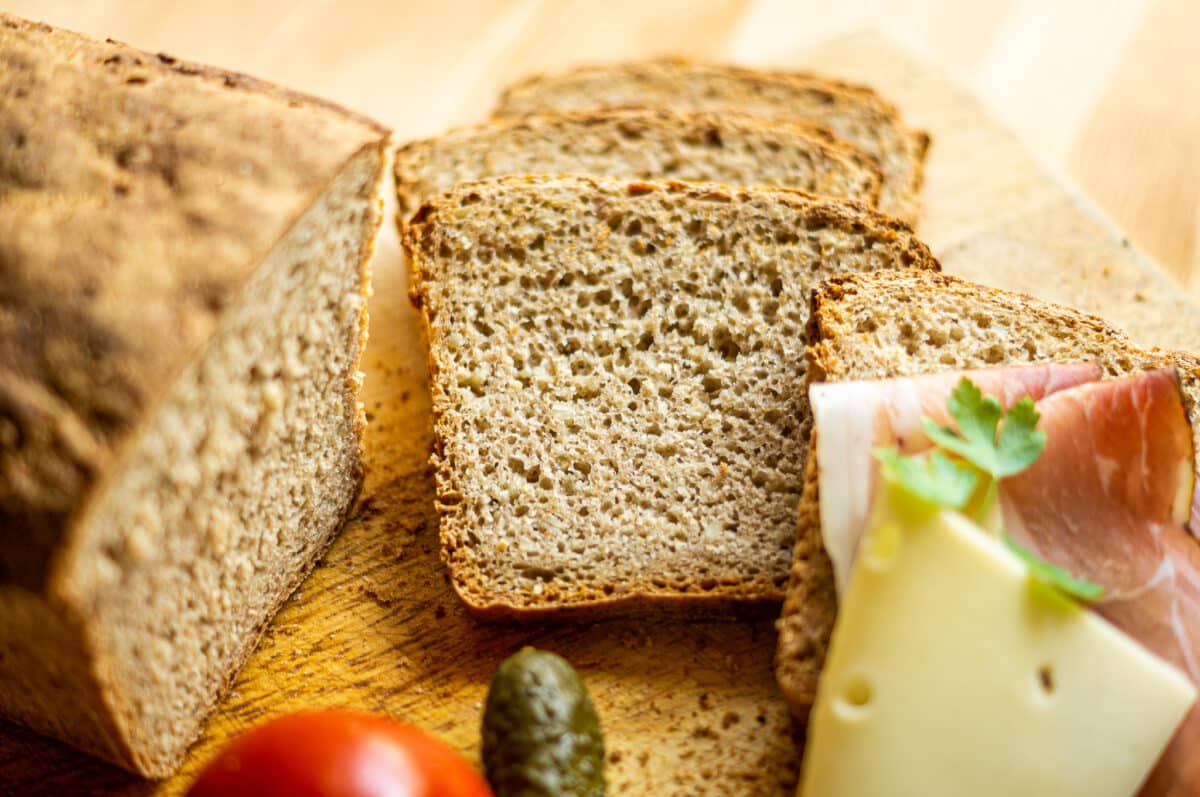
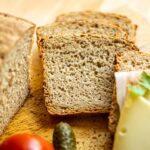
The real trick is not in the recipe itself but in the milling. Milling spelt grains directly before baking in the mixing bowl gives a noticeably more aromatic loaf than using ready-bought flour from the shelf. That is precisely the point where the Thermomix® beats an ordinary food processor: milling, kneading and weighing all happen in a single bowl.
The Best Spelt Bread in the Thermomix®
Ingredients 0 / 9 ✓
- 350 g spelt grains
- 100 g sunflower seeds
- 25 g rolled oats
- 300 g spelt flour, type 630
- 500 g water
- 1 cube fresh yeast
- 2 tsp salt
- 30 g vinegar
- 25 g rolled oats
Instructions 0 / 6
-
1
Mill the grains.
Place spelt grains in the mixing bowl and mill for 1 min / speed 10.
-
2
Knead the dough.
Add sunflower seeds with 25 g rolled oats and the remaining ingredients for the bread to the mixing bowl and knead for 8 min / kneading mode.
-
3
Line the loaf tin.
Meanwhile, line a loaf tin with baking paper.
-
4
Prove the dough.
Transfer the dough into the loaf tin and leave to prove, covered with a damp kitchen cloth, for 30 minutes.
-
5
Preheat the oven. Meanwhile, preheat the oven to 220 °C (200 °C fan).
-
6
Bake.
Scatter the remaining rolled oats over the dough and bake on the middle shelf for 60 minutes.
Tip: Stored in a bread bin, the bread keeps for up to one week.
Nutrition per serving
Freshly milled spelt beats ready-made flour
Both recipes start at the mixing bowl with whole grains. For the lighter loaf, 350 g of spelt grains go into the bowl for 1 minute at speed 10; for the wholegrain loaf it is 500 g, which need 2 minutes at speed 10 because of the larger quantity. Fresh flour brings more germ oils and aroma because it has not been oxidising on a shelf for weeks.
We show what the milling looks like and what fineness to aim for in our basic recipe for coarse wholegrain flour in the Thermomix®. Anyone using ready-made spelt flour type 630 or wholemeal flour can skip the milling step, though a little aroma is lost. The ratio of flour to water stays the same.
Light spelt loaf or wholegrain with seeds: which version suits you
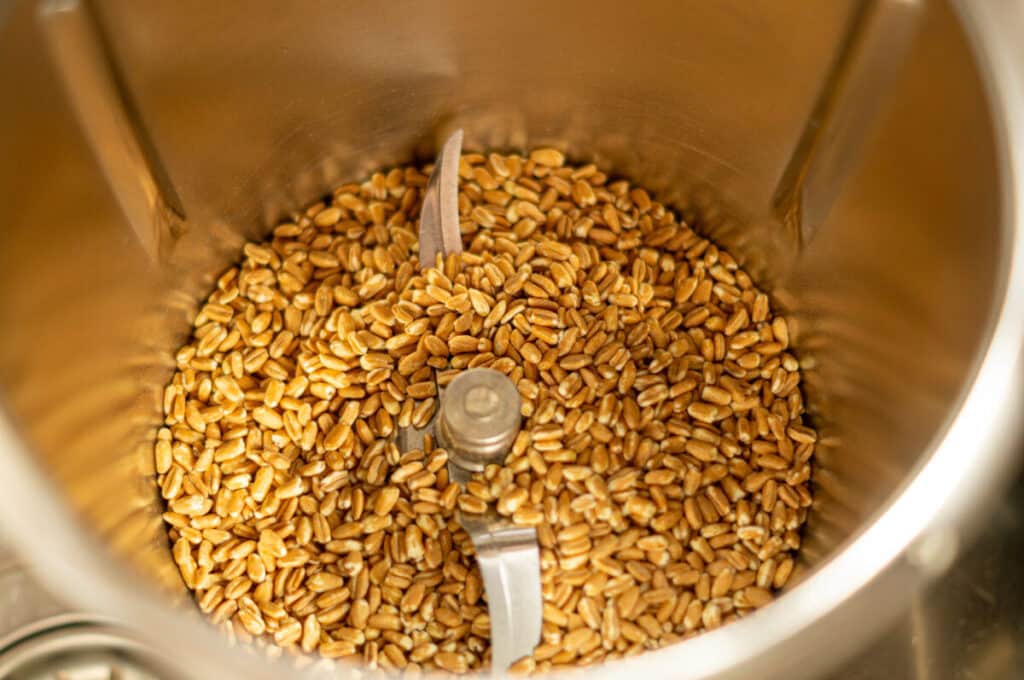
The two recipes differ in more than just the amount of flour. The lighter loaf combines 350 g of milled spelt with 300 g of spelt flour type 630, 100 g of sunflower seeds and 2 x 25 g of rolled oats. It has a finer crumb, a milder flavour and is a great starting point for anyone used to wheat bread. At 281 kcal per slice, it sits within the normal range for a mixed loaf.
The wholegrain loaf uses 500 g of whole spelt with no additional flour, but with 50 g of sunflower seeds, 50 g of pumpkin seeds and 50 g of linseeds. It tastes nuttier, keeps you fuller for longer and comes in at a slightly lower 239 kcal per slice. Instead of vinegar, 10 g of honey provides a gentle sweetness and a better browning of the crust.
Why dough temperature decides between success and a soggy loaf
Spelt is more sensitive than wheat. Its gluten network breaks down at around 24 °C, whereas wheat doughs can take 26 to 27 °C. This is exactly where the Thermomix® can catch you out: the kneading motion creates friction and warms the dough. For this reason, both recipes knead for only 8 minutes on kneading mode and not a second longer. Anyone who wants to be safe should use cold rather than lukewarm water, especially in summer.
Spelt flour absorbs water less readily than wheat and therefore bakes dry very quickly. Both recipes use 500 g of water, which gives a high hydration. The dough feels softer than a wheat dough after kneading, and that is intentional. Adding more flour at this point will result in a dry, dense loaf.
The three pitfalls with spelt bread
The dough spreads out instead of rising upwards
If the loaf spreads flat in the tin, the dough had too little tension or proved for too long. Our solution: Fill the dough into a loaf tin (about 25 x 13 cm) that holds it in shape, and stick to the proving time. For the lighter loaf that is 30 minutes under a damp cloth, for the wholegrain loaf it is 45 minutes in the oven preheated to 70 °C.
The dough becomes sticky and stringy
This is the classic sign of over-kneading. Spelt dough first feels silky and then quickly turns sticky. Our solution: Stop at 8 minutes on kneading mode, even if the dough still looks soft. It firms up during proving. Anyone kneading a double quantity should still not run the machine for longer, but should briefly open the bowl in between to let heat escape.
The crumb stays moist and dense inside
Usually the bread has simply been taken out of the oven too early. Our solution: The tap test. Turn the loaf out and tap the base. If it sounds hollow, it is done. If it sounds dull, put it back in the oven without the tin for another 5 to 10 minutes. Both recipes bake at 220 °C: the lighter loaf for 60 minutes, the wholegrain loaf also for around 60 minutes after its proving time.
Variations on the spelt bread
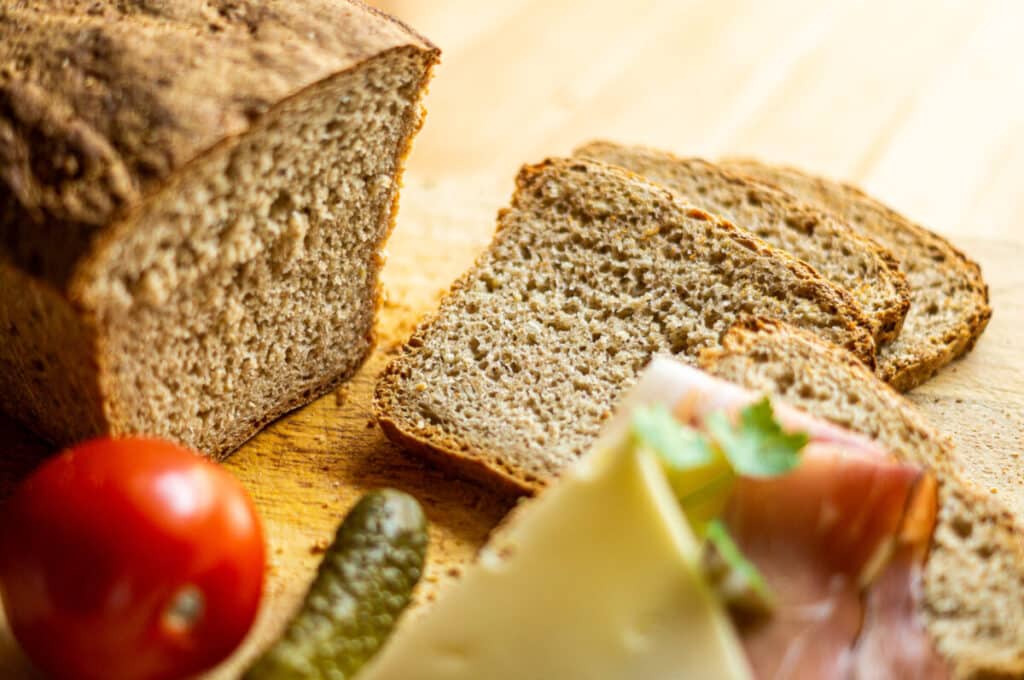
With bread spice: Add 1 tsp of bread spice or a mixture of caraway, coriander and fennel during kneading. This is the seasoning many people know from bakery bread, and it works especially well with the hearty wholegrain loaf.
Overnight in the fridge: Place the dough in the tin, cover it and leave to prove slowly in the fridge overnight instead of for 30 minutes. The slow fermentation develops more aroma and makes the dough easier to digest. The next morning, place it directly from the fridge into the preheated oven and bake for about 5 minutes longer.
Other seeds: Pumpkin seeds, sesame seeds or linseeds can be swapped freely. Toasting the seeds briefly in a dry pan first gives a more intense nutty note. In total, use no more than around 150 g of seeds per quantity of flour, otherwise the dough will not hold together.
What to serve with it
Freshly sliced, spelt bread is best served simply with butter. It also goes well with a homemade jam without jam sugar from the Thermomix® or, for a savoury option, with a generous selection of cold cuts. Anyone who prefers rolls will find our oat rolls from the Thermomix® on the site.
We have put together more bread and roll recipes from the Thermomix® in the baking category. Anyone who likes something heartier should try our seeded loaf or the moist potato bread from the Thermomix®.
Keeping spelt bread fresh and freezing
Stored in a bread bin or bread crock, spelt bread stays fresh for around one week. The key is to let it cool completely first, otherwise condensation forms in the crumb and makes it clammy. Turning the cut side face down on the board slows it from drying out.
To freeze, slice the cooled loaf and place portions in freezer bags. That way each slice can be taken out individually. In the freezer it keeps for about 3 months. It is best reheated in the toaster or briefly in the oven, where it tastes almost freshly baked.
Frequently asked questions about spelt bread in the Thermomix®
Goes well with: Butter, jam and honey.
Our tip: Mini baguettes Thermomix®.
We have put together our best recipes for you.