Wild garlic cream flatbreads only work if the cream is made AFTER the yeast dough is ready. We make the dough first, let it rise, and only blend the wild garlic cream shortly before baking. Otherwise the wild garlic oxidises, turns brown and loses its freshness.
This recipe is a classic spring companion for barbecues or as a side dish with soups. The combination of a crispy yeast base, creamy wild garlic topping and smoky bacon always works.
Wild Garlic Cream Flatbreads, Thermomix®

Ingredients 0 / 11 ✓
- 1/2 cube fresh yeast
- 1/2 tsp sugar
- 1 tsp salt
- 25 g olive oil
- 180 g water lukewarm
- 360 g flour, type 550
- 30 g wild garlic
- 200 g crème fraîche
- 50 g diced bacon
- 1/2 tsp salt
- 1/4 tsp white pepper
Instructions 0 / 6
-
1
Dissolve the yeast.
Place the yeast, sugar, salt, olive oil and water into the mixing bowl and mix for 3 minutes / 37°C / speed 1.
-
2
Knead the dough.
Add the flour and knead for 3 minutes / kneading mode. Transfer to a bowl and leave to rise, covered, in a warm place for at least 1 hour.
-
3
Prepare the wild garlic.
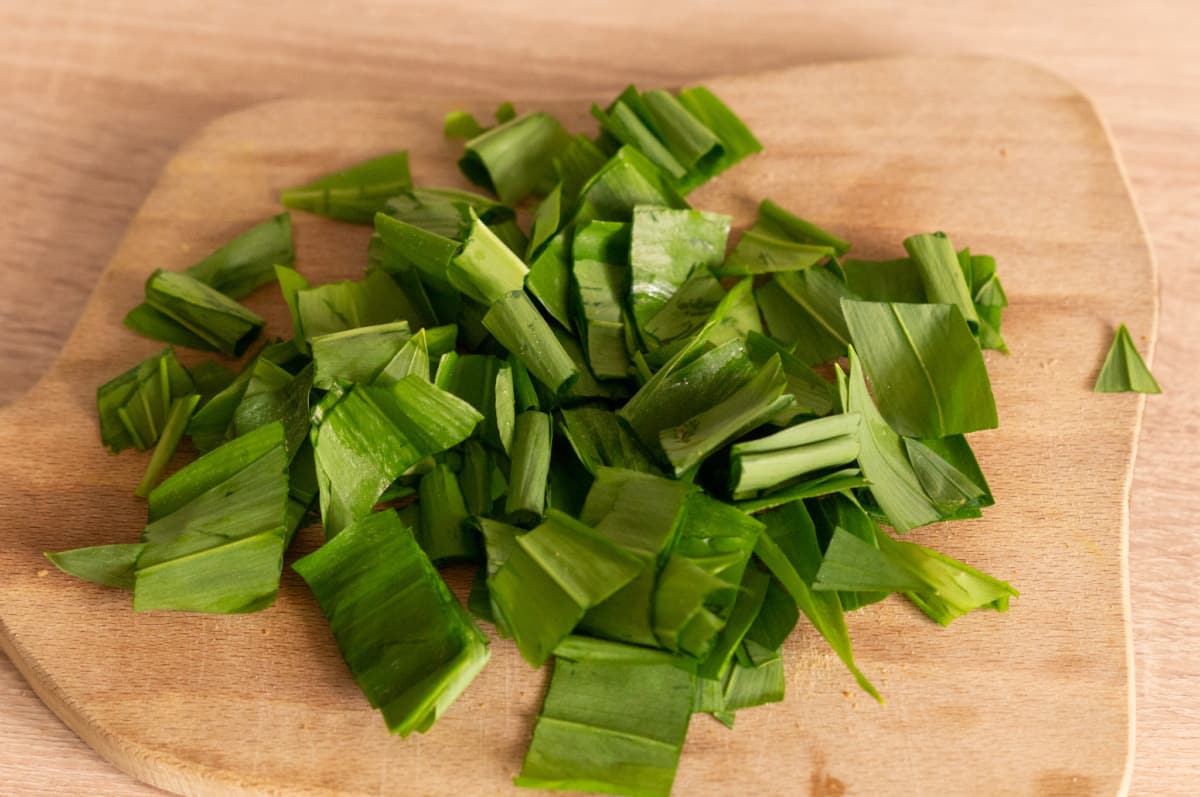
Wash the wild garlic, shake it well to dry, and remove the thick stems. Cut into pieces, place in the mixing bowl, chop for 6 sec / speed 6 and push down with the spatula.
-
4
Mix the wild garlic cream.
Add the remaining ingredients and mix for 10 sec / reverse direction / speed 3.
-
5
Shape the flatbreads.
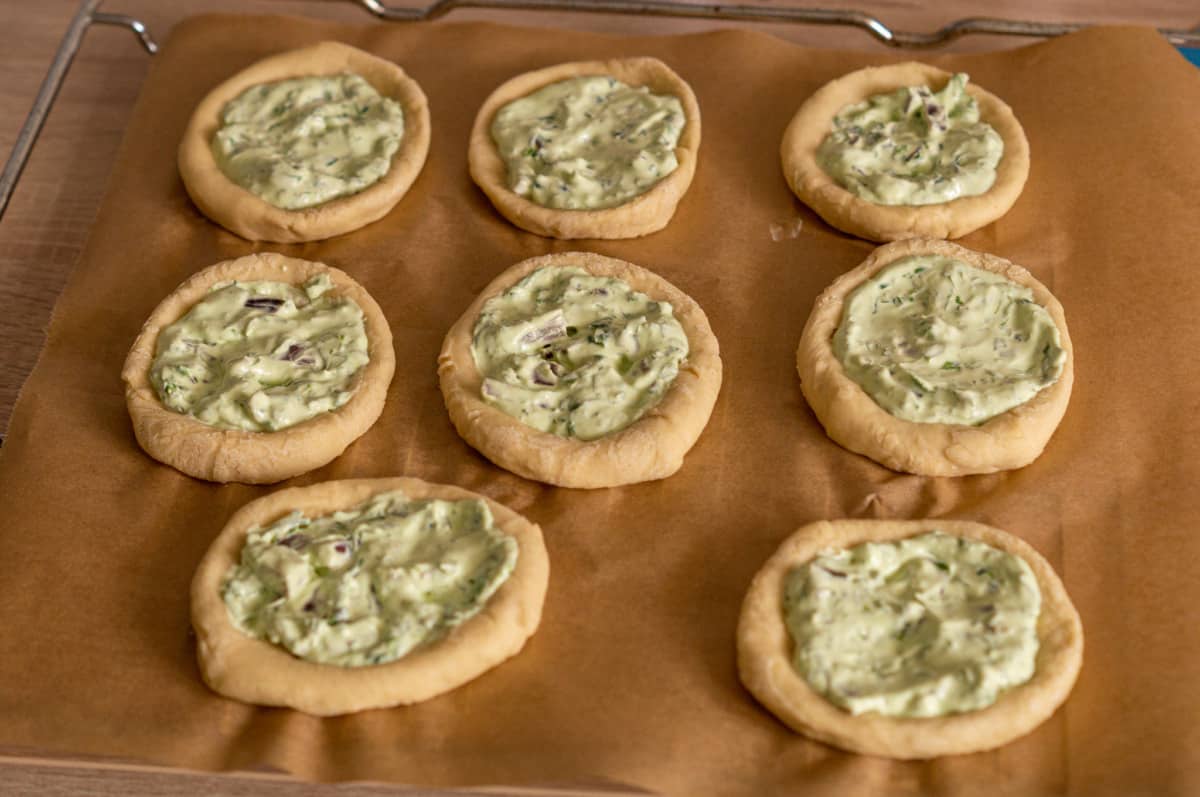
Preheat the oven to 230°C top and bottom heat. Cut the dough into 8 pieces, shape them into balls and stretch each one into a flatbread. Form a slightly thicker edge around each one.
-
6
Bake the wild garlic flatbreads.
Spread the wild garlic cream over the flatbreads, line the grill rack with baking paper and bake the flatbreads on the lowest shelf of the oven for approx. 10 to 13 minutes.
Tip: For an even crispier base, remove the baking paper in the last 3 minutes of baking.
Cheese lovers can sprinkle grated cheese over the flatbreads before baking.
Video
Nutrition per serving
Why type 550 flour instead of spelt
We use type 550 wheat flour because the dough becomes more elastic than with wholemeal or spelt. Wild garlic flatbreads are stretched by hand into thin rounds, so the dough needs to be pliable. Spelt flour tears more easily, and wholemeal becomes too dense. Type 550 has enough gluten for structure, but not as much as type 405. This keeps the edge light and airy while the centre turns crispy.
The rising time of at least 1 hour is not a suggestion, it is essential. The yeast dough needs that time to build volume. Too short and the dough is too dense; the flatbreads become too thick when stretched and bake up soggy in the middle. Longer is fine, 90 minutes is actually better.
Blend the wild garlic only just before baking
Wild garlic oxidises quickly. If you blend the cream 30 minutes before baking, it turns brownish and loses its fresh, punchy flavour. We always make the wild garlic cream only once the dough has risen and the flatbreads are shaped. 6 sec / speed 6 chops the wild garlic finely without blending it to a mush. The pieces remain visible, which gives texture.
The thick stems must come out first. They are woody and will not soften even after blending. Use only the tender leaves. After washing, shake them dry thoroughly, otherwise the water will dilute the crème fraîche.
Reverse direction at speed 3 prevents the crème fraîche from being whipped too vigorously. 10 seconds is enough to bring everything together. Any longer and the cream becomes too loose and runs over the edge during baking.
230°C top and bottom heat on the lowest shelf
The flatbreads must bake on the lowest shelf of the oven, not in the middle. The heat from below makes sure the base turns crispy before the cream on top burns. In the middle, the base stays soft while the top gets too dark. 230°C is the right temperature; at 200°C it takes too long and the dough dries out.
10 to 13 minutes is the window. Check after 10 minutes: if the edge is golden brown and the cream is bubbling, they are done. More than 13 minutes and the bacon will burn.
Shaping the edge when stretching the flatbreads
The dough is divided into 8 pieces and rolled into balls. When pressing them flat with your hands, leave a thicker edge all around, like a pizza. The edge holds the cream in the centre; without it the cream runs onto the baking paper during baking. The centre should be thin, about 3 to 4 mm. Thicker and it becomes too doughy; thinner and it tears when you add the topping.
Do not use a rolling pin. It presses the air out of the dough and the flatbreads turn flat and hard. Stretching with your hands preserves the air bubbles in the dough.
Cheese as an option, not the default
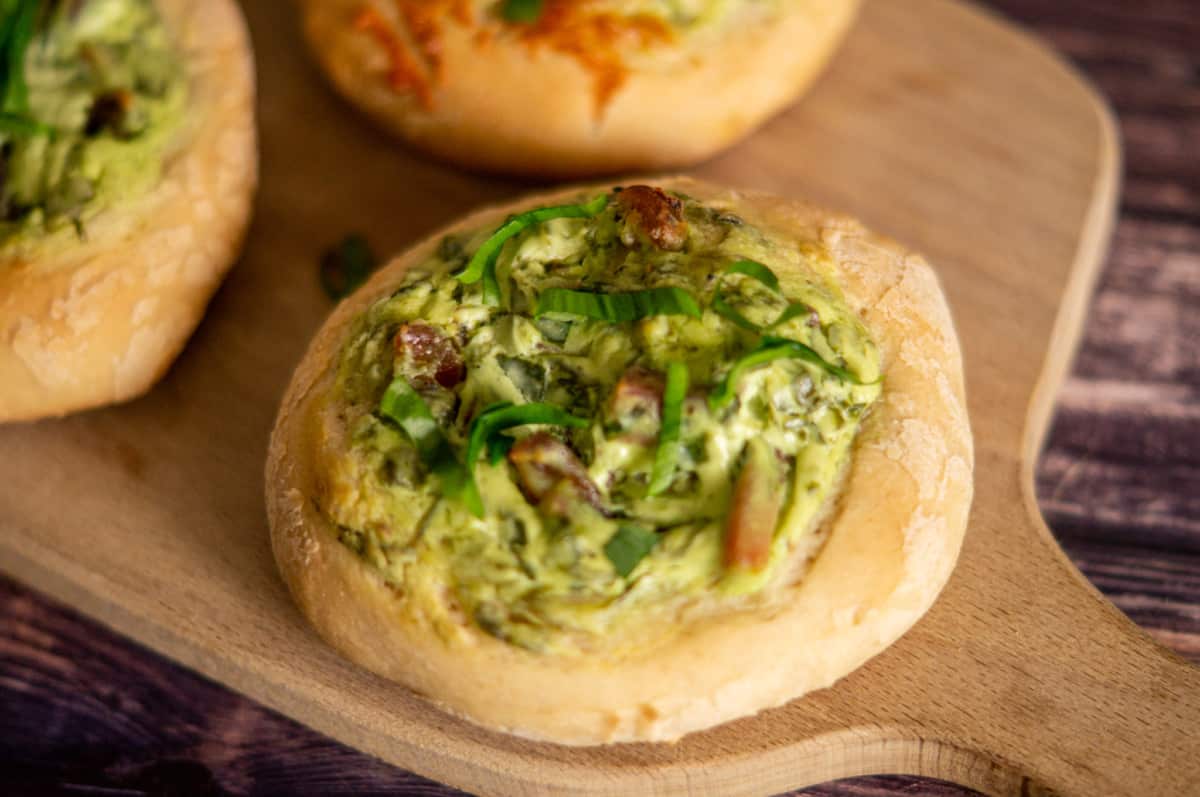
Grated cheese on the flatbreads is a variation, not a requirement. The wild garlic already has plenty of flavour on its own. If you do use cheese, choose a mild one such as Gouda or Emmental. Parmesan overpowers the wild garlic, and Mozzarella releases too much water. About 20 g per flatbread, sprinkled on just before baking.
For a crispier base, remove the baking paper in the last 3 minutes. Direct contact with the grill rack gives more colour and crunch. Without this step the base stays softer.
Serve warm, do not store
Wild garlic cream flatbreads are meant to be eaten straight away. They taste best fresh from the oven. After 30 minutes the base softens and the cream soaks in. You can reheat them the next day at 180°C for 5 minutes, but the freshness is gone. Freezing does not work as the cream separates when thawed.
These spring recipes go well alongside:
You might also like: 5-Minute Bread with the Thermomix®.
- Wild Garlic Potato Rolls
- Wild Garlic Oil
- Wild Garlic Cream
- Wild Garlic Pesto
- Wild Garlic Salt