Cheese sauce with the Thermomix® is ready in 15 minutes and makes 4 servings. The base is a classic roux made from 40 g butter and 30 g flour, then 500 g milk plus 100 g double cream, with 100 g grated Emmental stirred in at the end. The technique gives the sauce a silky consistency and makes it foolproof, without any lumps of cheese.
We make this sauce regularly as a quick pasta side for family dinners. One portion of sauce is enough for 100 g of dried pasta. It also works well with cauliflower, broccoli, or as a gratin sauce.
Cheese Sauce with the Thermomix®

Ingredients 0 / 10 ✓
- 100 g Emmental
- 1 onion
- 40 g butter
- 30 g flour
- 500 g milk
- 100 g double cream
- 1 tsp vegetable stock powder
- 1/2 tsp salt
- 1/2 tsp white pepper
- 2 tsp mixed herbs frozen
Instructions 0 / 4
-
1
Grate the cheese.
Place the cheese in pieces into the mixing bowl and chop for 6 seconds / speed 8, then set aside.
-
2
Chop the onion.
Place the onion into the mixing bowl and chop for 5 seconds / speed 5, then push down with the spatula.
-
3
Cook the sauce.
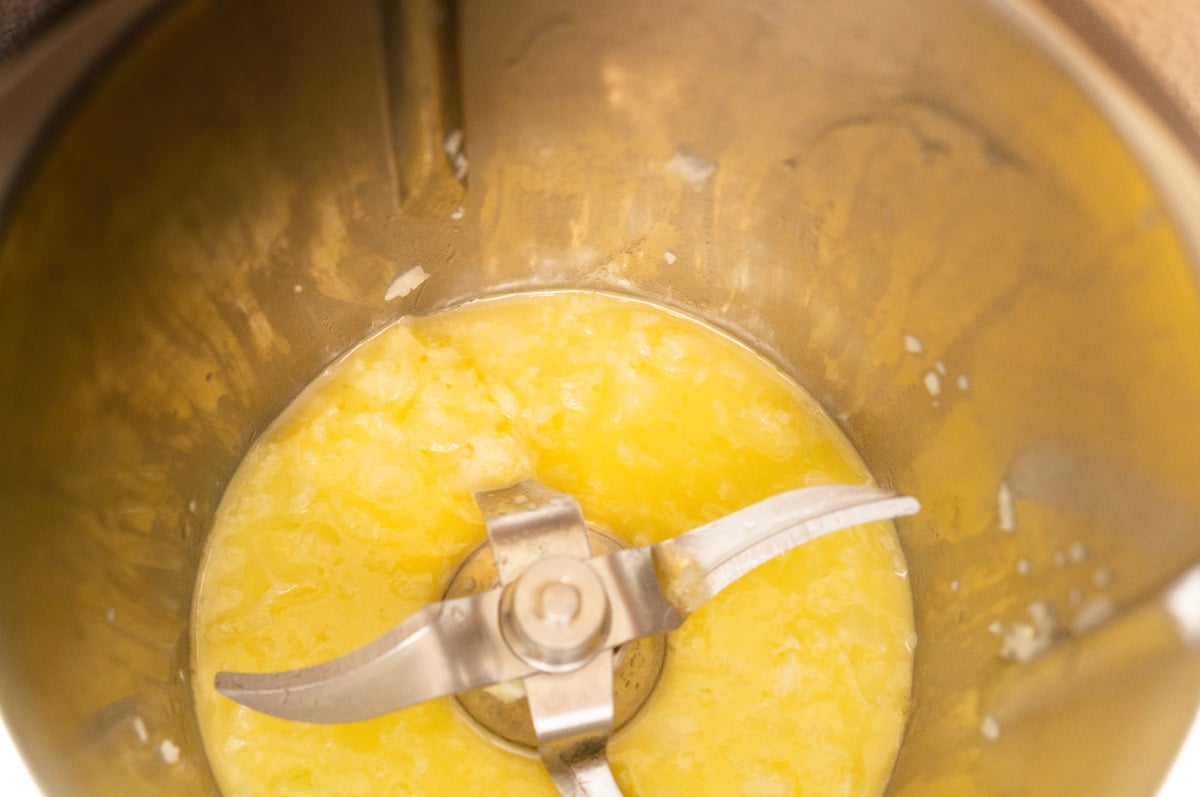
Add the butter and steam for 3 minutes / Varoma / speed 1. Add the flour, milk, double cream, vegetable stock powder, salt and pepper, cook for 8 minutes / 95°C / speed 2, then blend by gradually increasing to speed 8.
-
4
Serve.
Add the cheese and melt for 3 minutes / 90°C / speed 2. Season the sauce to taste, sprinkle with herbs and serve immediately.
Tip: You can use other types of cheese too, for example Gouda, Tilsiter, or Pecorino. Just be sure to adjust the seasoning if the cheese already has a strong flavour.
Video
Nutrition per serving
Roux as the base: why not melt cheese directly
Vorwerk community recipes such as four-cheese sauce often skip the roux and melt the cheese directly into hot milk. This works for very hard cheeses like Pecorino or Parmesan, but it causes lumps with melting cheeses like Emmental or Gouda. The roux binds the sauce and prevents lumps from forming.
40 g of butter is steamed with the chopped onion for 3 minutes at Varoma on speed 1. Then flour, milk and double cream are added and cooked for 8 minutes at 95°C on speed 2. This is the classic béchamel technique.
Emmental is the classic choice, other cheeses as a variation
Emmental melts beautifully and has a mild, nutty flavour. For something more robust: Bergkäse (stronger), Gouda (mild when young, sharper when aged) or Cheddar (British style). For a proper Italian version: 50 g Emmental plus 30 g Parmesan plus 20 g Pecorino (four-cheese style without the blue cheese).
Take care with very aged or firm cheeses like Parmesan: they do not melt completely and leave small crumbles. This adds texture to the sauce, but some people find it distracting. Pre-grated Parmesan from a packet melts less well than freshly grated (due to anti-caking agents).
Four-cheese variation: Italian restaurant style
For the Italian quattro formaggi version: 30 g Emmental plus 30 g Gorgonzola (blue cheese) plus 20 g Parmesan plus 20 g Pecorino. The total cheese quantity stays at 100 g, but the flavour becomes more complex and intense. Gorgonzola is the key ingredient for the Italian character.
If you do not like blue cheese, replace with 30 g Mozzarella (for a stretchy, stringy effect). If you do not have Pecorino, double the Parmesan (40 g instead of 20 g). These variations turn a standard cheese sauce into a special pasta dish.
All-in-one pasta cooked directly in the sauce
To save time, cook the pasta directly in the sauce rather than separately. After step 3 (roux ready), add 250 g of raw pasta and 400 g water to the mixing bowl. Cook for 12 minutes / 100°C / reverse direction / speed 1. Then stir in the cheese as in the standard recipe.
This works with short pasta shapes (penne, fusilli, rigatoni). Long pasta (spaghetti) gets broken up by the mixing blade. Advantage: only one pot, less washing up. Disadvantage: the pasta comes out a little softer than al dente.
What to serve with the cheese sauce
Classic with pasta (penne, spaghetti, rigatoni). Also great over steamed broccoli or cauliflower (cheese and vegetable gratin style). As a sauce for cordon bleu or a breaded escalope. As a topping for jacket potatoes. As a dip for chips (California cheese fries style). As a lasagne layer instead of béchamel.
For a children’s version: add 1/2 tsp turmeric (gives a more intense yellow colour like shop-bought cheese sauce). If you are looking for more pasta sauces, we have them all gathered in our dips and sauces collection.
Cheese sauce keeps for 3 days, reheat with a trick
Keeps in the fridge in a sealed container for 3 days. Give it a good stir before serving, as the roux firms up while standing. Reheat over a medium heat in a small saucepan, adding a splash of milk (30 to 50 g) to restore the original consistency.
The microwave works too, but stir every 30 seconds. Do not overheat, or the cheese will split. Freezing is possible (3 months), but the texture becomes slightly grainy after thawing. Fresh is always better.
Also works well with: Cauliflower, Spätzle and breaded escalope.
Also worth trying: Peanut Sauce Thermomix®.