Hot eggnog is the American Christmas classic that far too few people make in Britain. We have been drinking it for years on the first Advent weekend, when the tree goes up and the evenings draw in early.
Anyone who only knows eggnog from American films tends to picture a sweet, thick slop from a carton. Homemade is a completely different thing. Eggs, milk, double cream and sugar are whisked together in the mixing bowl to form a creamy base. Then comes the nutmeg, cinnamon and a generous splash of rum. The result tastes like a warm vanilla sauce you can drink, with that classic warming feeling in the stomach.
Hot Eggnog with the Thermomix®
Ingredients 0 / 9 ✓
- 2 eggs
- 1 egg yolk
- 2 tbsp sugar
- 1 sachet vanilla sugar
- 450 g milk (3.5% fat)
- 1 pinch nutmeg
- 1/2 tsp ground cinnamon
- 50 g double cream
- 60 g rum
Instructions 0 / 3
-
1
Whisk the eggs until frothy.
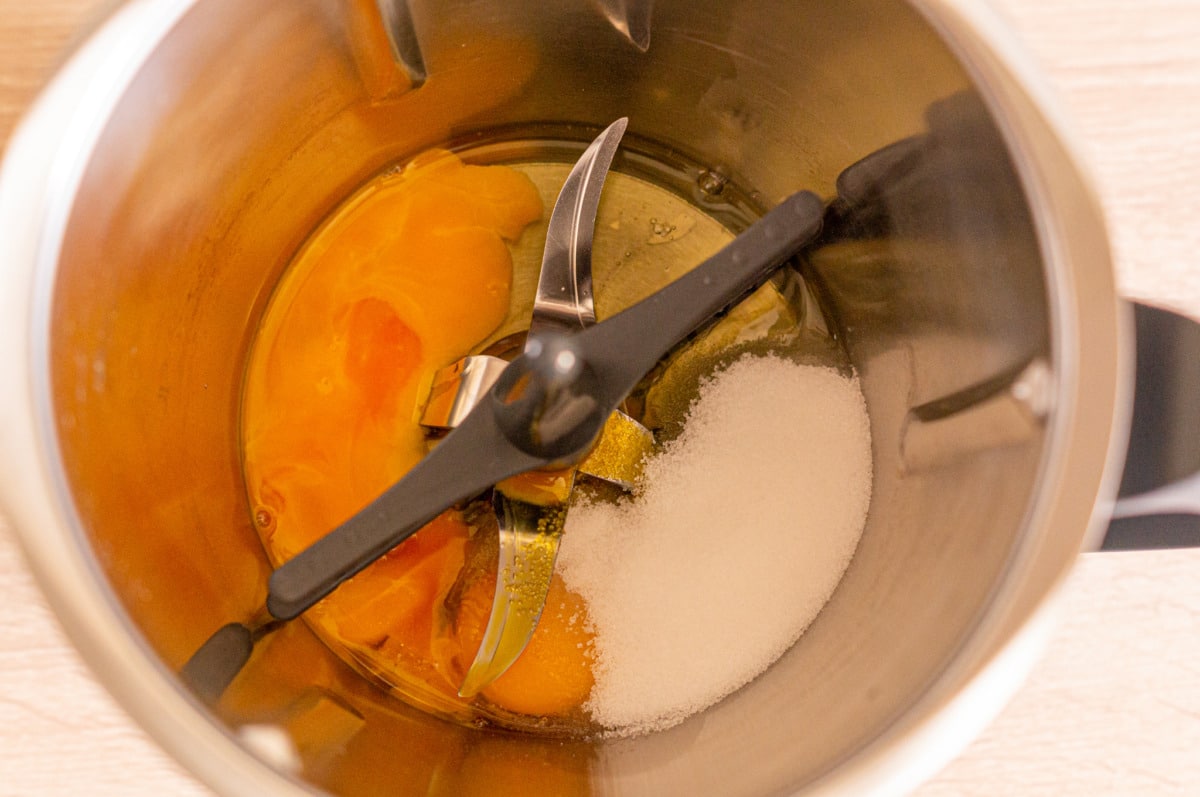
Insert the butterfly whisk into the mixing bowl. Add the eggs, egg yolk, sugar and vanilla sugar and whisk for 30 sec / speed 4.
-
2
Add milk and spices.
Add the milk and heat for 10 min / 70°C / speed 3, then add the nutmeg, ground cinnamon, double cream and rum and mix for 20 sec / speed 3.
-
3
Serve.
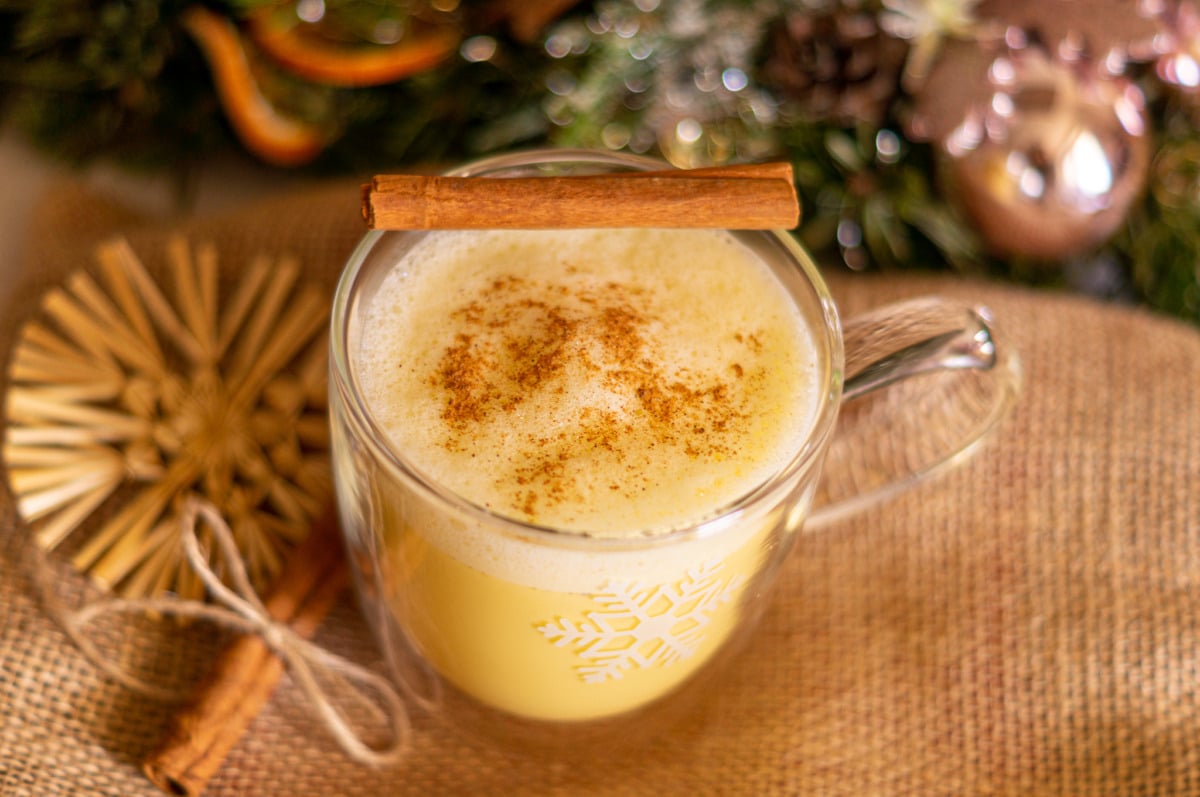
Pour into glasses and serve with a dusting of ground cinnamon.
Tip: You can serve your eggnog with a dollop of whipped cream on top, which works really well too.
Nutrition per serving
Why the rum goes into the mixing bowl last
This is the point where most eggnog recipes online quietly destroy the alcohol. Pure drinking alcohol boils at 78°C, and in a water-based mixture slightly above that. Anyone who heats rum, bourbon or whisky directly with the milk will still see the label on the bottle at the end, but there will be noticeably less alcohol in the glass than expected. The characteristic eggnog warmth comes largely from within, not from the sip itself. If the alcohol has evaporated beforehand, exactly that effect is lost.
We heat the egg and milk base to 70°C first, then add the rum, cream and spices afterwards, mixing them in briefly for just 20 seconds at speed 3. The 70°C is warm enough for the eggs to thicken and give the drink its silky texture, but low enough that the eggs do not scramble and the rum added later does not boil off. If you want to be sure, check the temperature by holding the glass: pleasantly hot, not scalding.
What the eggs actually do in eggnog
The recipe calls for 2 whole eggs plus 1 egg yolk. That might seem like a lot for just 450 g of milk, but it is exactly right. The egg white adds volume and makes the eggnog light. The extra yolk provides the silky texture, because the lecithin in the yolk binds fat and water together. Without the extra yolk you end up with a thin warm egg and milk mixture. With it, you get a creamy drink that briefly coats the spoon when you stir.
We whisk the eggs, egg yolk, sugar and vanilla sugar first for 30 seconds at speed 4 with the butterfly whisk. Only then does the milk go in. If you add milk and eggs to the cold mixing bowl at the same time and heat directly, the eggs are more likely to curdle into small white flecks. Whisking beforehand dissolves the sugar and stabilises the eggs enough that they can withstand the 70°C without trouble.
Fresh nutmeg beats the powder from the jar
Eggnog stands or falls with the nutmeg. The ingredient list includes 1 pinch of nutmeg, which goes into the mixing bowl at the end along with the cinnamon, cream and rum. But the real eggnog experience happens in the glass, just before drinking. We grate a little fresh nutmeg straight over the foam. The difference compared to ready-ground nutmeg powder is clear: freshly grated nutmeg smells resinous and sweet, while the powder from the jar is often dusty and flat. A whole nutmeg keeps in a grater for years.
With the cinnamon, we deliberately hold back. The recipe uses 1/2 tsp ground cinnamon, and that is enough. Eggnog is an egg drink, not mulled wine. Too much cinnamon drowns out the subtle notes of vanilla and rum. If you prefer, replace the ground cinnamon with half a cinnamon stick, warmed directly with the milk and removed before serving. The flavour becomes more subtle, almost slightly woody.
If the eggnog curdles: first aid
Sometimes it still happens. The milk was ice-cold straight from the fridge, the mixing bowl heated up too quickly, or the phone rang and the timer ran longer than planned. Small white flecks appear in the glass. This is not a disaster. Pour the eggnog through a fine sieve into a second jug, then blend it again for 20 seconds at speed 4 until smooth. The sieve catches the curdled egg pieces, and the second blend restores the creaminess.
Prevention is easier though: take the milk out of the fridge half an hour before mixing so it does not go into the mixing bowl ice-cold. And when heating, really do stay at 70°C, not 80 or 90, even if it would be quicker. The 10-minute heating time is not an accident. It gives the eggs time to adjust gradually to the heat.
Variations we have tested ourselves
Eggnog with bourbon instead of rum: The American original is classically made with bourbon whiskey. The vanilla and caramel notes of bourbon actually suit the egg and milk base even better than rum. Keep the quantity the same, so 60 g for this recipe.
Eggnog with cognac: For a more festive flavour, replace the rum with a decent cognac. This makes the drink noticeably rounder, almost dessert-like. It pairs well with biscuits.
Alcohol-free for children or drivers: Simply leave out the rum and add 1 tbsp of homemade vanilla sugar or a few drops of vanilla extract instead. The egg and milk base is a satisfying drink even without alcohol. We make it this way for our children on Christmas Eve, alongside the adults’ pot.
With real vanilla: Instead of a sachet of vanilla sugar, add the seeds of half a vanilla pod to the milk. The flavour is noticeably more aromatic and turns the eggnog into a proper festive drink.
Serving and equipment
Eggnog goes into the glass hot, but not into a paper-thin mulled wine glass that burns your fingers on contact. We use punch glasses with handles or thick stoneware mugs. The heat stays in longer, and you can hold the glass in your hand without scalding yourself.
On top goes a small dollop of whipped cream, then the freshly grated nutmeg, optionally a cinnamon stick as edible decoration and stirrer in one. If you like, hang a strip of orange peel on the rim of the glass. The bitter notes of the peel balance out the sweetness of the milk.
Prepare the day before, serve the next day
Hot eggnog is best drunk fresh. We recommend drinking it straight away. Any leftovers go into a glass bottle, cool down in the fridge and keep there for around 2 days thanks to the alcohol. Give it a good shake before reheating, as the cream and egg milk can separate. Bring it back to drinking temperature in the mixing bowl at 5 min / 60°C / speed 2, no hotter, or the egg white will turn.
Freezing does not work. Eggs and milk separate on thawing, and the result cannot be rescued even with blending. It is better to make smaller quantities fresh than to try freezing leftovers.
Why 70°C is the magic eggnog temperature
Most eggnog recipes cite 70°C as if it were an arbitrary figure. In fact, this is exactly the temperature at which salmonella in eggs is reliably killed, provided it is maintained for at least 3 to 5 minutes. Our 10 minutes at 70°C in the mixing bowl puts us well above that safety threshold. This makes hot eggnog safe for pregnant women, children and elderly guests, unlike cold advocaat or tiramisu made with raw egg. Below 65°C the risk remains, above 75°C the egg white starts to set and the eggnog becomes lumpy. The 70°C is the narrow window in which pasteurisation and creaminess both work at once. That is precisely why the Thermomix® is so well suited to this recipe: degree-accurate, with no need to stand stirring at the hob.
Gingerbread, biscuits or stollen alongside
Eggnog is sweet and creamy, so something crumbly and slightly salty works well alongside. We usually serve butter biscuits from the Thermomix® or a few salted walnuts. Anyone planning a full Advent evening can pair it with our gingerbread liqueur as an aperitif beforehand and a cup of hot chocolate for the children.