Two-action cleaning: soda breaks down fats through alkalinity, vinegar dissolves limescale through acidity. One spray for both types of dirt. Most DIY cleaners keep alkaline and acidic ingredients in separate bottles. We combine both in a single litre.
Soda, with a pH of around 11, breaks fats down into fatty acids and glycerol. White vinegar concentrate at 25% acetic acid dissolves mineral deposits such as limescale. This cleaning spray covers organic AND mineral soiling. Not as a compromise, but as full-spectrum cleaning in one bottle.
Homemade Magic Cleaning Spray (Thermomix®)
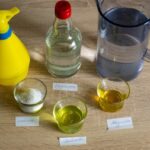
Ingredients 0 / 5 ✓
- 900 g water
- 15 g washing soda
- 30 g washing-up liquid
- 10 g eucalyptus oil
- 20 g white vinegar concentrate 25%
Instructions 0 / 4
-
1
Cook.
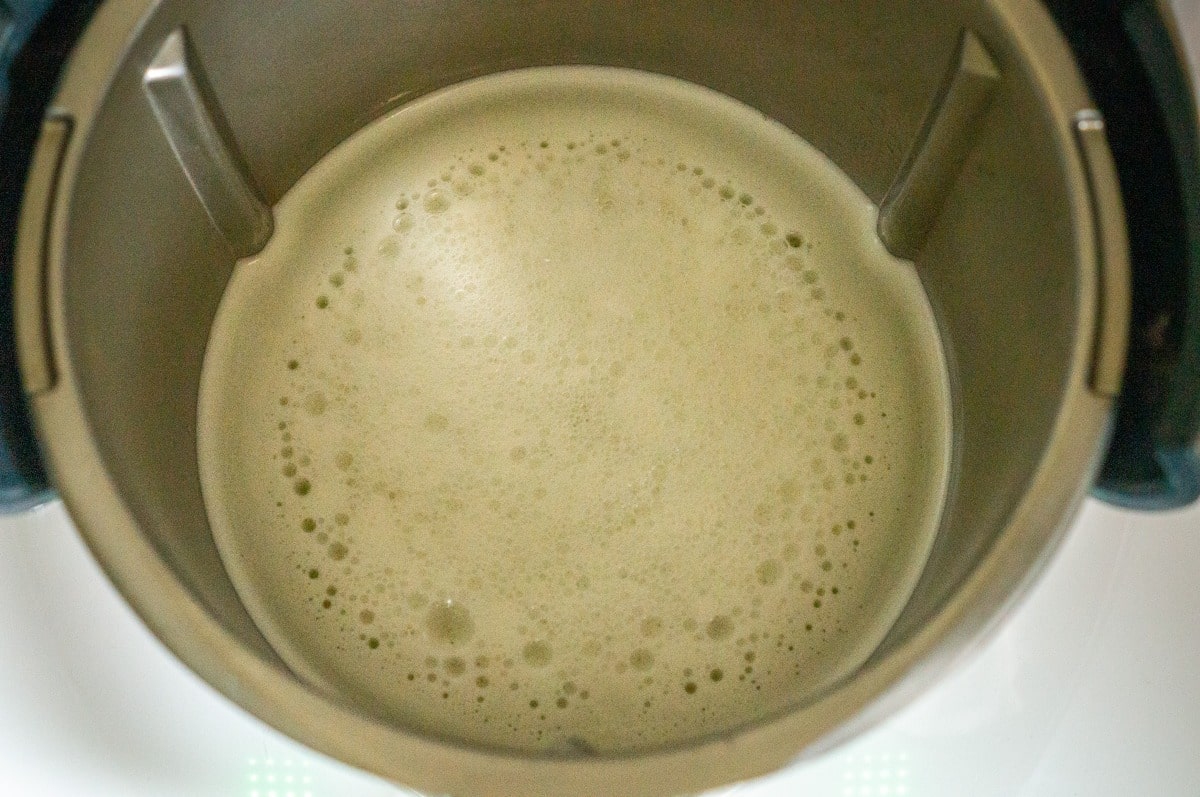
Add 200 g water and washing soda to the mixing bowl and cook for 4 minutes / 100°C / speed 1.
-
2
Add the oil.
Add the washing-up liquid, essential oil and vinegar concentrate.
-
3
Mix.
Add the remaining water and mix for 10 sec / speed 4.
-
4
Fill into bottle.
Pour into the spray bottle and seal. Shake before use.
Tip: Suitable for cleaning tiles, taps and floors. Spray onto the surfaces or items to be treated, leave to work according to the level of dirt, then rinse off. For cleaning floors, add 20 to 30 ml to the mopping water. Best used with gloves, as the spray can dry out the skin.
Video
Why soda AND vinegar?
Fats need alkaline conditions. Washing soda (sodium carbonate) has a pH of around 11 in a 5% solution. At this pH, fats are broken down by hydrolysis: triglycerides split into fatty acids and glycerol. These breakdown products are water-soluble and can simply be wiped away.
Limescale needs acidic conditions. White vinegar concentrate at 25% acetic acid reacts with calcium carbonate (limescale) to form calcium acetate, water and carbon dioxide. The reaction is visible from the rising bubbles. Calcium acetate is water-soluble and is removed when wiping.
Combining both components in the same spray is not a chemical compromise. Soda and vinegar do not neutralise each other as long as the proportions are right. We use 15 g soda to 20 g vinegar concentrate in 900 g water. This produces a slightly acidic overall solution with enough free acid to tackle limescale and enough dissolved carbonate to break down fats.
Eucalyptus oil: more than just fragrance
Eucalyptus oil has antibacterial properties against Staphylococcus aureus, Streptococcus and Pneumococcus, which are typical germs found on kitchen surfaces and taps. At 10 g of eucalyptus oil per litre of spray, the concentration is around 1 per cent. That is enough for an antibacterial effect when wiping, without causing excessive skin irritation.
Citrus oils such as orange oil or lemon oil smell pleasant but have no comparable antibacterial effect against those bacteria. Lavender oil has a soothing effect on the skin, not a disinfecting effect on surfaces. Tea tree oil would be an alternative, but it has a much stronger smell and many people find it unpleasant.
We use eucalyptus oil because it combines disinfection with an acceptable scent. The fragrance fades within a few minutes, while the antibacterial effect remains on the cleaned surface.
Why use the Thermomix®?
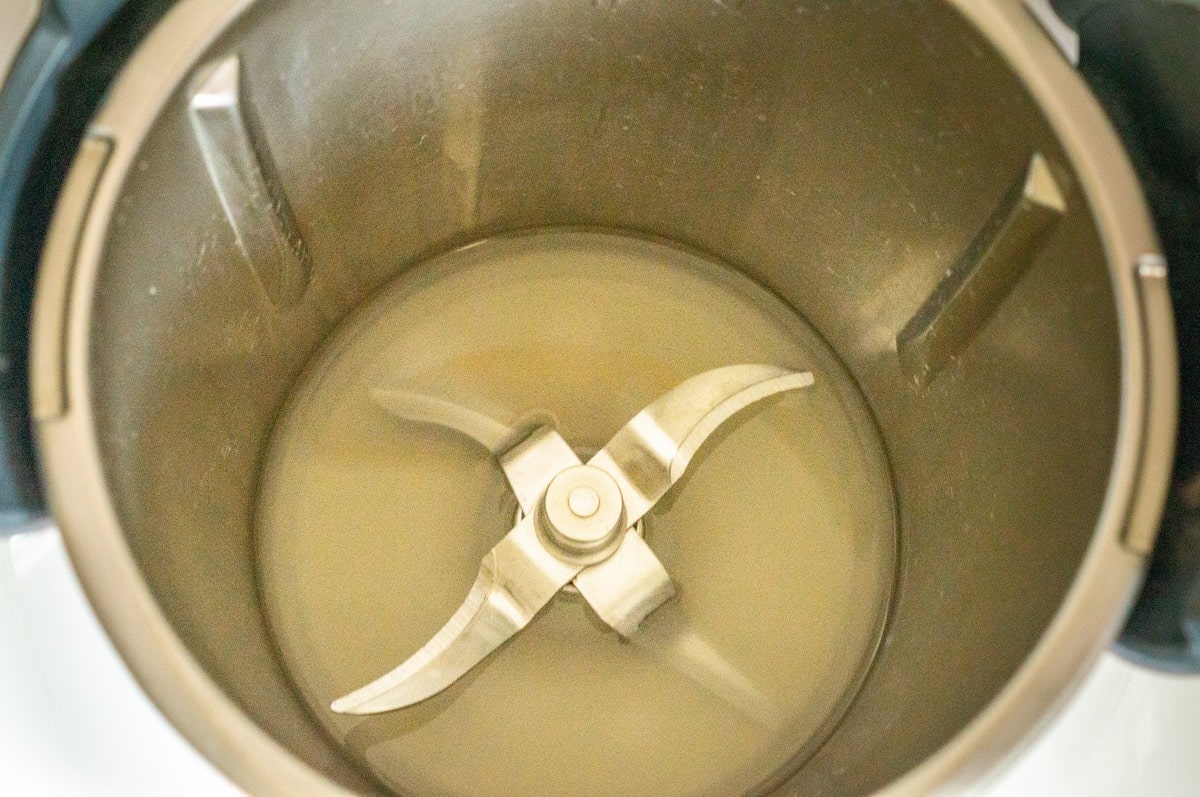
Soda dissolves slowly at room temperature. Mixing by hand takes long stirring or lukewarm water and patience. The Thermomix® heats 200 g of water together with the 15 g of soda to 100°C at speed 1 in 4 minutes. The soda dissolves completely, with no lumps remaining.
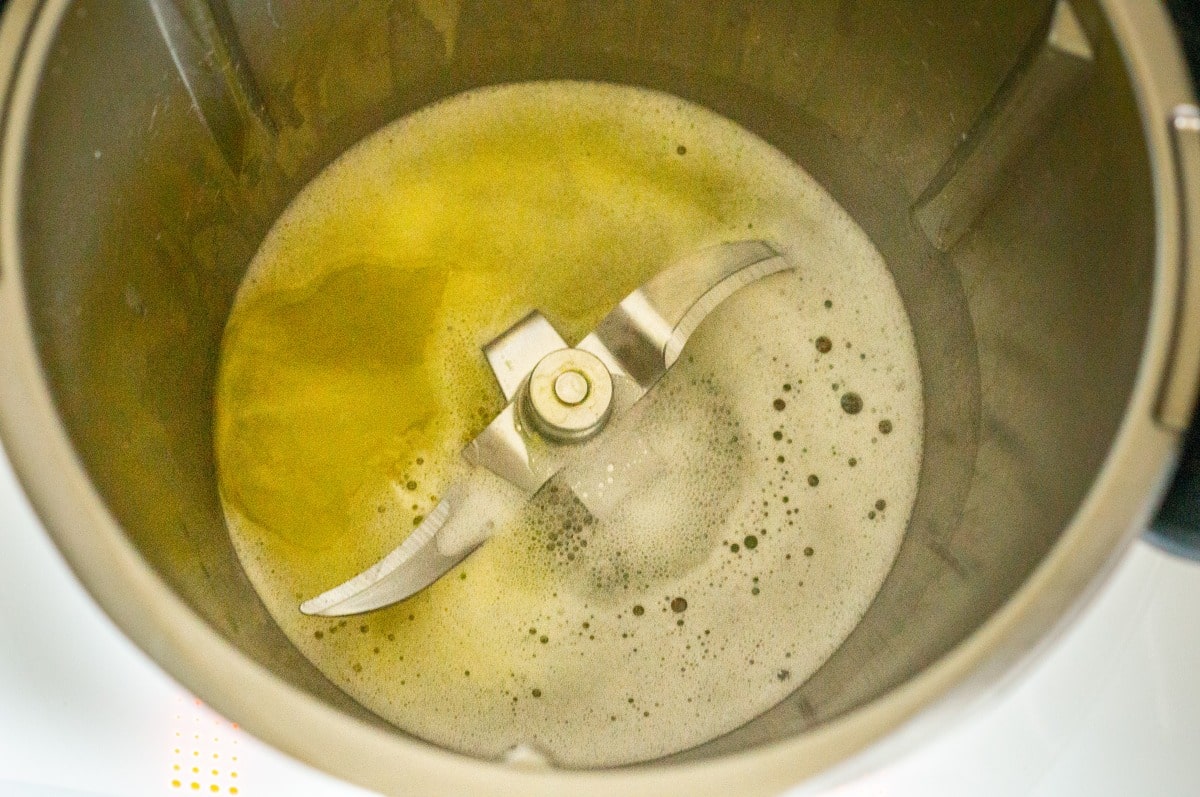
After cooking, we add the washing-up liquid, eucalyptus oil and vinegar concentrate to the hot soda water. The heat lowers the viscosity of the washing-up liquid and improves distribution. Then add the remaining 700 g of cold water and mix for 10 seconds at speed 4. This cools the mixture to room temperature and distributes all components evenly.
The washing-up liquid contains surfactants. Surfactants reduce the surface tension between water and fat. They form micelles: tiny spheres with a hydrophobic core and a hydrophilic outer layer. Dissolved fat residues are enclosed by the micelles and remain suspended in the mopping water rather than re-settling. Without surfactants, dissolved fat would leave streaks when the surface dried.
Who benefits from this spray?
In many regions, tap water is classified as hard, meaning it contains high levels of dissolved minerals. Hard water leaves limescale deposits on taps, tiles, shower walls and glass surfaces. The vinegar concentrate in this spray dissolves those deposits with every wipe. In areas with soft water, the limescale-removing effect is less relevant, but the fat-splitting action of the soda and the antibacterial properties of the eucalyptus oil remain useful.
Hard water leaves limescale deposits on taps, tiles, shower walls and glass surfaces. The vinegar concentrate in the spray dissolves these deposits every time you wipe. For households with soft water, the limescale-removing effect is less relevant. The fat-splitting action of the soda and the antibacterial properties of the eucalyptus oil remain useful nonetheless.
Check the water hardness for your area online. Many water suppliers publish current figures. If your hardness is above 14 degrees German hardness (dH), you will benefit from the vinegar content in the spray every day. If it is lower, you can reduce the vinegar concentrate to 10 g or leave it out entirely and use more water instead.
Where to spray, where NOT to spray
This cleaning spray is suitable for tiles, taps, glass surfaces, plastic surfaces and painted furniture. Spray onto the surface, leave to work for 30 seconds to 2 minutes depending on the level of dirt, then wipe off with a damp cloth.
Not suitable for natural stone, marble, granite, slate, enamel or silicone grout lines. Vinegar concentrate attacks calcium-rich natural stone surfaces and leaves dull marks. Silicone grout becomes porous and loses its seal. Enamel coatings can become dull with repeated use.
For floors, use 20 to 30 ml of spray per 5 litres of mopping water. Do not spray undiluted onto the floor, as the washing-up liquid will leave sticky residue.
Wearing gloves when cleaning is not optional, it is essential. Soda irritates skin, eyes and airways. Misuse or exposure to large quantities can be harmful to health. If the spray splashes into your eyes, rinse immediately with clean water and see a doctor if irritation persists.
Shelf life and storage
Vinegar acts as a preservative. The cleaning spray keeps for at least 6 months at room temperature. We label the spray bottle with the date of preparation and the contents. If the liquid discolours or develops an unusual smell, dispose of it and make a fresh batch.
Close the spray bottle tightly after each use so that the eucalyptus oil does not evaporate. Store out of reach of children. The bottle looks like a standard cleaning product but contains higher concentrations of acid and alkali than many ready-made products.
Shake before every use. Eucalyptus oil and washing-up liquid settle slightly over time. One good shake redistributes all the components evenly.
Find more homemade household helpers in our Thermomix® label remover recipe or in our Thermomix® washing-up liquid.