
Make fresh egg pasta dough in the Thermomix® with 200 g plain flour, 2 eggs, ½ tsp salt and 1 tbsp olive oil. Knead for 2 minutes on dough mode, bring the crumbs together by hand and rest the wrapped dough for 20 minutes. Roll it out, cut it into your chosen shape and cook the fresh pasta in boiling salted water for about 2 to 4 minutes, checking that it is cooked through.
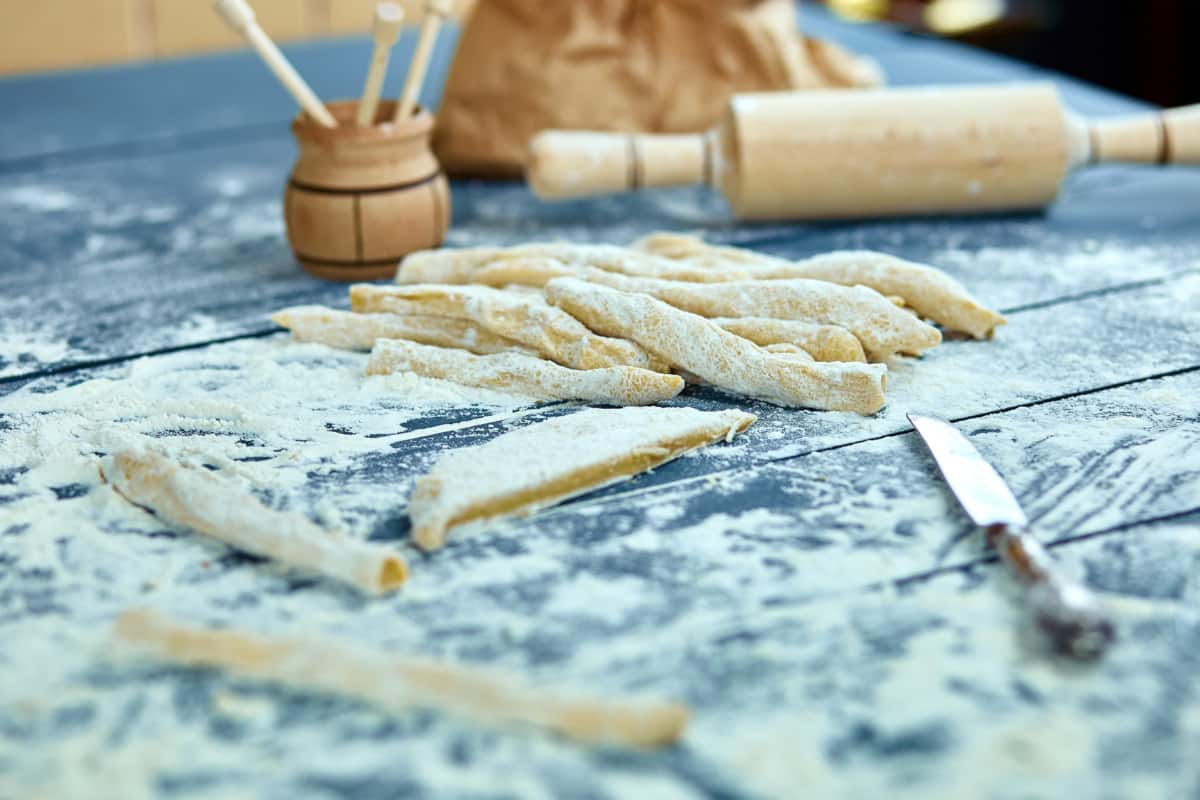
The Thermomix® mixes the ingredients inside the bowl, leaving less flour on the worktop. The dough can look crumbly when the kneading cycle ends. Tip it onto a lightly floured surface and knead it briefly by hand until it forms a smooth ball. The resting time then makes it easier to roll.
Flour, eggs and the dough texture
The German recipe uses Type 405 flour and medium eggs. Plain flour is a practical option for an English kitchen. Start with 100 g flour per egg, adding the salt and olive oil specified in the card. Egg sizes and flour absorption vary, so judge the dough by how it feels rather than adding a large amount of extra flour straight away.
Tipo 00 pasta flour is another option. The source also suggests replacing half the flour with fine durum wheat semolina for a different texture. Treat this as a variation: it may need a little more liquid. Do not use self-raising flour.
Knead for 2 minutes, then rest
Put the four ingredients into the mixing bowl and select 2 minutes on dough mode. Transfer the crumbs to the worktop, knead them together by hand and shape the dough into a ball. Wrap it in cling film and leave it to rest for 20 minutes at room temperature, as specified in the recipe card. Keep the dough covered whenever you are not working with it.
If the dough is sticky, work in a small dusting of flour. If it is too dry to come together, add water a teaspoon at a time. Make small adjustments: a dough that looks crumbly in the bowl can still come together when pressed by hand. Extra flour or water changes the original recipe quantities.
Roll and shape the pasta
Work with one portion of dough at a time and keep the rest wrapped. Use a pasta machine or a rolling pin on a lightly floured surface. The card calls for sheets about 2 to 3 mm thick; thinner sheets cook more quickly. Use only enough extra flour to stop sticking and brush off the excess before shaping.
- Linguine: Lightly flour the sheet, roll it up and cut it into strips about 4 mm wide. Unroll the strips and dust them lightly.
- Wider ribbon pasta: Cut the sheets into strips up to 2 cm wide and 30 cm long.
- Farfalle: Cut rectangles about 2 × 5 cm and pinch each one in the middle to make a bow.
- Lasagne: Cut sheets to fit the dish. The recipe card suggests rectangles about 20 × 10 cm.
- Filled pasta: Use the dough with a separate filling recipe that explains how to fill, seal and cook the pasta.
Cook fresh pasta and check the texture
Bring a pan of salted water to a rolling boil. Add the pasta and cook for about 2 to 4 minutes, depending on its shape and thickness. Check a piece from around 2 minutes and continue cooking until it is done. Filled pasta needs the cooking instructions for its filling as well as its dough.
Drain the pasta and combine it with the sauce straight away. A tomato sauce, pesto or our Thermomix® carbonara recipe gives a starting point for serving it. Use the sauce instructions alongside this fresh pasta method.
Colour and flavour variations
The German article suggests blending 50 g blanched, well-squeezed spinach with the eggs for green pasta. For a tomato variation, it suggests 50 g tomato purée and about 30 g additional flour. These are variations on the plain dough, so check the texture and adjust cautiously. A wholemeal version replaces half the flour with wholemeal flour and may need extra water.
Preparing ahead
This dough contains raw egg and flour. Do not taste it uncooked. Keep the dough covered and refrigerate it promptly if it is not being used after the resting and shaping steps. For longer preparation ahead, freeze the cut pasta in small portions, first spread out on a tray and then transferred to a suitable container. Cook from frozen and check that it is cooked through.
Do not treat a brief drying period on a tea towel as proof that homemade egg pasta is suitable for storage at room temperature. The general advice from the CDC on raw flour and dough also applies when handling this recipe: cook it before eating and clean hands, utensils and work surfaces after preparation.
More dough recipes
For another Italian meal, try our quick Thermomix® pizza dough. If you are looking for a batter rather than a kneaded dough, see the basic pancake batter recipe.
Fresh Egg Pasta Dough with the Thermomix®

Ingredients 0 / 4 ✓
- 200 g plain flour (German Type 405) + more for dusting
- 2 eggs
- 1/2 tsp salt
- 1 tbsp olive oil
Instructions 0 / 8
-
1
Mix dough.
Add all ingredients to the mixing bowl and knead for 2 minutes/knead mode.
- 200 g plain flour (German Type 405)
- 2 eggs
- 1/2 tsp salt
- 1 tbsp olive oil

-
2
Knead dough.
Transfer the crumbly dough from the mixing bowl to a lightly floured work surface and knead with your hands until elastic. Shape into a ball and let rest in plastic wrap at room temperature for 20 minutes.
-
3
Continue processing.
The dough can then be further processed as desired. For all the following recipes, roll out the dough in a pasta machine or on a floured work surface into 2 to 3 mm thick rectangular sheets. Cover these sheets with a slightly damp tea towel so that they do not dry out during processing.


-
4
Cut the linguine.
Dust the finished dough rectangles with flour and roll them tightly. Then cut them into 4 mm wide slices. Unroll the slices a little and dust them with flour.
-
5
Cook pasta.
Cook the linguine in bubbling water for about 2 to 4 minutes.


-
6
Cut ribbon pasta.
Cut the plates into strips no longer than 2 cm x 30 cm and boil them in bubbling water for about 2 to 4 minutes.

-
7
Form bows.
Cut the pasta dough sheets into small rectangles of about 2 cm x 5 cm and press them together in the middle to form bows. Cook them for about 2 to 4 minutes.

-
8
Cut the sheets.
Cut the dough into sheets approximately 20 x 10 cm. Use the sheets directly for lasagne. For ravioli, follow your chosen filling recipe to fill, seal and cook the pasta.

Preparing ahead: Keep uncooked egg pasta covered and refrigerated, or freeze it in portions. Brief drying on a tea towel does not make it suitable for storage at room temperature. Cook before eating.
