We have cleaned our Thermomix® with the same 30-second method after every use for years. Not because we are particularly thorough, but because this sequence stops dried-on residue from becoming a problem in the first place.
The difference from ordinary washing up: with the Thermomix®, direction matters. 10 seconds at speed 8 without reverse direction throws residue to the sides. 10 seconds with reverse direction loosens it. Only in this order does it work on moderate soiling without a brush.
Quick-Clean Thermomix®

Ingredients 0 / 2 ✓
- 400 g hot water
- 5 drops washing-up liquid
Instructions 0 / 3
-
1
Add 400 g hot water and five drops of washing-up liquid to the mixing bowl and froth for 10 sec / speed 8.
-
2
Blend for 10 sec / reverse direction / speed 8.
-
3
Finally, blend for 10 sec / normal direction / speed 8.
If needed, go over stubborn spots with a brush, then rinse.
Why 3 x 10 seconds beats one 30-second run
We have tested both methods hundreds of times. Running it for a single 30 seconds achieves less than three separate passes with a change of direction. The reason: in the first phase the blade flings residue outward. In the second phase, reverse direction loosens it from the opposite angle. The third phase without reverse direction rinses it away completely.
For light soiling straight after cooking, these 30 seconds are enough. For anything else there are two options: either a hot-water pre-fill with washing-up liquid, or for burnt-on residue the dishwasher-tablet trick at 100 °C for 7 minutes.
Quick rinse or dishwasher
The mixing bowl can be taken apart and cleaned in the dishwasher. The blade, lid, seals, steaming basket and Varoma all cope with that without any problems. That said, rinsing the mixing bowl straight after use saves the whole disassembly and reassembly cycle, and gets it ready to use again much faster.
The exception is dough residue. Cold water removes it better than warm water. Warm water makes yeast and gluten swell; cold water rinses them away.
Housing and handle brackets
We clean the housing with a damp microfibre cloth and a few drops of washing-up liquid. The key point: use as little water as possible so nothing runs into the electronics. Then wipe over with a clean damp cloth and dry thoroughly.
The handle brackets and inner surfaces beneath the mixing bowl are hard to reach. A narrow brush between the holders helps here. For the area directly under the mixing bowl we use a dry silicone brush. Flour or dough that lands there falls through the small round opening onto the worktop. Moisture must be kept out of that area because the contacts sit just below it.
Burnt-on residue with a dishwasher tablet
For heavily burnt-on residue, we put 500 g hot water and one dishwasher tablet into the mixing bowl and cook it for 7 minutes at 100 °C on speed 2. The heat loosens the crust and the tablet degreases. For very stubborn spots, work over them with a brush and rinse. Repeat if necessary.
For lightly scorched residue, citric acid is enough: pour hot water from the kettle into the mixing bowl, add citric acid and leave it to work. After a few minutes the dirt loosens.
Removing odours from the mixing bowl
Garlic and onion smells get trapped in the plastic of the seals. We prevent this by not placing the measuring cup back into the mixing bowl overnight. If it happens anyway:
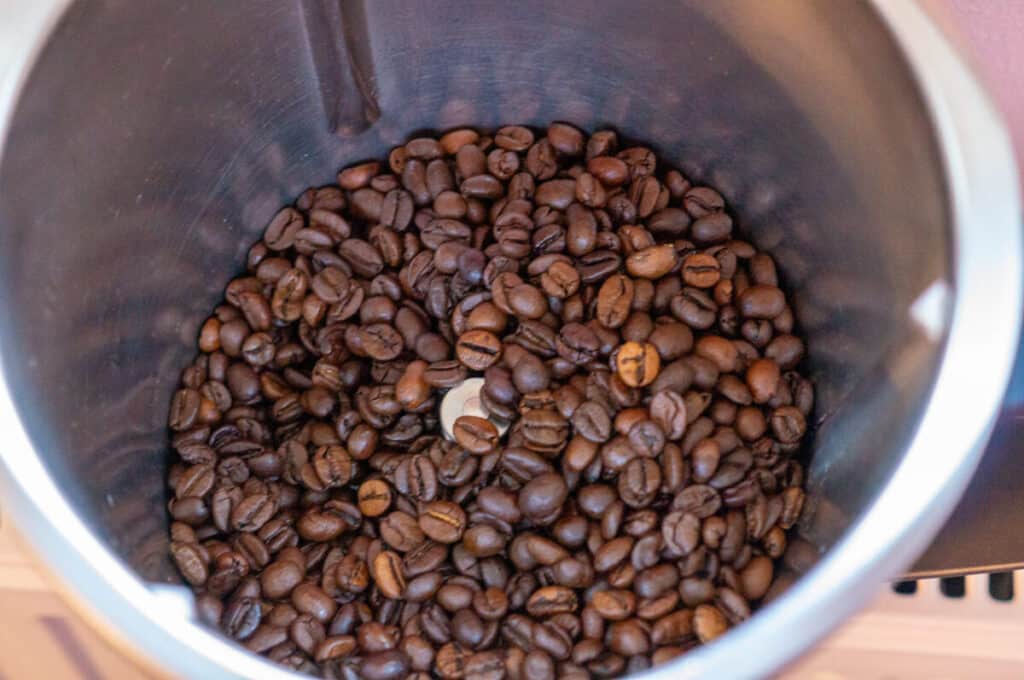
- Coffee beans: A handful into the mixing bowl, pulverise for 40 seconds at speed 10, leave overnight.
- Vinegar: 180 g into the mixing bowl, 40 seconds on Turbo, leave overnight with the lid closed.
- Lemon: Squeeze half a lemon into the mixing bowl, chop for 10 seconds at speed 10, leave overnight.
- Bicarbonate of soda: 180 g water with 1 tsp bicarbonate of soda or baking powder left in the mixing bowl overnight.
- Freezer: Put the smelly lid in the freezer for a few hours.
Removing sticky dough
Yeast dough sticks to the mixing bowl and blade. The trick: add 1 to 2 tbsp of flour to the mixing bowl and blend for 10 seconds at speed 10. The flour is flung to the sides and takes the dough residue with it. Then scrape out with the spatula and rinse with cold water.
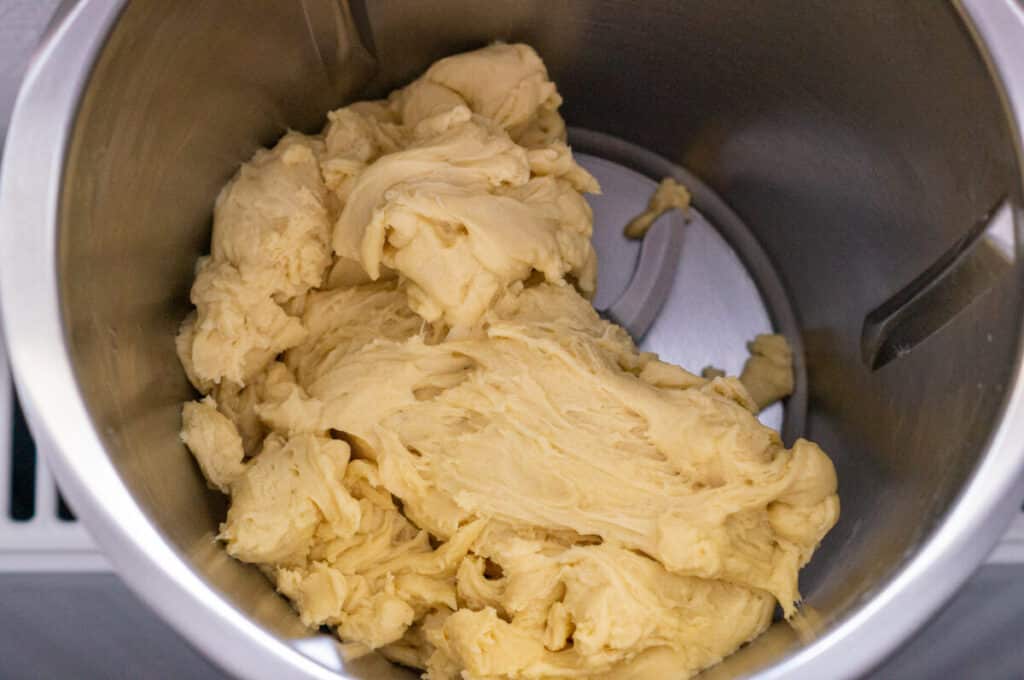
The TeigPro accessory prevents dough from getting stuck under the blade. A dough flower helps rotate the blade to remove dough residue.
Blade brush for the grooves
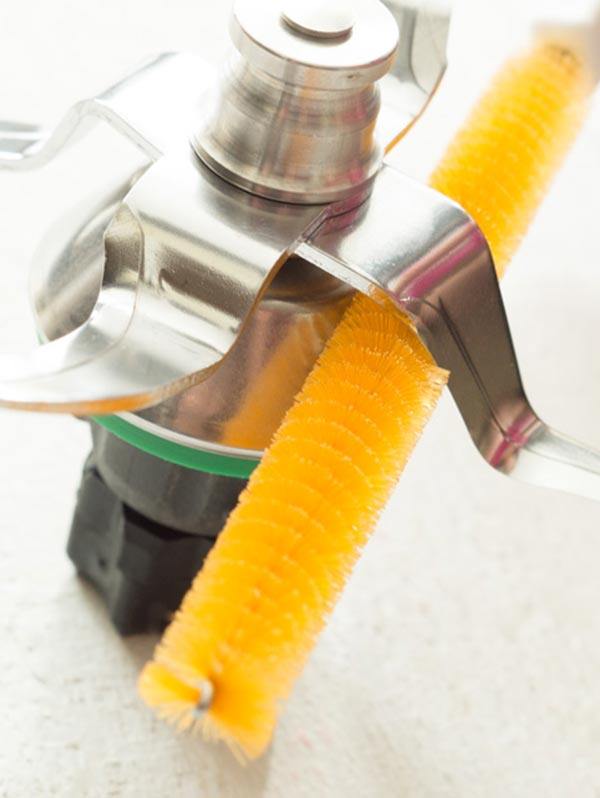
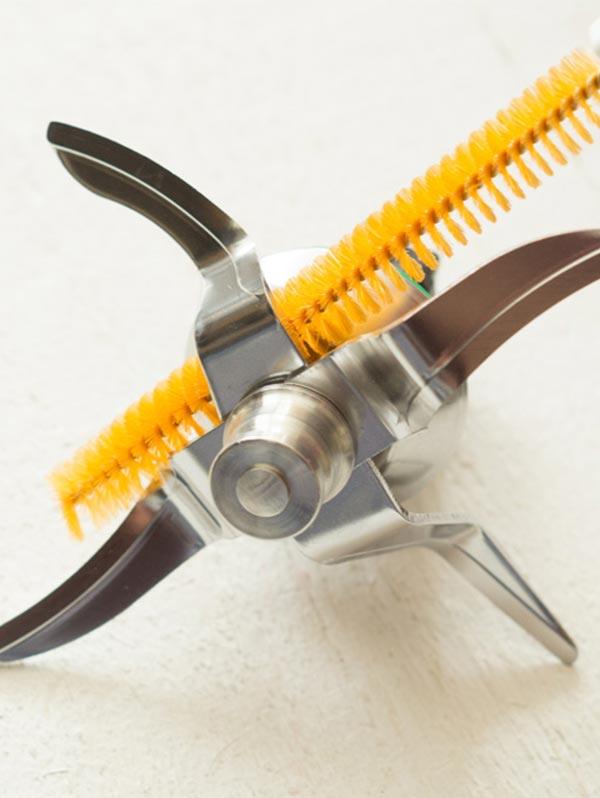
Residue collects in the small grooves of the blending blade and does not come out with ordinary washing up. A blade brush reaches these spots without scratching the surface. We use it after every session where nuts, spices or sticky ingredients were involved.
Discolouration on accessories
Curry, turmeric and paprika stain the plastic accessories. The stains are harmless but can be removed using sunlight. Place the affected part in direct sun for a few hours. UV light bleaches out the pigments.
Error message after cleaning
If your Thermomix® shows an error after cleaning, the contacts on the underside of the mixing bowl are still damp. Dry them completely before reinserting.
Goes well with this: Bath Salts Thermomix®.
More tips for beginners: The most important beginner tips for the Thermomix® and Basic functions of the Thermomix®.
More on this topic: In the Thermomix® Problems and Care section you will find further guides. Or browse the complete guides overview.