Pide from the Thermomix® only works with a double proving time. We let the dough rise for 30 minutes, knead it through by hand, then give it another 30 minutes. The second rise after kneading builds stable air pockets that do not collapse during baking. A single rise leaves the flatbreads dense and flat rather than airy.
We bake these flatbreads regularly for the grill. The combination of yoghurt in the dough and Jamaican Jerk on top works differently from classic Turkish pide, but that is exactly why none of them ever end up as leftovers in the bread basket.
Spiced Pide Flatbreads with the Thermomix®
Ingredients 0 / 9 ✓
- 1 garlic clove
- 2 tsp Jamaican Jerk by Rimoco + a little extra for sprinkling
- 500 g flour, type 405
- 160 g natural yoghurt (3.5% fat)
- 160 g water
- 1/2 cube fresh yeast
- 1 tsp sugar
- 1 tsp salt
- olive oil
Instructions 0 / 6
-
1
Chop garlic and spice.
Peel the garlic, add it to the mixing bowl with 2 tsp Jamaican Jerk and chop for 3 sec / speed 6.
-
2
Knead the dough.
Add the remaining ingredients and knead for 6 minutes / kneading mode. Transfer the yeast dough to a bowl, cover and leave to rise in a warm place for at least 30 minutes.
-
3
Knead the dough again.
Knead the dough by hand once more and leave to rise for a further 30 minutes.
-
4
Preheat the oven.
Preheat the oven to 240°C and line a baking tray with baking paper.
-
5
Shape the flatbreads.
Divide the dough into 8 pieces, shape them into balls and press flat so that the flatbreads are slightly thicker at the edges. Place the flatbreads on the baking tray, drizzle with oil and sprinkle with Jamaican Jerk.
-
6
Bake the flatbreads.
Leave the flatbreads to rise for a further 15 minutes, then bake for 8 minutes until golden brown.
Tip: You can also sprinkle the flatbreads with sesame seeds.
Nutrition per serving
Yoghurt makes the dough elastic
160 g of yoghurt to 500 g of flour is no coincidence. The yoghurt provides lactic acid, which relaxes the gluten network. The result: the dough is easier to press flat without springing back, and stays soft after baking rather than drying out. Without yoghurt the dough becomes tougher and the flatbreads turn harder.
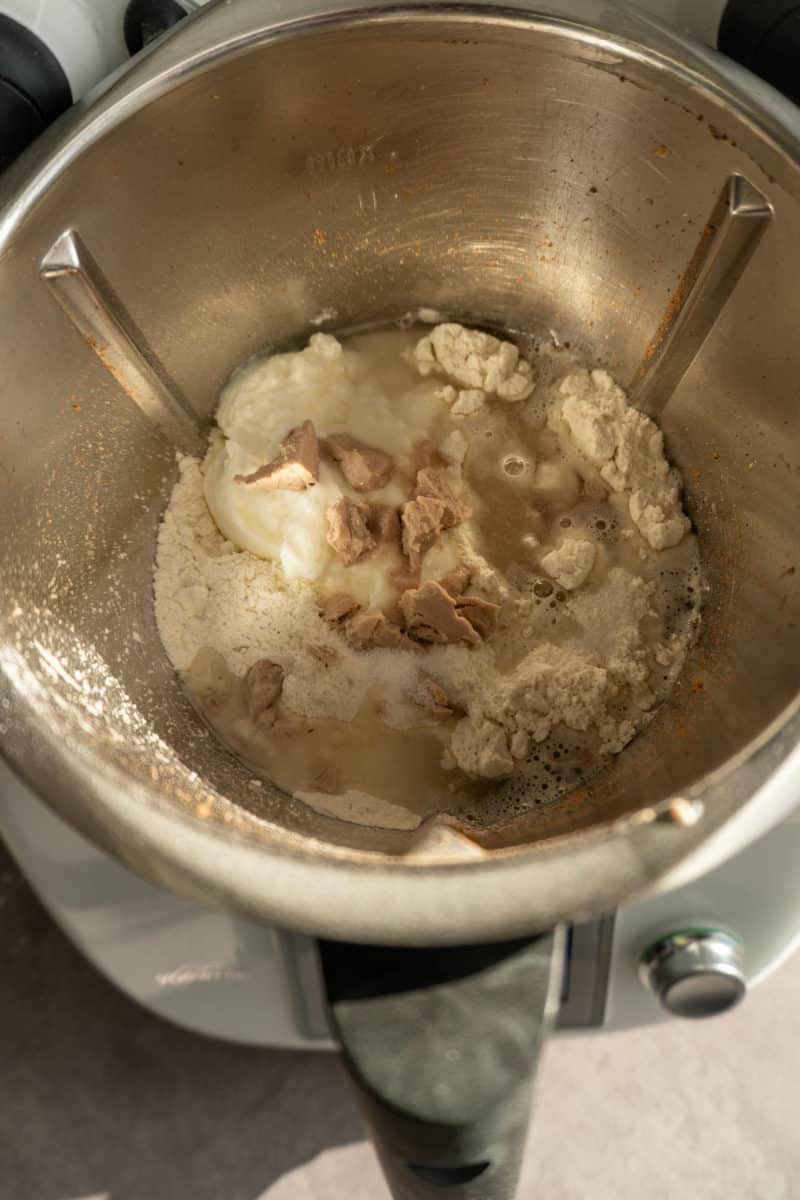
6 minutes on kneading mode is enough. After kneading, the dough is soft and slightly sticky. That is correct. Adding more flour makes the flatbreads dry.
Jamaican Jerk instead of black cumin
Classic pide is sprinkled with black cumin or sesame seeds. We use Jamaican Jerk by Rimoco. The spice brings chilli, allspice, thyme and garlic. The heat is moderate, and the toasted notes from baking intensify the aroma. The effect: the flatbreads smell of the grill when you cut them open, not of a bakery.
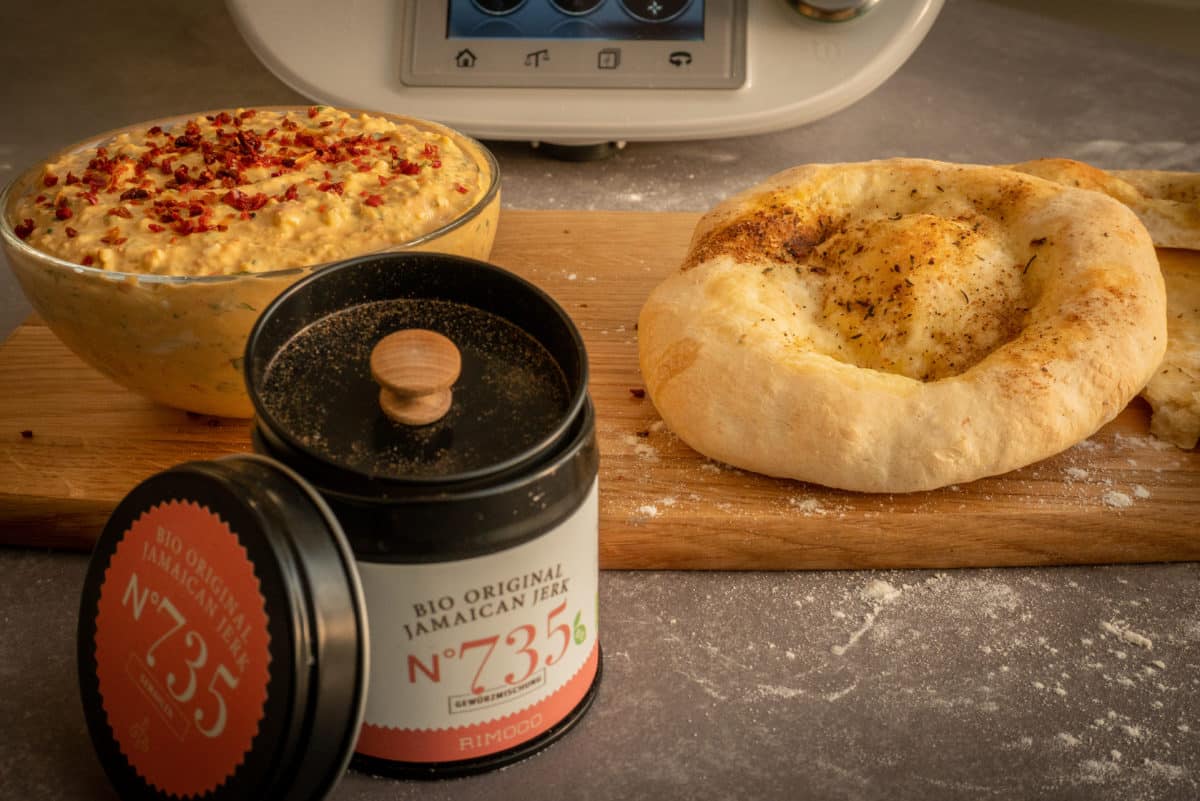
The 2 tsp of Jamaican Jerk in the dough is the base. The amount for sprinkling on top depends on your heat tolerance. We use about 1 extra tsp per tray.
240°C for oven spring
240°C is not a suggestion, it is essential. At this heat the water in the dough evaporates instantly, the air pockets expand quickly and the surface sets before the dough collapses. This is called oven spring. At 200°C the process takes too long and the flatbreads stay flat.
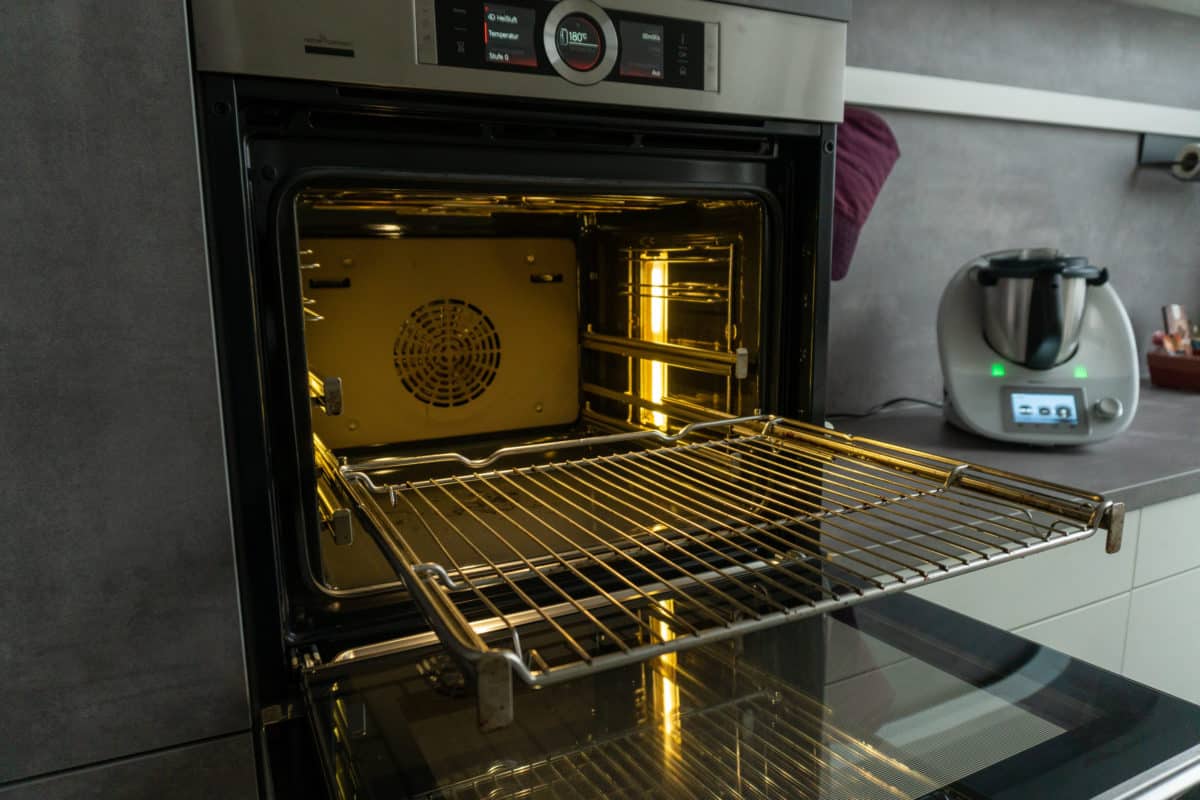
8 minutes of baking time is enough for golden edges. Any longer and the underside becomes too dark. The flatbreads are ready when the edges have colour and the centre is still pale.
Edges thicker than the centre
When pressing flat, deliberately leave the edges thicker than the centre. The thicker edge prevents the flatbreads from tearing during baking. The thinner centre cooks through more quickly and stays soft. Pieces pressed evenly flat end up hard at the edge and underdone in the middle.
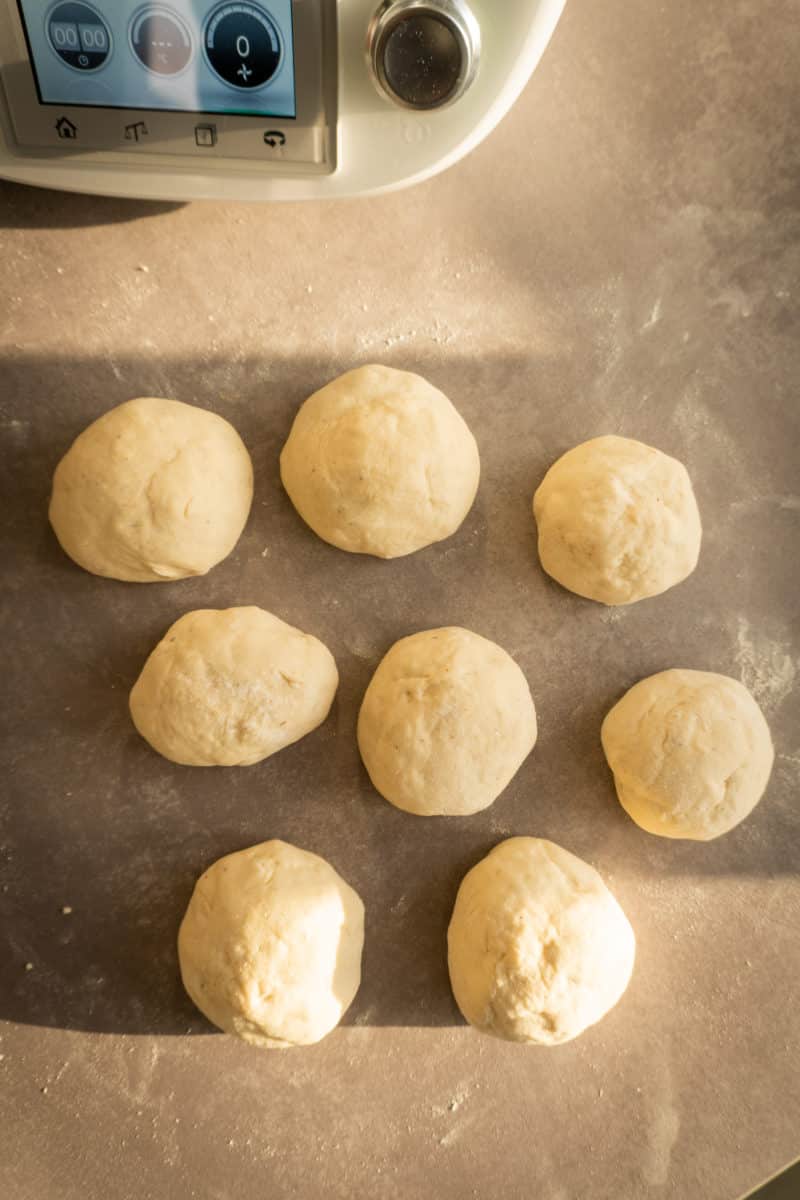
The 15 minutes proving time on the tray is the final stage. During this time the dough relaxes after shaping and the surface becomes smooth. Without this stage the flatbreads shrink in the oven.
Olive oil before baking
The olive oil is drizzled on just before baking, not after. During baking the oil soaks into the surface and makes it glossy. Applied afterwards it sits on top of the crust and tastes greasy.
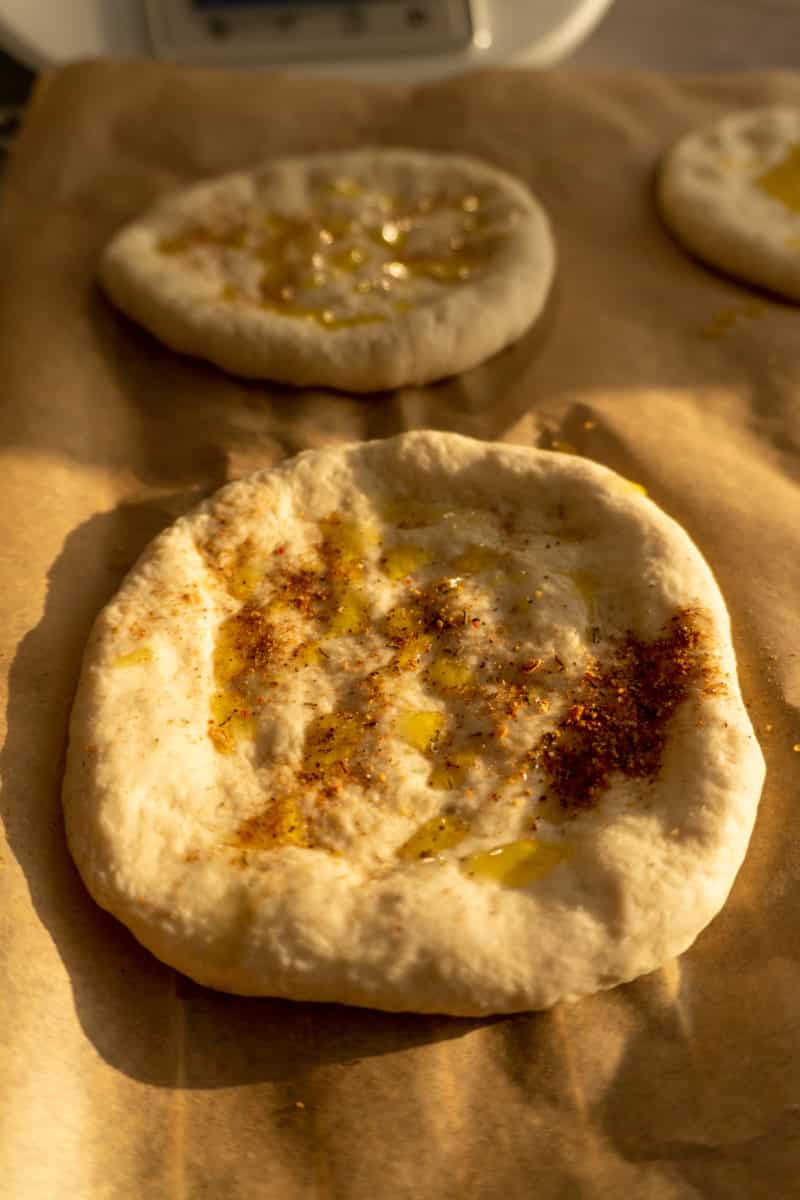
The amount is flexible. We use about 1 tbsp per 4 flatbreads. More makes the breads too oily, less leaves the surface matt.
Serving and storing
The flatbreads taste best warm, straight from the tray to the table. After 2 hours they become firmer. Reheating works at 180°C for 3 minutes. Freezing is possible, but the texture suffers. After defrosting the flatbreads become softer and lose their bite.
Goes well with: Hummus and Feta.
These flatbreads go well with Tzatziki, Hummus or Ajvar. As a grill side dish alongside chicken or lamb skewers.
More bread recipes: Spelt Baguette, Classic Flatbread, Quark and Oil Rolls.